
Last updated September 21, 2026
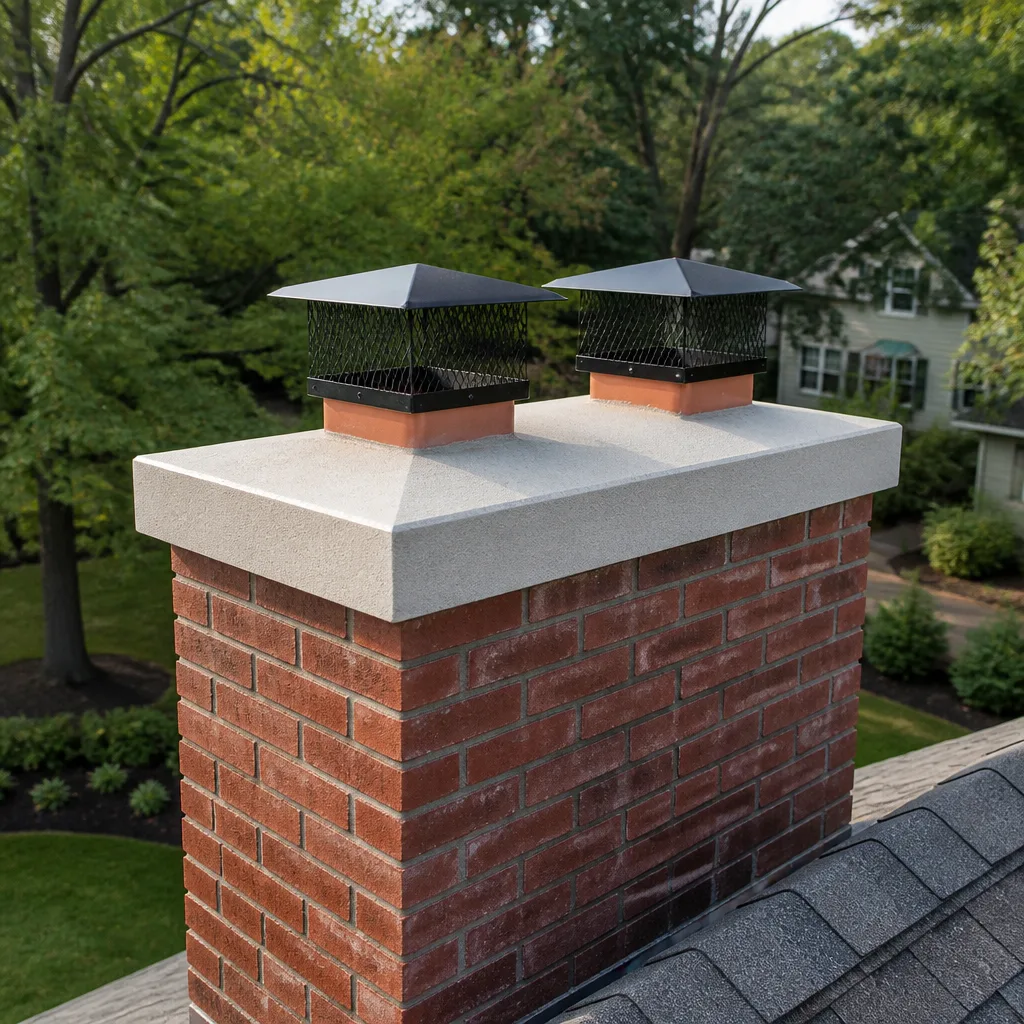
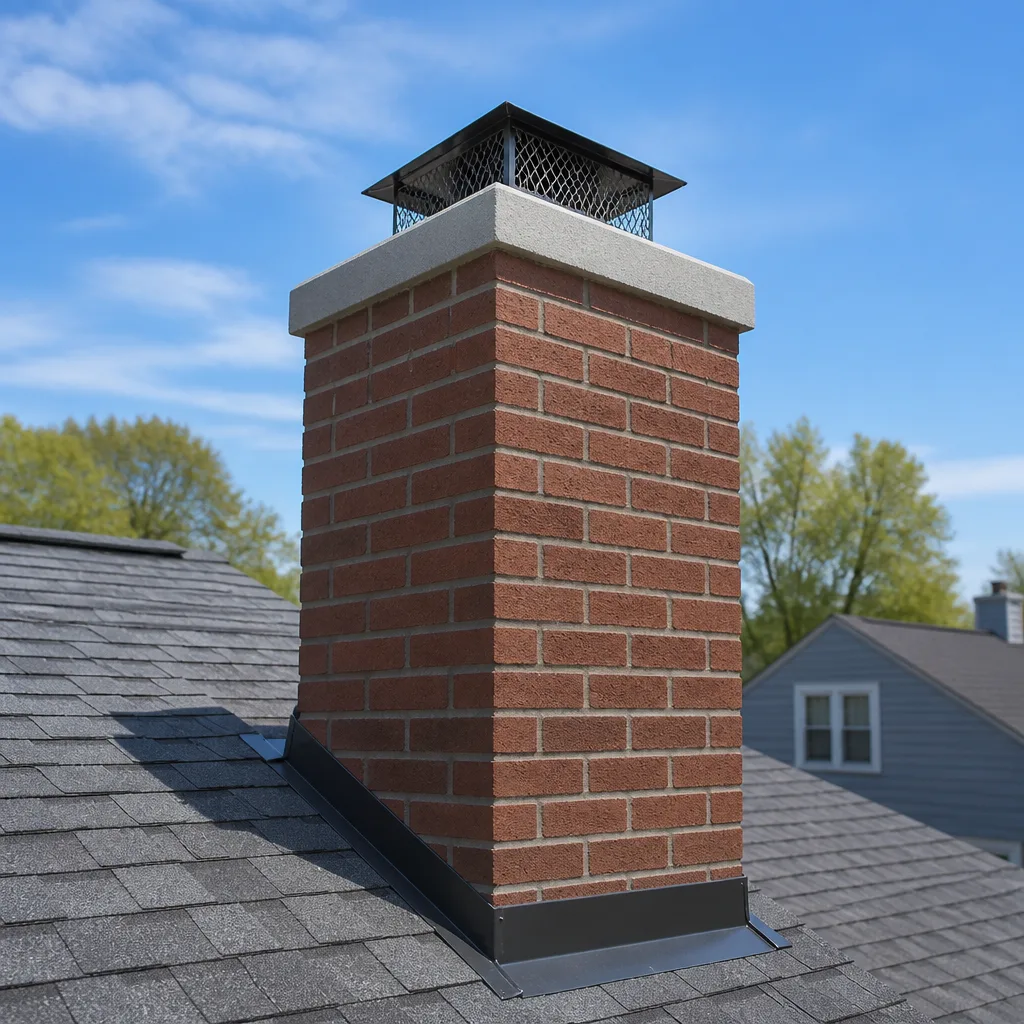
Level 1 sweep and inspection to the NFPA 211 annual standard - flue, crown, cap, and flashing checked and photographed
Chimney sweep logs do not sweep chimneys. They loosen some creosote - which then falls where a brush and vacuum still have to collect it.
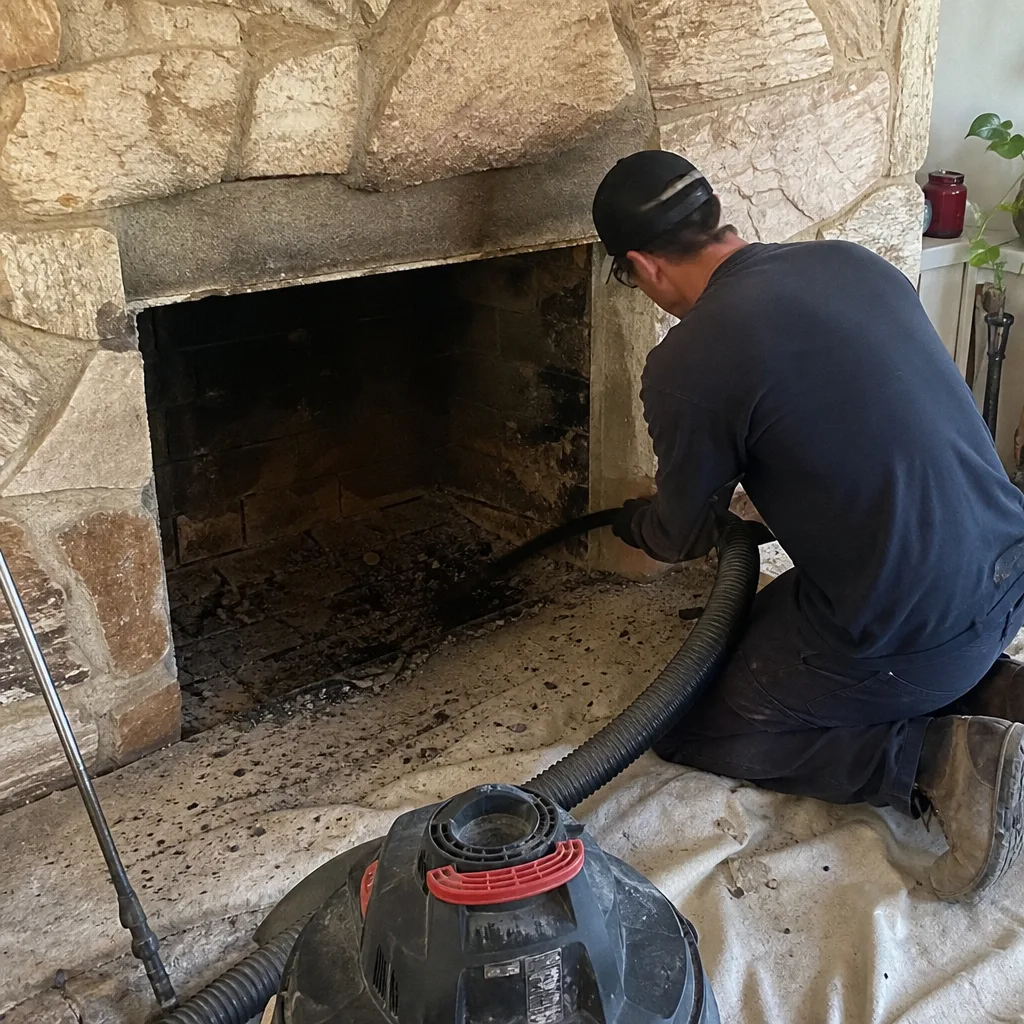 Before
 After
After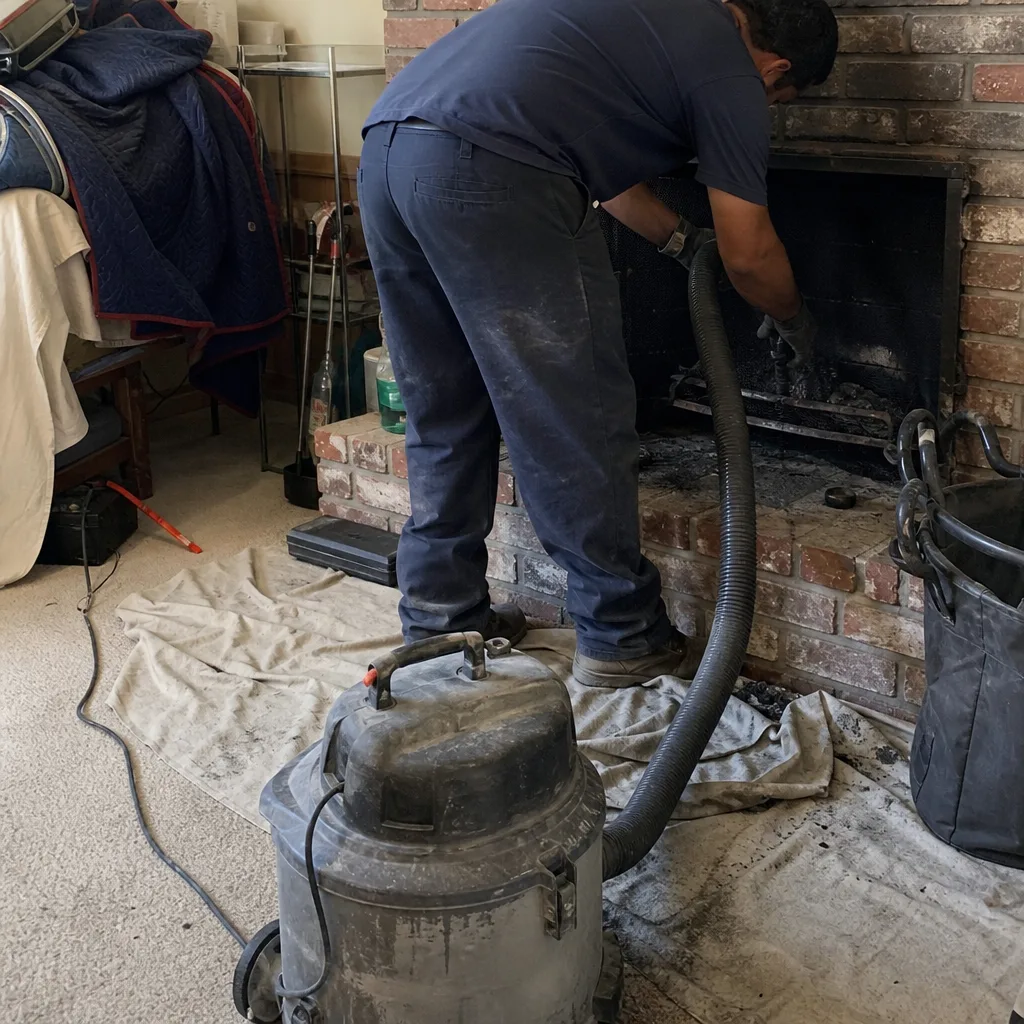 Before
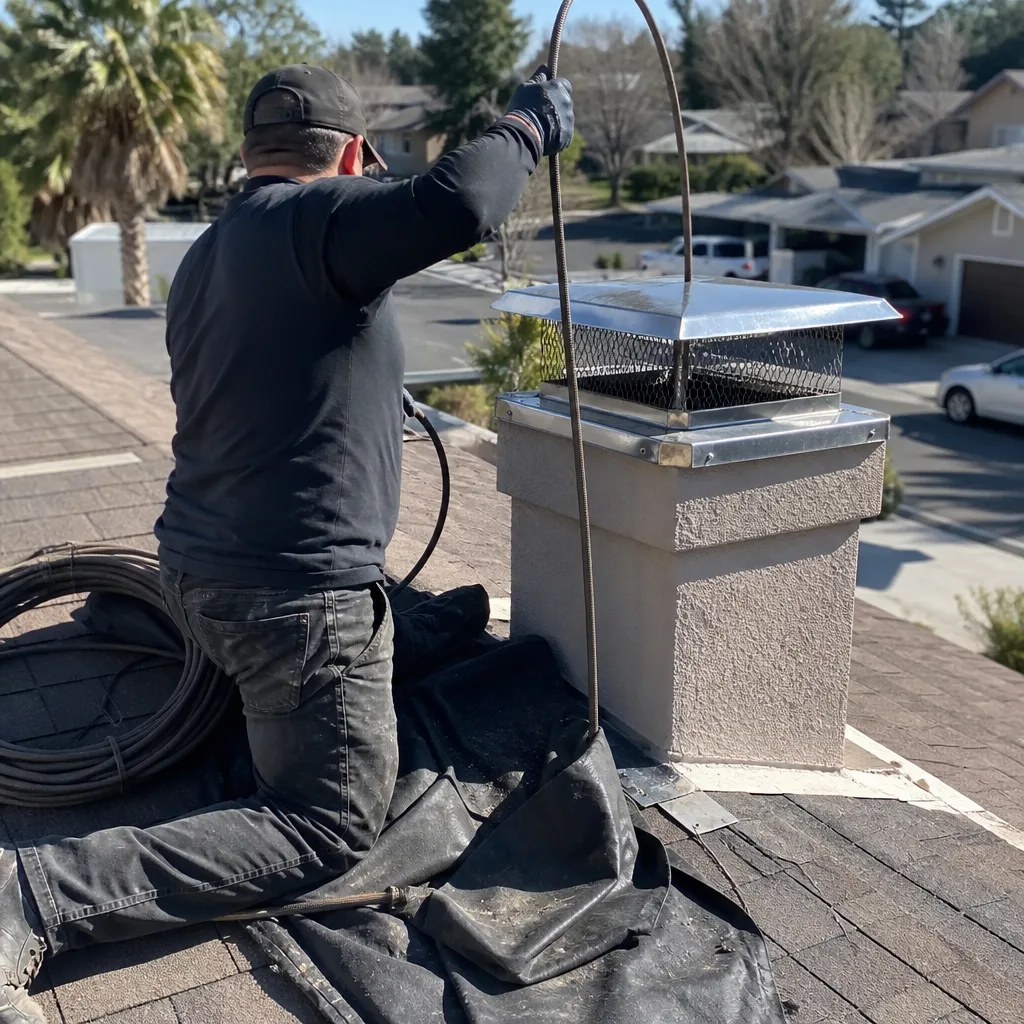 After
After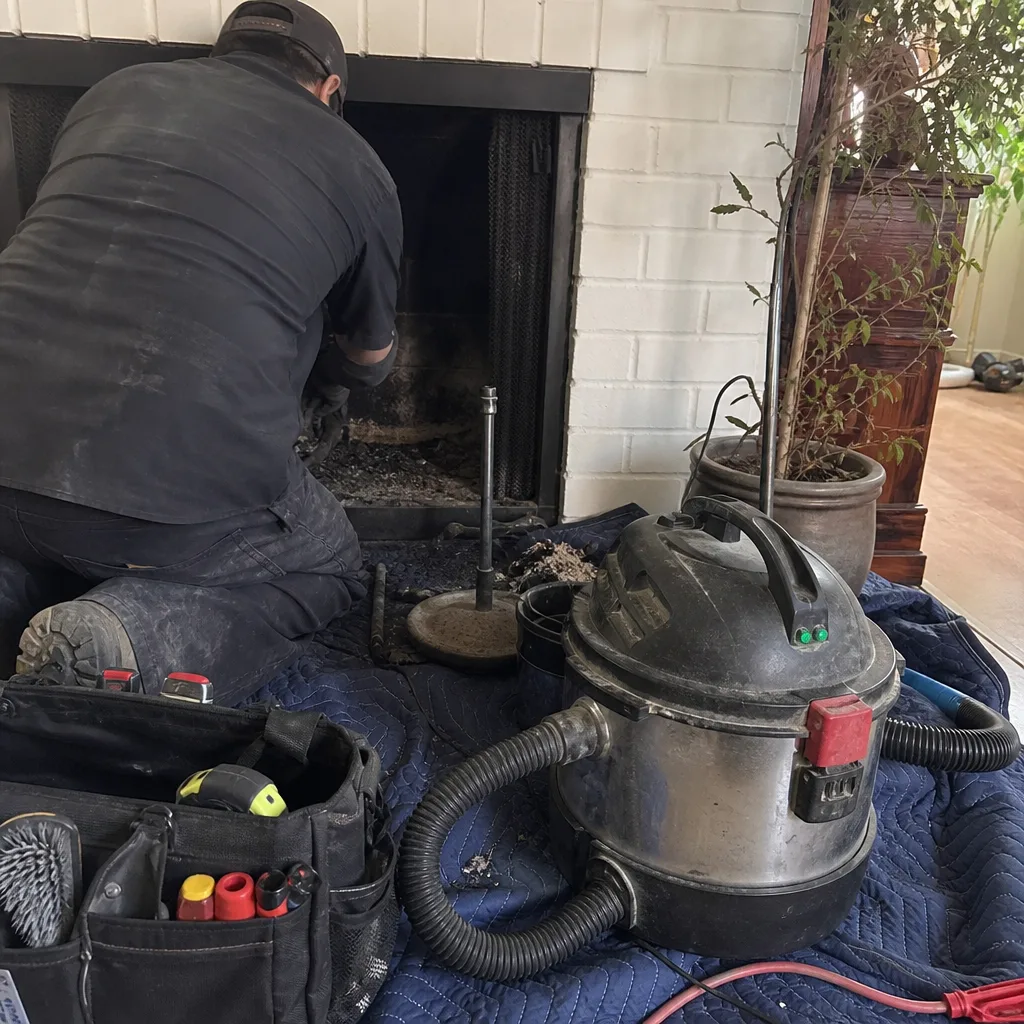 Before
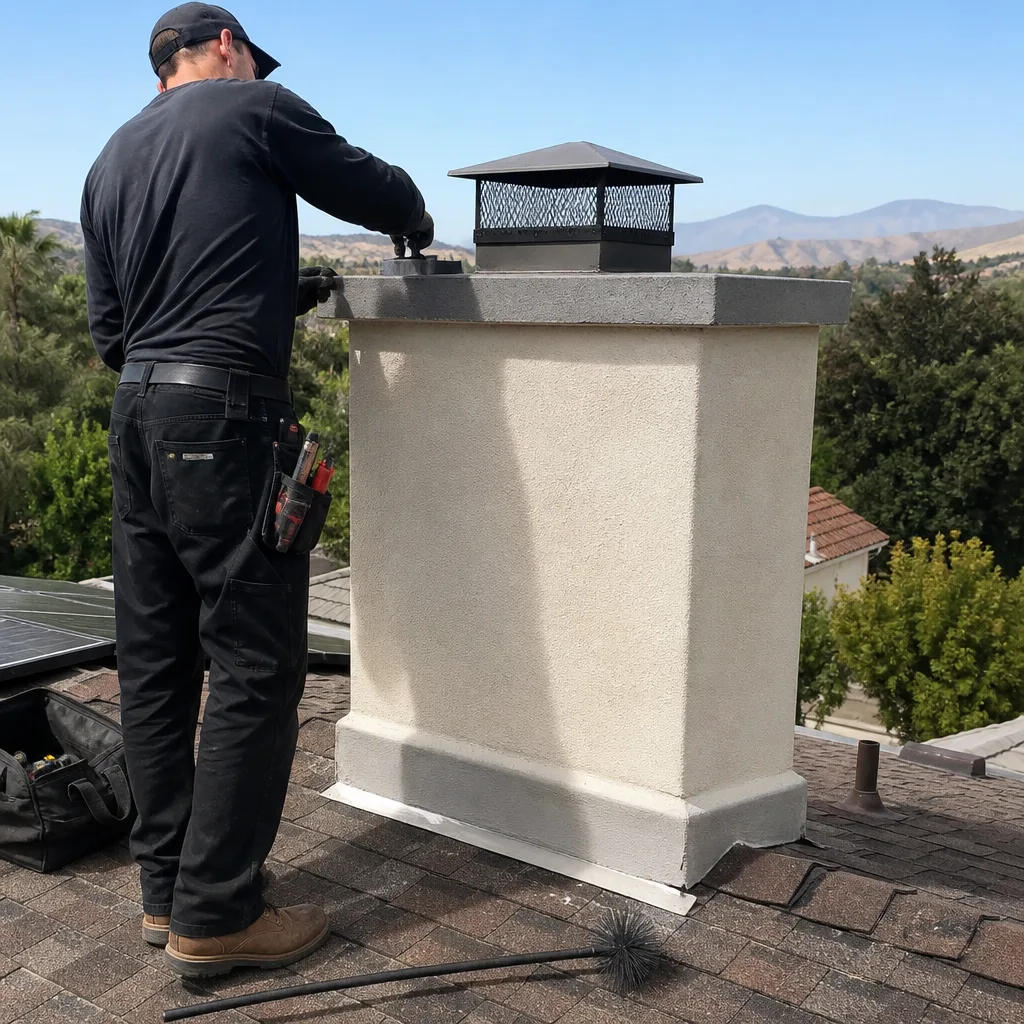 After
AfterDIY vs Professional Chimney Cleaning: The Santa Clarita Homeowner’s Decision Guide
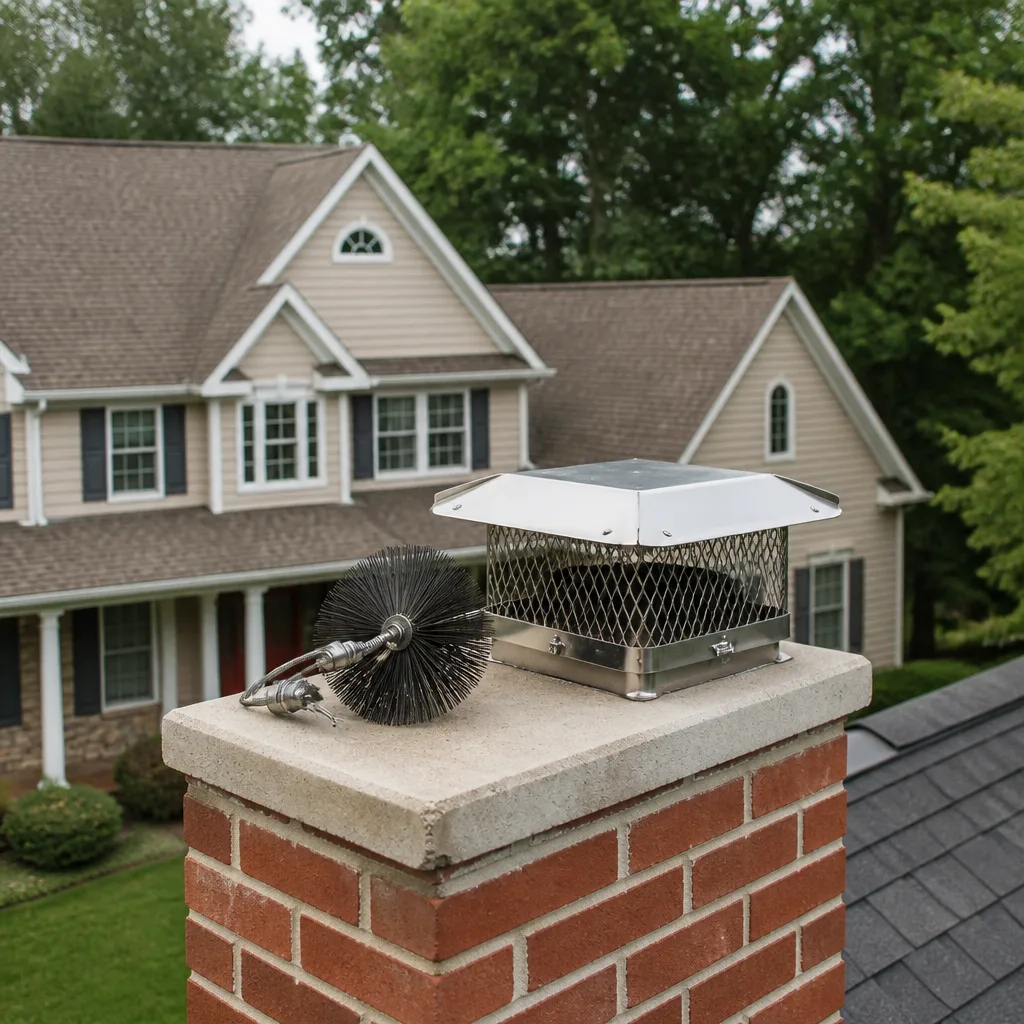
The chimney brush kit costs $80 at the hardware store, and it will remove loose soot. It will not tell you whether your flue tiles are cracked, whether your smoke chamber is eroding, or whether your insurer will cover a fire in a flue with no inspection record on file - and those are the three things that actually determine your risk. In Santa Clarita, where Santa Ana wind events push embers through compromised flues and where home sales routinely trigger Level 2 inspection requirements during escrow, the documentation gap between DIY cleaning and professional service is where the real cost lives. This guide walks through what a homeowner can actually accomplish, what remains invisible without a camera scan, and how to calculate whether the $80 kit saves money or simply defers it. For more guides & resources on protecting your home, see our Santa Clarita chimney care library.
Quick Answer
DIY chimney cleaning in Santa Clarita can safely remove loose soot from accessible firebox surfaces in a recently inspected, properly functioning system. It cannot detect cracked flue tiles, eroded smoke chambers, or Class III creosote buildup, and it produces no inspection record that insurers or home buyers will accept. For most Santa Clarita homeowners, professional cleaning with NFPA 211 Level 2 camera documentation pays for itself through insurance compliance, sale-readiness, and early detection of conditions that cost $3,000-$8,000 to repair if ignored.
Table of Contents
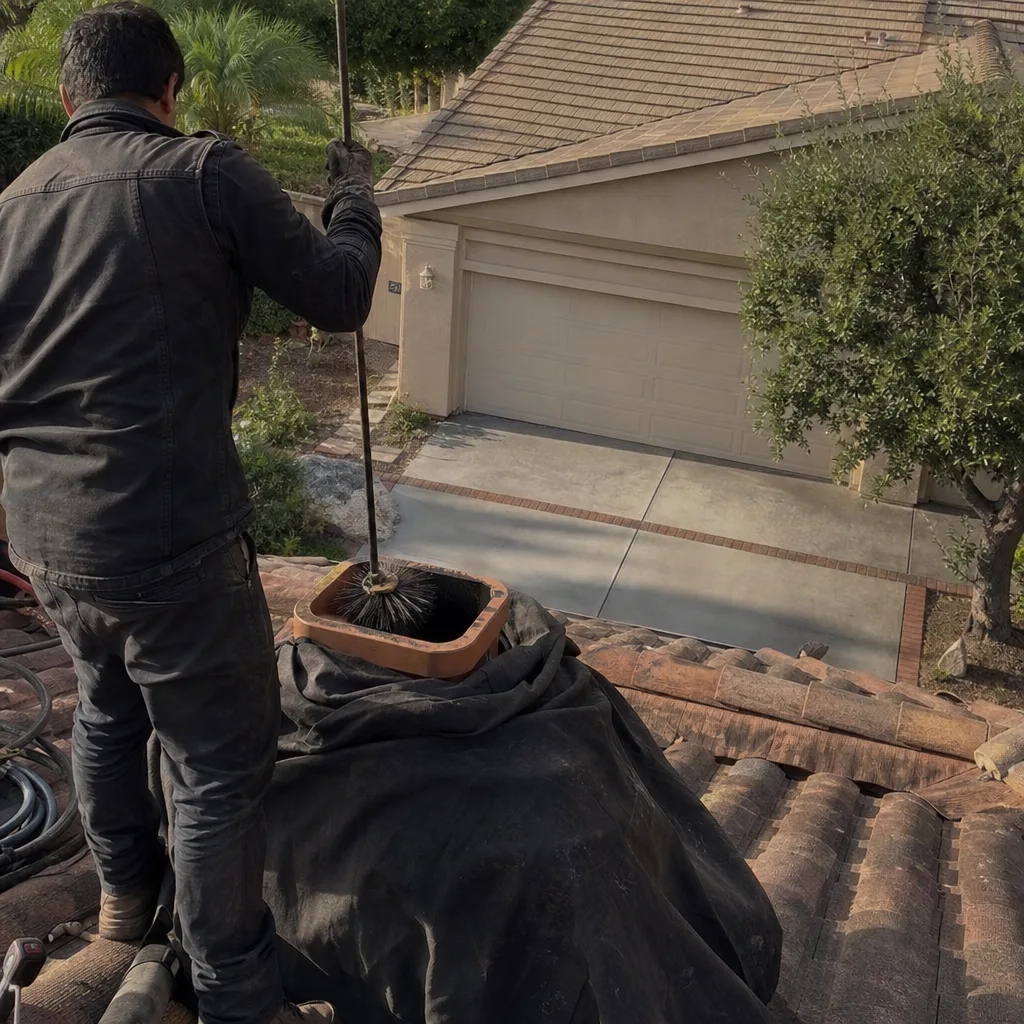
- What DIY Chimney Cleaning Actually Accomplishes
- The Camera-Scan Gap: What DIY Cannot Detect
- How California Insurance Treats Professional vs. DIY Records
- The Home-Sale Reality: Escrow Inspections Eliminate DIY Savings
- True Cost Comparison in Santa Clarita
- When DIY Cleaning Is a Reasonable Interim Step
- Santa Clarita-Specific Risks and Conditions
- What Professional Service Actually Includes
 Before
 After
AfterWhat DIY Chimney Cleaning Actually Accomplishes
A homeowner with a basic brush kit, a shop vacuum with HEPA filtration, and a flashlight can accomplish specific, limited work. Understanding exactly where those limits fall prevents the dangerous assumption that a clean-looking firebox means a safe system.
What You Can Legitimately Do
- Remove loose soot from firebox walls. Dry, flaky deposits that haven’t bonded to masonry respond well to manual brushing. This improves appearance and reduces dust circulation into living spaces.
- Clear debris from the smoke shelf. Leaves, animal nesting material, and loose ash accumulation can be vacuumed out through the firebox opening in many standard masonry fireplaces.
- Inspect visible firebox components for obvious damage. Cracked firebrick, missing mortar, or deteriorated throat dampers can be spotted without specialized equipment.
- Check the chimney cap and crown from ground level or roof edge. Visible gaps, rust streaks, or displaced caps indicate needed service but don’t constitute a flue inspection.
What You Cannot Do, Regardless of Skill
- Reach the full flue length in most Santa Clarita homes, where two-story construction with steep-pitch roofs creates 25-35 foot vertical runs that require sectional rods and proper anchoring
- Remove glazed or tar-like creosote (Class III), which requires rotary mechanical treatment or chemical modification - brushing alone hardens it further
- Inspect flue liner joints, which fail most commonly at the offset where the flue transitions through the smoke chamber, 8-12 feet above the firebox and invisible from below
- Evaluate draft performance or measure carbon monoxide spillage, which requires calibrated equipment
- Document findings in a format accepted by insurers, real estate transactions, or the California Building Code
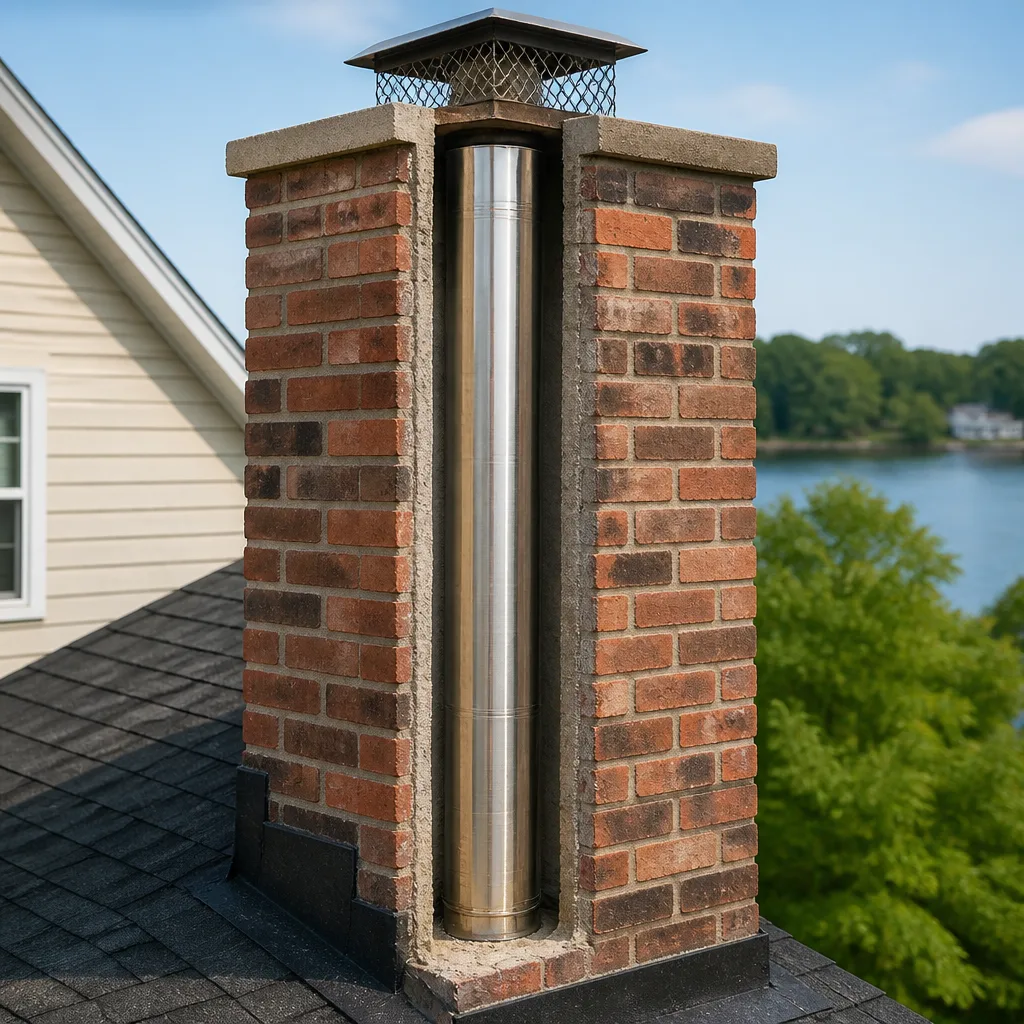
The distinction matters because many Santa Clarita homes built during the 1980s-2000s construction boom used clay flue tile liners with known thermal-shock vulnerability. These liners can look intact from the firebox while displaying hairline fractures or spalled surfaces 15 feet up - exactly where combustion gases concentrate and exactly where a brush kit never reaches.
The Camera-Scan Gap: What DIY Cannot Detect
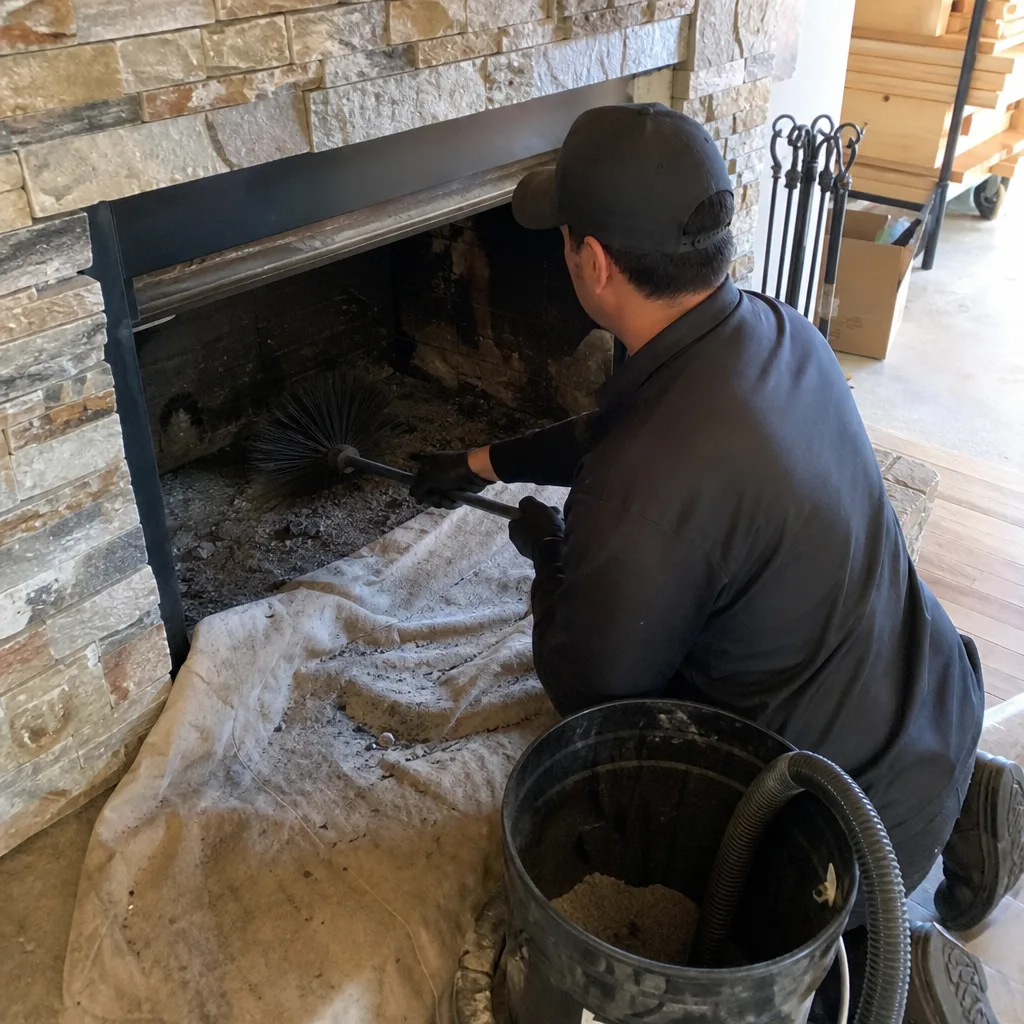
NFPA 211 Level 2 inspection requires a camera scan of the entire flue interior. This isn’t regulatory excess. It’s the only method that reveals conditions that determine whether your chimney functions as a vent or as a liability.
Specific Conditions We Document on Santa Clarita Jobs
In Valencia and Saugus, we regularly find vertical cracks in flue tiles caused by thermal cycling during Santa Ana wind events, when rapid temperature shifts stress clay liners already weakened by decades of use. The cracks run longitudinally, invisible from above or below, and allow combustion gases to penetrate surrounding masonry. A brush kit passes right over them.
In Canyon Country and Newhall, older homes with poured pumice liners show erosion at the smoke chamber throat - the transition area where the rectangular firebox meets the round flue. This erosion increases turbulence, reduces draft, and deposits creosote in patterns that accelerate buildup. No amount of brushing from below reveals the depth of material loss.
In Stevenson Ranch and the newer Sand Canyon developments, we’ve documented factory-built metal chimney systems with separated inner-wall joints, often caused by seismic movement or improper original installation. The separation creates a second pathway for exhaust, potentially overheating surrounding framing. These systems require specific Gelco or Olympia Chimney replacement components matched to the original listing - not generic hardware store parts.
The Documentation Value
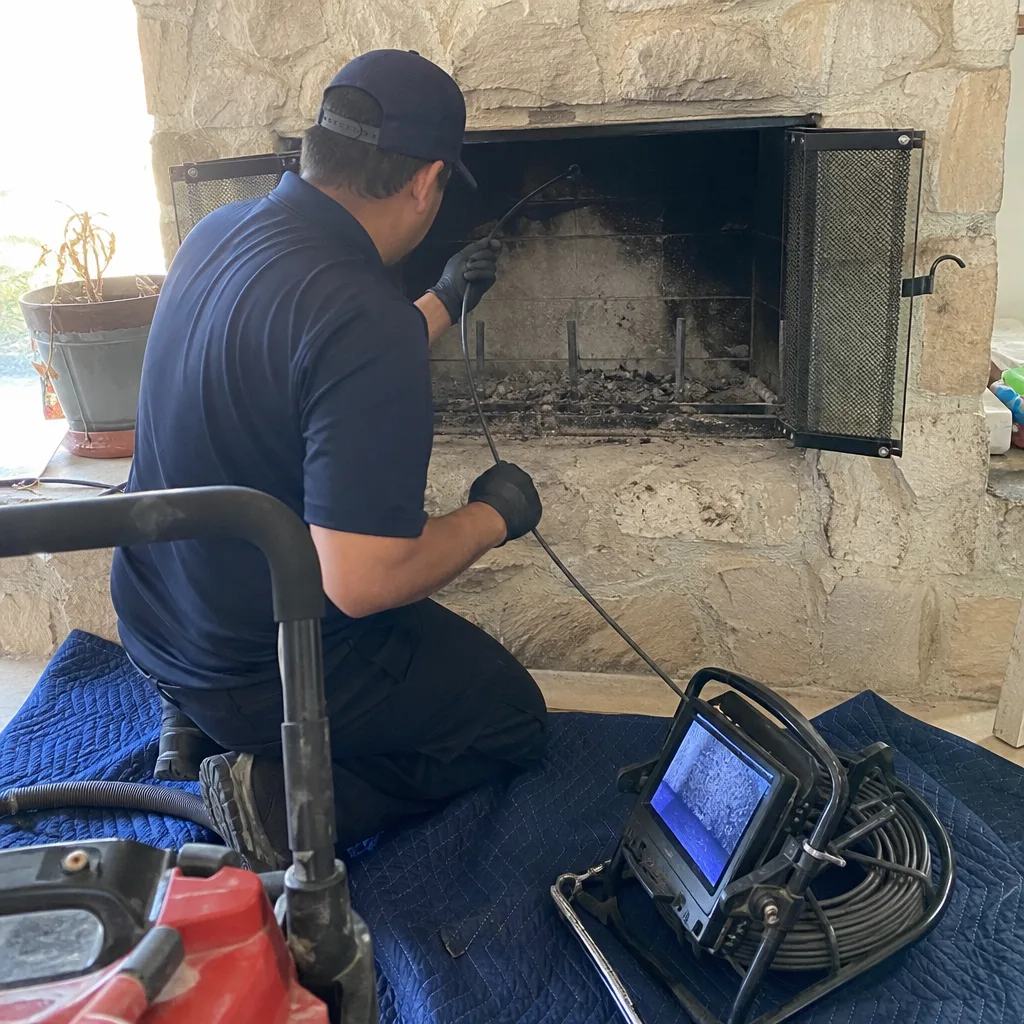
Clause 4 of the Haven Standard requires a photo record on every job. Our technicians deliver dated, geotagged images of the full flue scan, the smoke chamber, the firebox, and the exterior crown and cap. This record serves as:
- Proof of system condition for insurance underwriting
- Baseline for future comparison - change over time is often more significant than any single finding
- Required documentation for home sale disclosures in Santa Clarita’s competitive market
- Evidence in warranty claims for factory-built chimney components
A homeowner’s $80 brush kit produces none of this. The gap isn’t in cleaning effort. It’s in evidentiary value.
How California Insurance Treats Professional vs. DIY Records
California homeowner’s insurance policies contain standard language requiring “proper maintenance” of heating systems, including fireplaces and wood stoves. What “maintained” means in a claims context has shifted significantly, and the shift disadvantages DIY cleaning.
The Claims Environment
After 2017-2018 wildfire losses, California insurers tightened subrogation and claims investigation. A chimney fire claim now typically triggers a records request: when was the chimney last professionally inspected and cleaned? The homeowner who answers “I clean it myself every year” faces a coverage determination that hinges on whether that cleaning met the policy’s maintenance requirement.
Most policies don’t explicitly define “professional” versus “DIY” maintenance. But insurers increasingly reference NFPA 211 standards in coverage disputes, and NFPA 211 specifies Level 1 or Level 2 inspection protocols that require trained personnel. A brush kit in a garage doesn’t satisfy this reference standard.
What We’ve Seen in Santa Clarita
We don’t handle claims directly, but we’ve been called to document chimney condition after fires in Val Verde, Castaic, and the Santa Clarita Valley foothills. In cases where no professional inspection record existed, we’ve watched insurers assign partial or denied coverage based on maintenance failure - even when the fire’s origin was unrelated to chimney condition. The absence of documentation became the determinative factor.
The cost calculation changes when you include this risk. Professional Chimney Cleaning & Sweep in Santa Clarita runs $199-$349 for standard service with Level 2 inspection. A denied fire claim runs $50,000-$400,000 in structure and content loss. The documentation isn’t a surcharge. It’s a policy compliance mechanism with explicit financial value.
The Home-Sale Reality: Escrow Inspections Eliminate DIY Savings
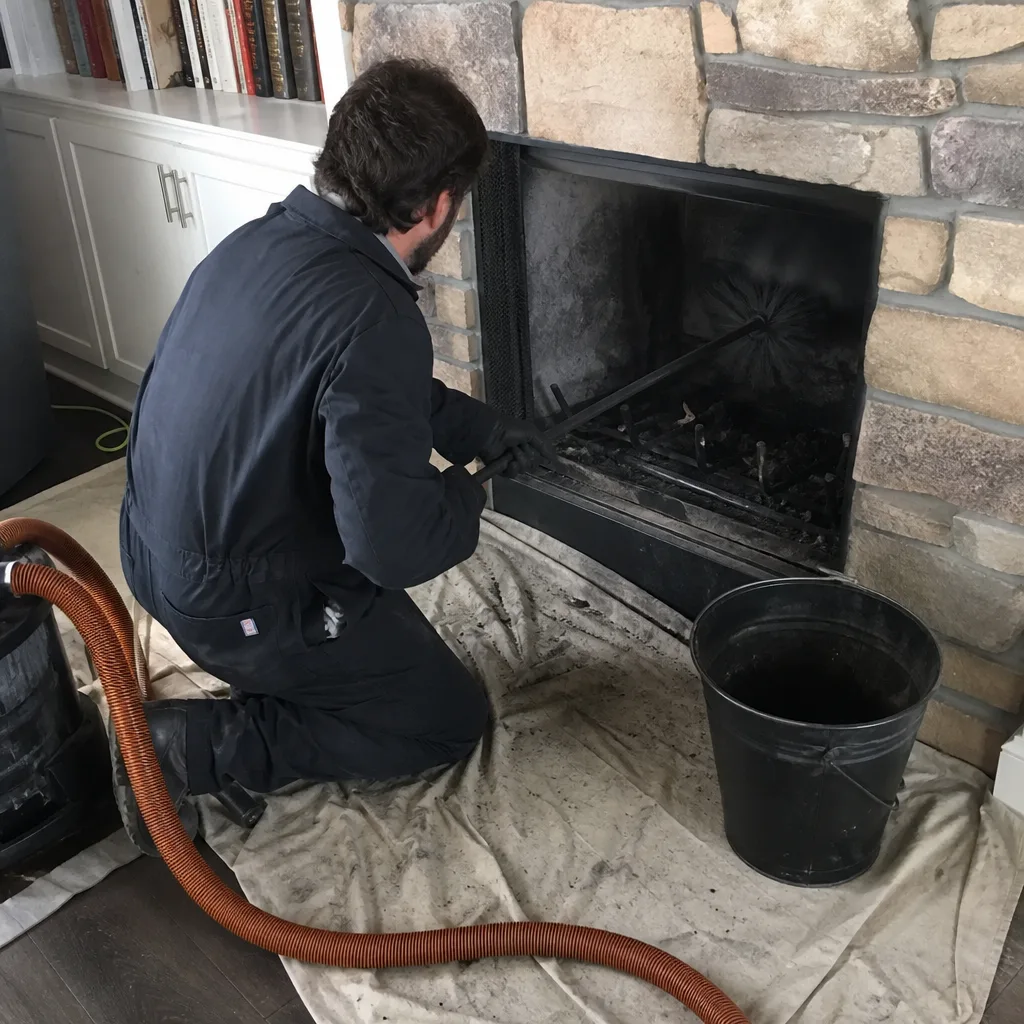
Santa Clarita’s housing market moves fast, and contingency periods have compressed. Buyers and their insurers increasingly require professional chimney documentation before close of escrow. A DIY-cleaned chimney with no inspection record doesn’t satisfy this requirement - it triggers it.
The Escrow Timeline Problem
Here’s how the sequence actually plays out:
- Homeowner cleans chimney DIY for years, saving perhaps $150-$200 annually.
- Home goes on market in Canyon Country or Valencia. Buyer submits offer with inspection contingency.
- Buyer’s inspector notes “chimney condition unknown - recommend professional Level 2 inspection.”
- Escrow timeline: 7-10 days to schedule, perform, and document inspection; 2-3 days for report delivery; potential repair negotiation if defects are found.
- If defects exist, repair quotes add 5-14 days. Meanwhile, other offers stack up.
- Original DIY savings: perhaps $600-$1,000 over five years. Cost in delayed close, repair urgency premium, or lost buyer: potentially far more.
The critical point: defects discovered during escrow inspection must be disclosed to all subsequent buyers if the deal fails. There’s no putting the information back. A pre-listing professional inspection with clean documentation removes this variable entirely.
When Sellers Call Us
We receive calls weekly from Santa Clarita listing agents requesting “fast chimney inspection for escrow.” The urgency premium is real - rushed scheduling, weekend rates, expedited reporting. These costs exceed standard service pricing by 30-50%. The homeowner who maintained annual professional documentation avoids this scenario and can present a multi-year condition history that supports asking price.
True Cost Comparison in Santa Clarita
The hardware store brush kit costs $80. Professional service with Level 2 inspection in Santa Clarita ranges by system type and accessibility. For a detailed Chimney Cleaning Cost Breakdown: The Santa Clarita Homeowner’s Reference for 2026, see our dedicated pricing guide. Here’s the actual math:
| Service Component | DIY Approach | Professional Service (Level Two) |
|---|---|---|
| Initial equipment | $80 brush kit, $40 HEPA vacuum rental | Included in service |
| Firebox surface cleaning | Yes - limited effectiveness | Yes - rotary tools, industrial HEPA extraction |
| Full flue cleaning to cap | No - most Santa Clarita flues exceed safe DIY reach | Yes - sectional rods, power sweeping as needed |
| Camera scan documentation | No | Yes - NFPA 211 Level 2, Clause 4 Haven Standard |
| Written condition report | No | Yes - dated, with photos, scope, and warranty |
| Insurer-accepted record | No | Yes - 38,000+ documented jobs since 2009 |
| Repair quote if needed | No - must call professional anyway | Yes - written price before work starts, Clause 1 Haven Standard |
| Annual recurrence | $80 kit replacement every 2-3 years | $199-$349 standard masonry; $249-$449 factory-built or insert |
The break-even analysis depends on how you value documentation. If your chimney never needs repair, never faces insurance scrutiny, and never sells, DIY cleaning saves $120-$270 annually. If any of those conditions apply - and for most Santa Clarita homeowners, at least one will - professional service with documentation pays for itself at first use.
We also offer a Free Second Opinion on any written estimate. Bring us a competitor’s quote. We’ll review scope, materials, and pricing against what we find in your flue.
When DIY Cleaning Is a Reasonable Interim Step
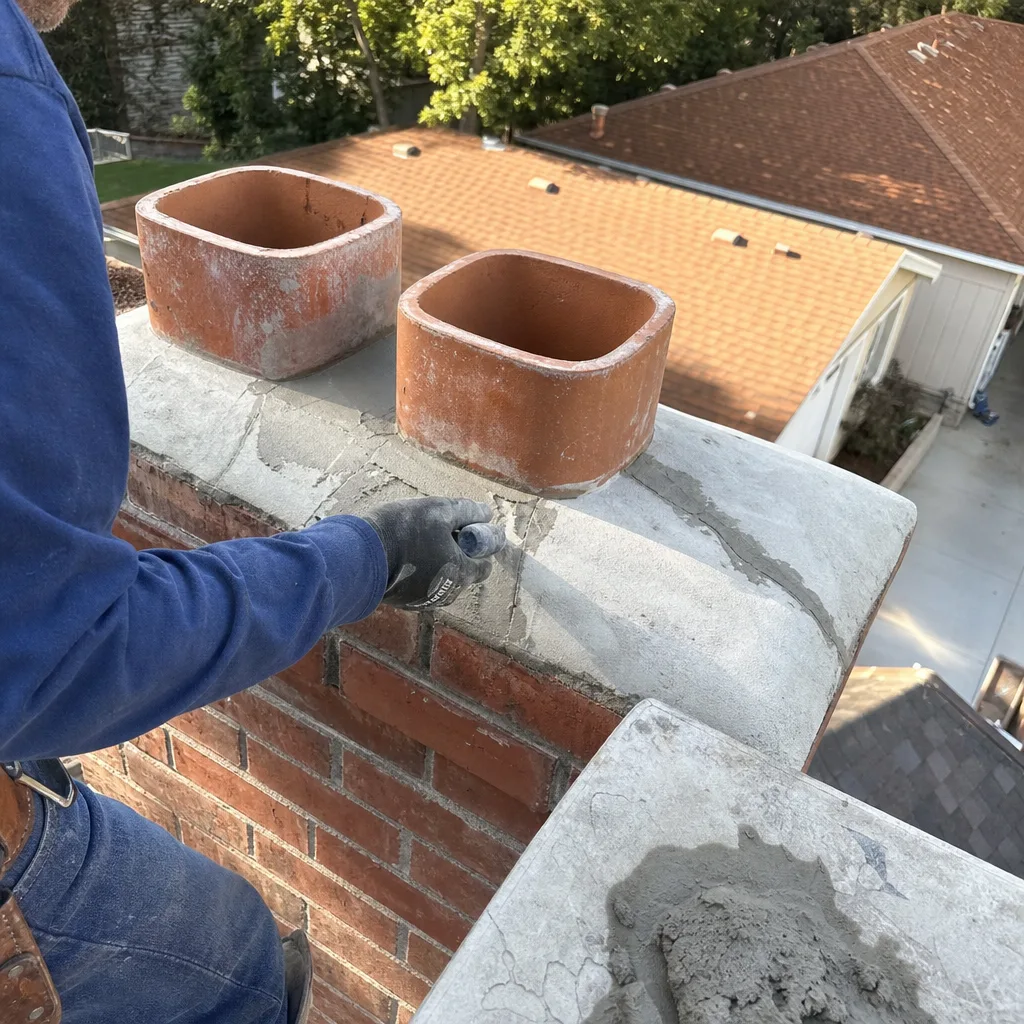
There are specific, narrow conditions where DIY cleaning between professional services is appropriate and even sensible. The key is recognizing that these conditions are temporary and bounded.
Appropriate DIY Scenarios
- Recently documented system: Professional Level 2 inspection within 12 months showed clean flue, intact liner, no deferred maintenance. Light use (fewer than 20 fires) since inspection.
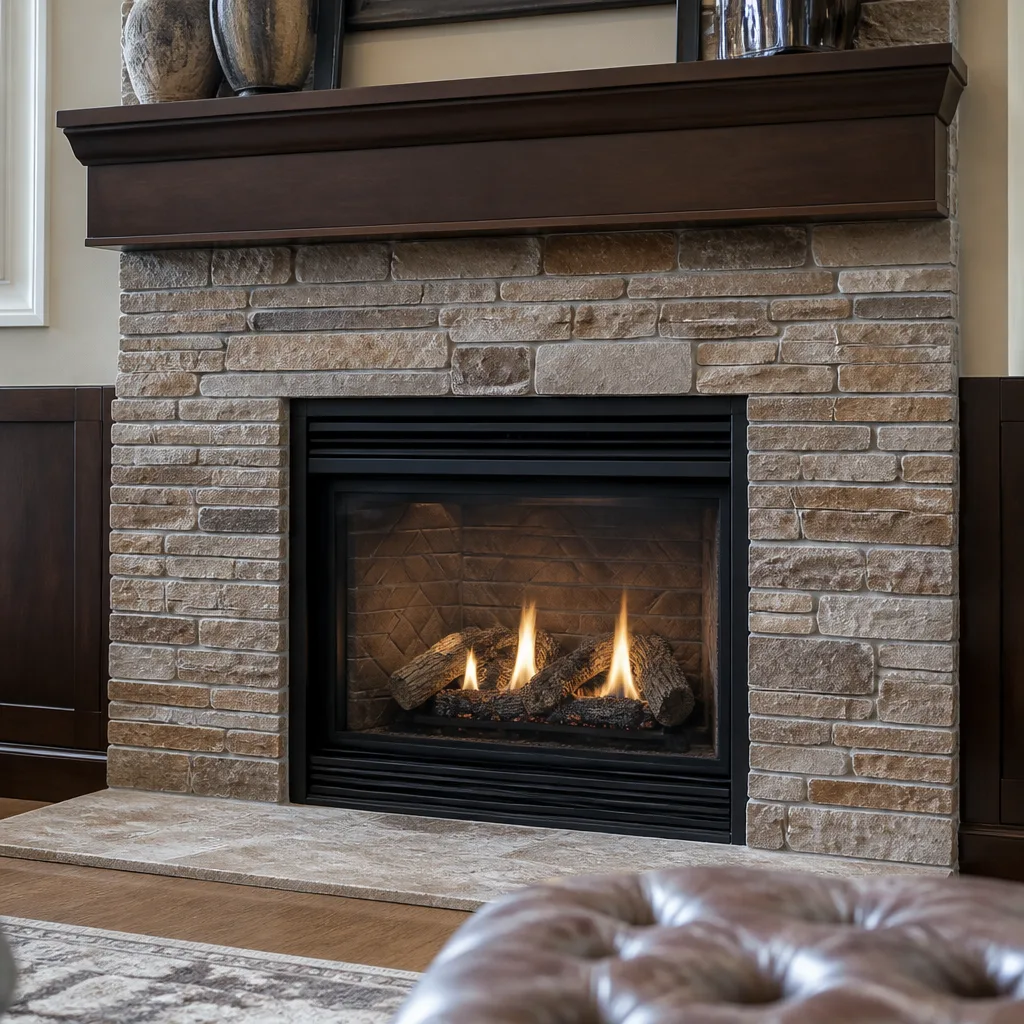
- Gas log set with minimal sooting: Decorative gas appliances produce minimal residue; surface dusting and glass cleaning are homeowner-appropriate.
- Between scheduled professional sweeps: Annual professional service in October; homeowner removes ash accumulation in February to improve draft and reduce odor.
- Post-storm debris removal: Santa Ana winds deposit leaves and dust on the smoke shelf; careful vacuuming is safe if the damper and flue condition are known good.
Conditions That Override DIY Appropriateness
Regardless of homeowner skill or confidence, DIY cleaning is inappropriate when:
- The system hasn’t been professionally inspected - you cannot assess what you cannot see
- Any smoke spillage, odor, or draft problem has occurred - these indicate functional issues, not cleanliness issues
- Class III (glazed, tar-like) creosote is suspected - mechanical removal risks igniting it
- The home is pre-1980 with original clay liner - thermal shock damage probability increases with age
- Any factory-built metal chimney shows rust, separation, or discoloration - these systems have specific replacement protocols using listed components from manufacturers like Gelco or Olympia Chimney
- The homeowner cannot safely access the roof to inspect cap and crown condition
In Santa Clarita’s hilly terrain, roof access itself is often hazardous. Many Canyon Country and Sand Canyon homes have pitch angles and heights that require fall protection equipment most homeowners don’t own.
Santa Clarita-Specific Risks and Conditions
Local geography and climate create chimney conditions that differ from coastal or inland valley environments. Understanding these specifics - covered in our Seasonal Chimney Cleaning Care for Santa Clarita: Year-Round Homeowner’s Guide - explains why Santa Clarita homeowners face different risk profiles than Los Angeles or Bakersfield residents.
Santa Ana Wind Events
The dry, high-velocity Santa Ana winds that sweep through Santa Clarita Valley in fall and winter create unique chimney stress. Rapid pressure changes can reverse draft in marginal systems, pushing smoke and embers into living spaces. Wind-driven rain enters cap gaps and crown cracks, accelerating freeze-thaw damage during cold nights. We’ve documented more crown deterioration in Santa Clarita’s wind-exposed ridges - parts of Valencia, Stevenson Ranch, and the foothills above Newhall - than in sheltered valley floors.
Seismic and Soil Conditions
Santa Clarita’s location on the San Gabriel fault system means continuous micro-movement. Masonry chimneys are rigid structures in flexible environments. Hairline cracks in flue tiles, separations in factory-built chimney joints, and settling-related smoke chamber distortion are all more common here than in seismically stable regions. The camera scan detects movement-related damage that develops between inspections.
Wildfire Interface Zones
Homes in the wildland-urban interface - parts of Sand Canyon, Bouquet Canyon, and the northern Santa Clarita Valley - face additional scrutiny. Insurance requirements often mandate professional chimney documentation as a condition of coverage in these zones. DIY cleaning doesn’t satisfy this mandate regardless of thoroughness.
Local Code and Permit Context
Los Angeles County, which governs unincorporated Santa Clarita areas, requires permits for chimney rebuilds, liner replacements, and certain repairs. Professional service includes permit guidance; DIY cleaning provides no pathway to permitted repair when needed. We’ve handled jobs where homeowners discovered during sale that unpermitted work - even well-intentioned repairs - required costly remediation to satisfy title requirements.
What Professional Service Actually Includes
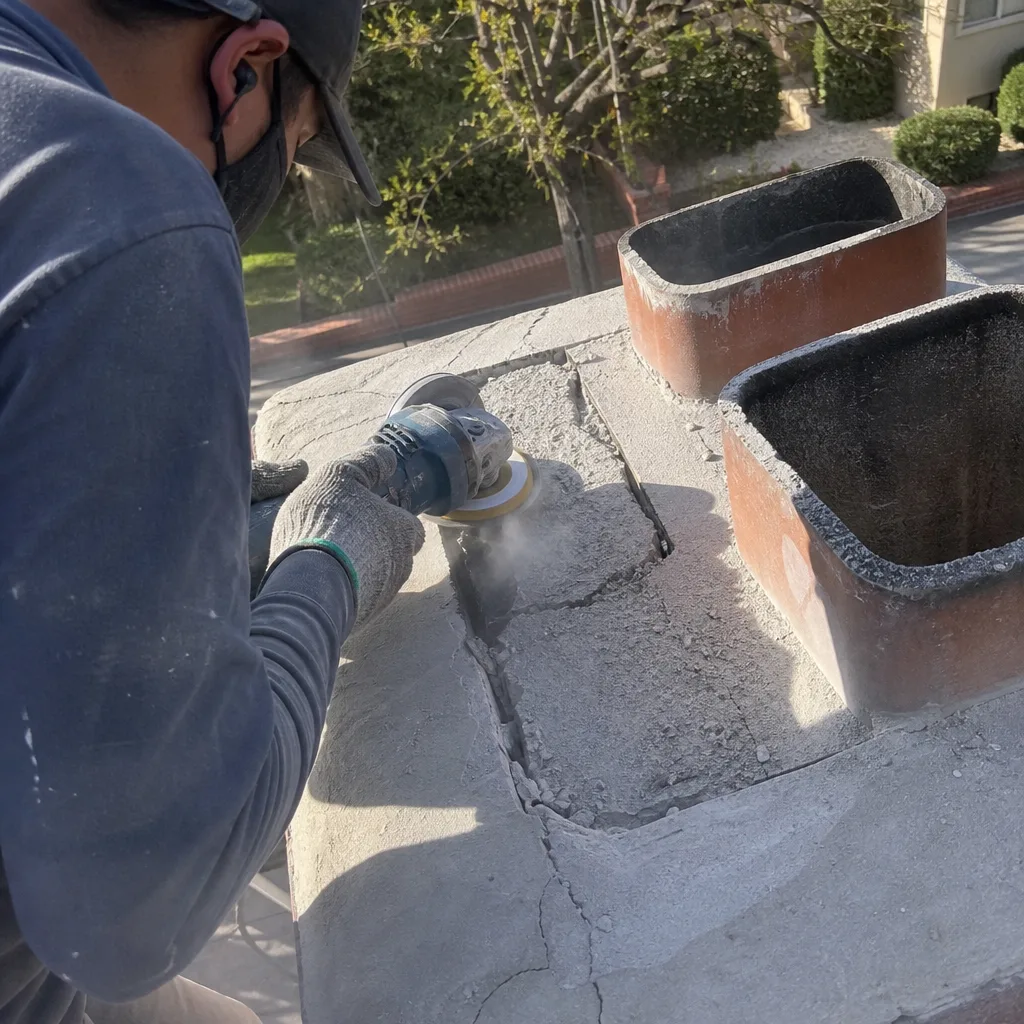
Understanding what professional service delivers helps evaluate whether the cost differential is justified. At Level Two Chimney Santa Clarita home, our process reflects the Haven Standard we’ve operated under since 2009.
Pre-Service: Written Price Before Work Starts
Clause 1 of the Haven Standard requires a written price, written scope, and written warranty before any work begins. Our technician arrives, performs a preliminary assessment, and delivers a printed or emailed quote. No work proceeds without explicit authorization. This eliminates the common industry practice of “discovering” additional charges after work is underway.
During Service: Documented Inspection and Cleaning
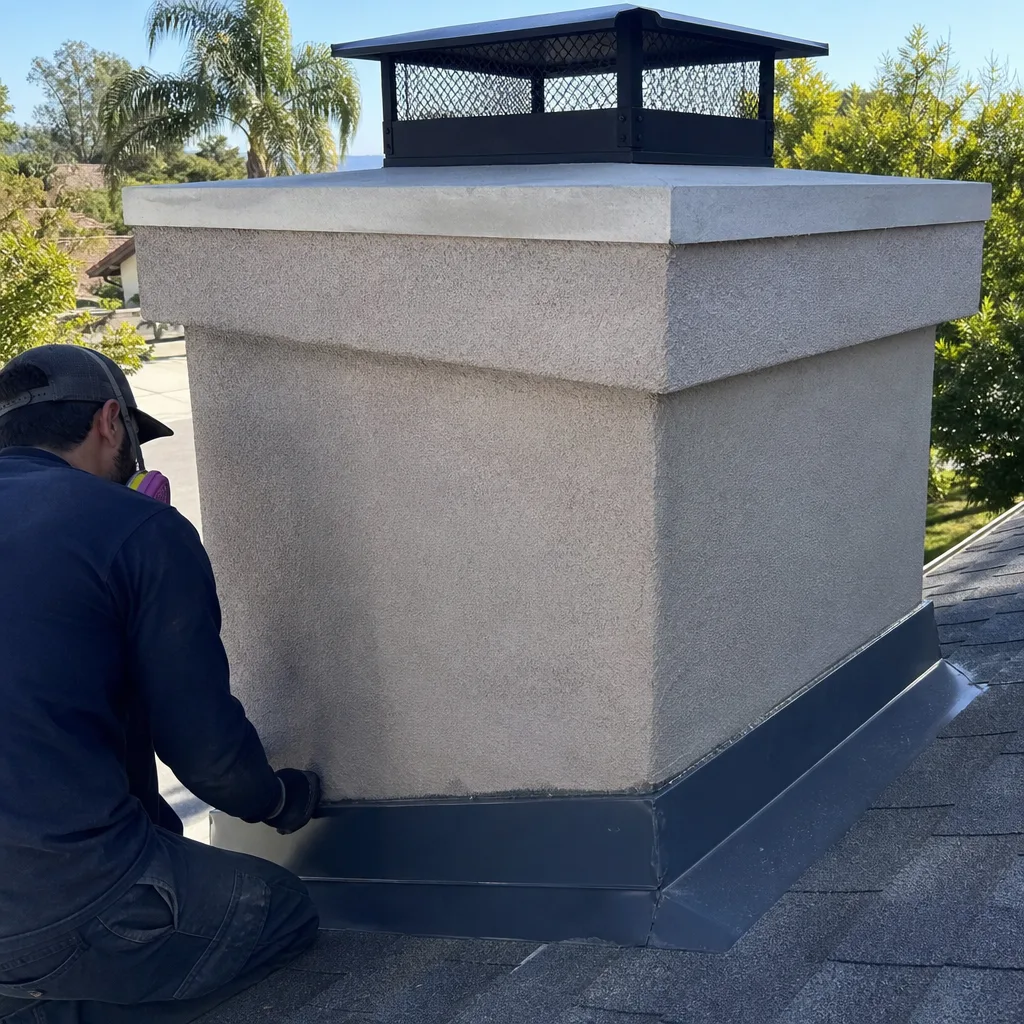
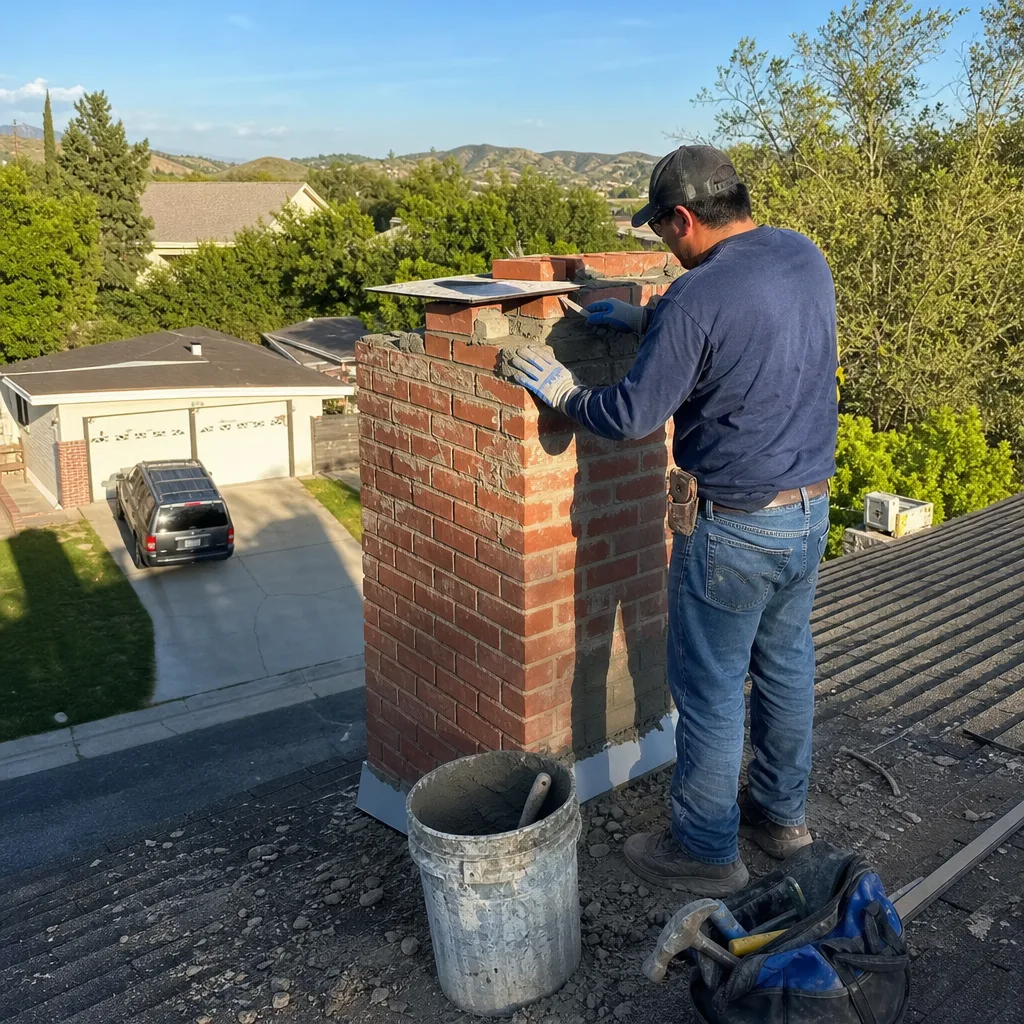
- Exterior evaluation: Crown, cap, flashing, and visible masonry condition from roof level, with photos.
- Firebox and smoke chamber inspection: Visual and tactile assessment of brick, mortar, damper, and throat condition.
- Camera scan: Full-length flue video documentation, with narration of findings. The homeowner may view in real time or receive the recording.
- Cleaning: Rotary power sweeping or manual brushing as appropriate for creosote class and liner type. Industrial HEPA containment prevents dust migration.
- Final documentation: Photo record of cleaned condition, written report with findings and recommendations, and warranty documentation.
Post-Service: Ongoing Record
Every job enters our archive - 38,000+ records since 2009. Returning customers receive year-over-year comparison. This longitudinal view often reveals gradual changes invisible in any single inspection: liner deterioration progression, creosote accumulation rate changes, or crown crack development that suggests structural movement.
Materials for any needed repair are sourced through our Haven buying network from DuraFlex, HeatShield, Gelco, Olympia Chimney, Famco, and Copperfield. This procurement relationship maintains pricing transparency and ensures listed-component compliance for factory-built systems.
The 365-Day Done Right Promise applies to every job. If it’s not done right, we make it right. No expiration negotiation, no claim forms.
Common Mistakes to Avoid
- Assuming a clean firebox means a clean flue. The firebox is the visible 10%; the flue is the functional 90%. We’ve found Class III creosote in flues whose fireboxes looked showroom-clean.
- Using a brush kit on glazed creosote. Mechanical brushing hardens glazed deposits, making professional removal more difficult and expensive. If residue is shiny, black, and tar-like, stop and call for rotary treatment.
- Neglecting the smoke chamber. This transition area is where most chimney fires originate, and it’s invisible from standard homeowner positions. In Santa Clarita’s 1970s-1990s construction, parged smoke chambers often show dangerous erosion.
- Ignoring factory-built chimney specifications. Metal chimney systems require listed replacement parts. Generic caps or improper sealants from hardware stores void warranties and create liability. We source correct components from Gelco, Olympia Chimney, and other listed manufacturers.
- Skipping post-storm inspection. Santa Ana winds and winter rains damage caps and crowns. A quick ground-level look misses lifted flashing or cracked crown wash that allows water into the flue system.
- Documenting nothing. Photos on your phone don’t constitute an inspection record. Insurers and buyers require dated, professional documentation with methodology noted.
- Delaying professional service after buying a home. New homeowners in Valencia or Stevenson Ranch often inherit chimneys with unknown history. The inspection during purchase was general, not chimney-specific. Budget for professional Level 2 service in year one.
When to Call a Professional
Call a professional when the chimney hasn’t been inspected in over a year, when any functional problem exists, when the home is being prepared for sale, or when insurance documentation is required. Call immediately if you’ve experienced a chimney fire, smoke spillage, or visible damage after seismic activity or high wind.
Level Two Chimney Santa Clarita offers free estimates throughout Santa Clarita, Valencia, Saugus, Canyon Country, Newhall, Stevenson Ranch, and surrounding areas. Browse our more guides & resources for additional homeowner information. Our technicians are background-checked, uniformed, and named before arrival - you’ll receive a text when your tech is en route. Calls are answered live, 24 hours a day. For a written price before any work starts, call (747) 294-2146.
Frequently Asked Questions
Standard masonry chimney cleaning with NFPA 211 Level 2 camera inspection runs $199-$349 in Santa Clarita, depending on accessibility, flue condition, and creosote class. Factory-built metal chimneys and fireplace inserts typically range $249-$449 due to additional disassembly and component-specific knowledge required. We deliver a written price before work starts - no exceptions, no surprises. Call (747) 294-2146 for an exact quote; estimates are free.
A damaged flue liner cannot be safely ignored. Cracked clay tiles or corroded metal liners allow combustion gases to penetrate surrounding masonry or framing, creating fire and carbon monoxide risks. However, not every imperfection requires immediate replacement. We classify liner conditions as monitor, repair, or replace, and we show you the camera footage that supports our recommendation. Some conditions can be addressed with HeatShield resurfacing; others require DuraFlex stainless steel relining. Nothing is recommended without photo evidence you can see yourself. Call (747) 294-2146 for a documented assessment.
NFPA 211 recommends annual inspection for all chimneys, with cleaning frequency determined by use and fuel type. Wood-burning systems used regularly during Santa Clarita’s November-March burning season typically need annual sweeping. Gas systems may extend to every 2-3 years if inspection shows minimal sooting. The determining factor isn’t calendar time alone - it’s creosote accumulation rate, which varies with wood moisture, burning practices, and flue draft performance. Our documented records track your specific accumulation pattern.
Skipped maintenance leads to progressive, often invisible deterioration. Creosote accumulates, reducing flue diameter and increasing fire risk. Moisture entry degrades mortar and liner. Small cracks become large separations. The cost curve is non-linear: annual maintenance at $199-$349 prevents repairs that commonly run $3,000-$8,000 for liner replacement or $8,000-$15,000 for partial rebuild. In insurance or sale contexts, skipped maintenance becomes a documented liability. Call (747) 294-2146 to restart a maintenance record; we don’t judge prior neglect - we document current condition and provide a forward path.
You can, but the economics rarely work. Our service price includes cleaning because inspection after DIY cleaning still requires full setup, access, and documentation. A “clean” flue that hasn’t been professionally swept often requires additional work to reach inspectable condition - residual soot obscures camera views, and improper brushing can deposit debris at liner joints that must be removed. The bundled service is priced competitively; separating components doesn’t reduce cost and may increase it.
Yes, though the service profile differs. Gas systems produce minimal creosote but still require inspection for deteriorated liners, moisture damage, venting configuration, and appliance connection integrity. In Santa Clarita, we’ve found bird nesting in unused gas flues, deteriorated B-vent connectors, and improper conversions from wood to gas that create combustion hazards. Fireplace Services in Santa Clarita includes gas-specific inspection protocols with combustion analysis where indicated.
No. Home inspectors in Santa Clarita’s active market routinely recommend professional Level 2 chimney inspection regardless of visible cleanliness. A DIY cleaning produces no documentation of flue condition, liner integrity, or compliance with NFPA 211. The buyer’s insurer may specifically require professional inspection records. The DIY cleaning becomes sunk cost - it doesn’t advance the sale and may delay it if defects are discovered late in escrow. Pre-listing professional service with clean documentation removes this contingency entirely.
The Bottom Line
The $80 brush kit removes loose soot. It does not inspect, document, or protect against the conditions that actually cause chimney fires and insurance disputes. In Santa Clarita’s specific environment - Santa Ana winds, seismic activity, active real estate market, and tightened insurance standards - the documentation produced by professional NFPA 211 Level 2 service carries concrete financial value that usually exceeds the DIY cost savings.
Calculate honestly: annual professional service at $199-$349, with written price before work, camera documentation, and archived records, versus the deferred cost of escrow-rush inspection, repair urgency premiums, insurance disputes, or undetected damage progression. For most Santa Clarita homeowners, especially those in 1980s-2000s construction with original clay liners, professional service isn’t the expensive option. It’s the option that prevents expensive surprises.
We’ve completed more than 38,000 chimney inspections and cleanings since 2009. Every one had a written price before work started and a documented record when it was done. That practice became Clause 4 of the Haven Standard because evidence matters more than assurance.
Written by Corrine Halstead, Owner at Level Two Chimney Santa Clarita, serving Santa Clarita since 2009.