
Last updated September 21, 2026
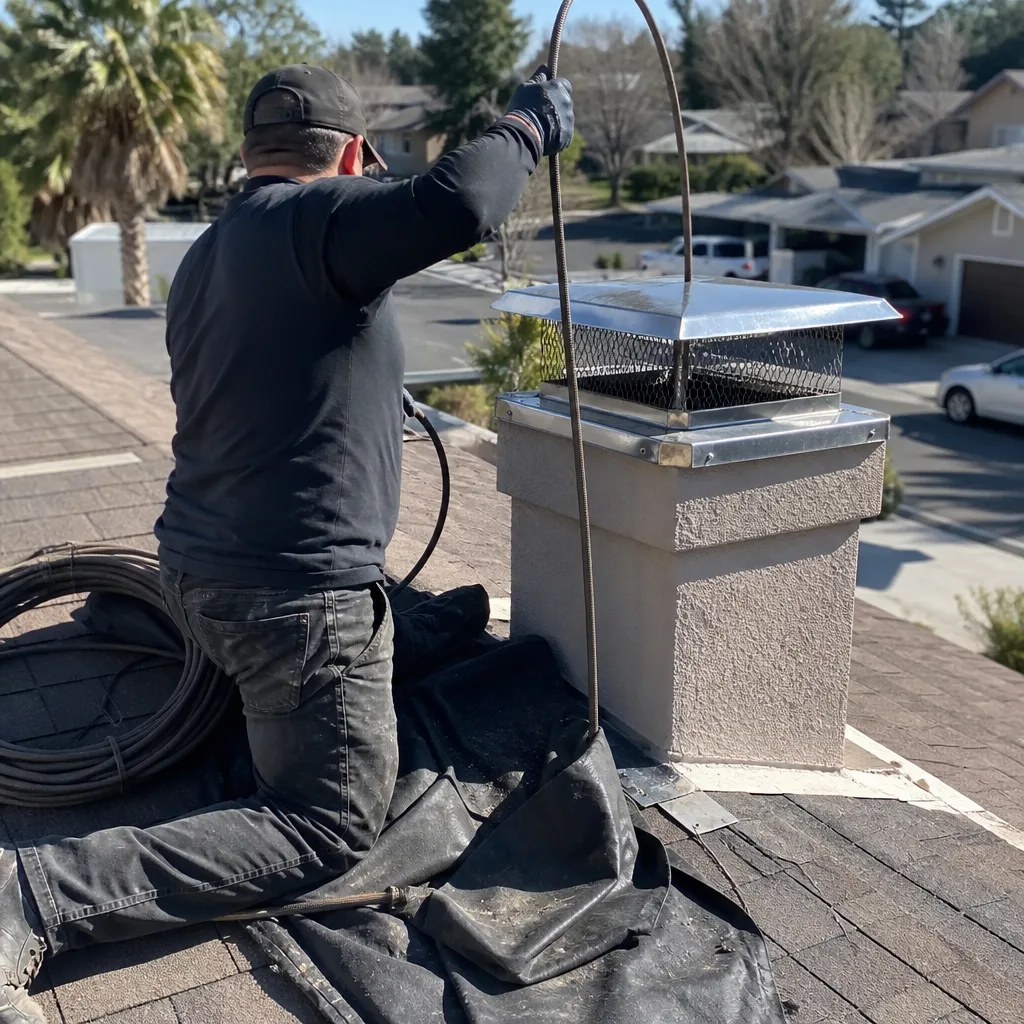
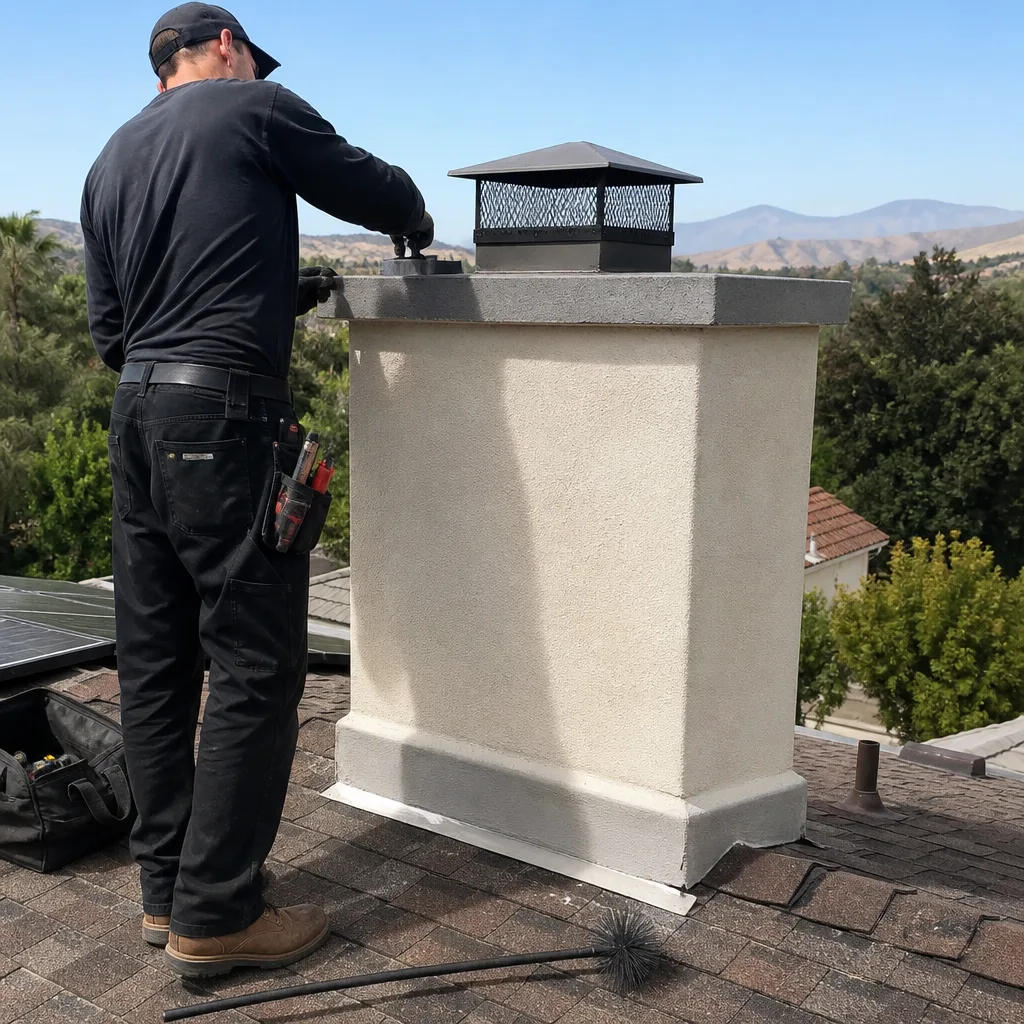
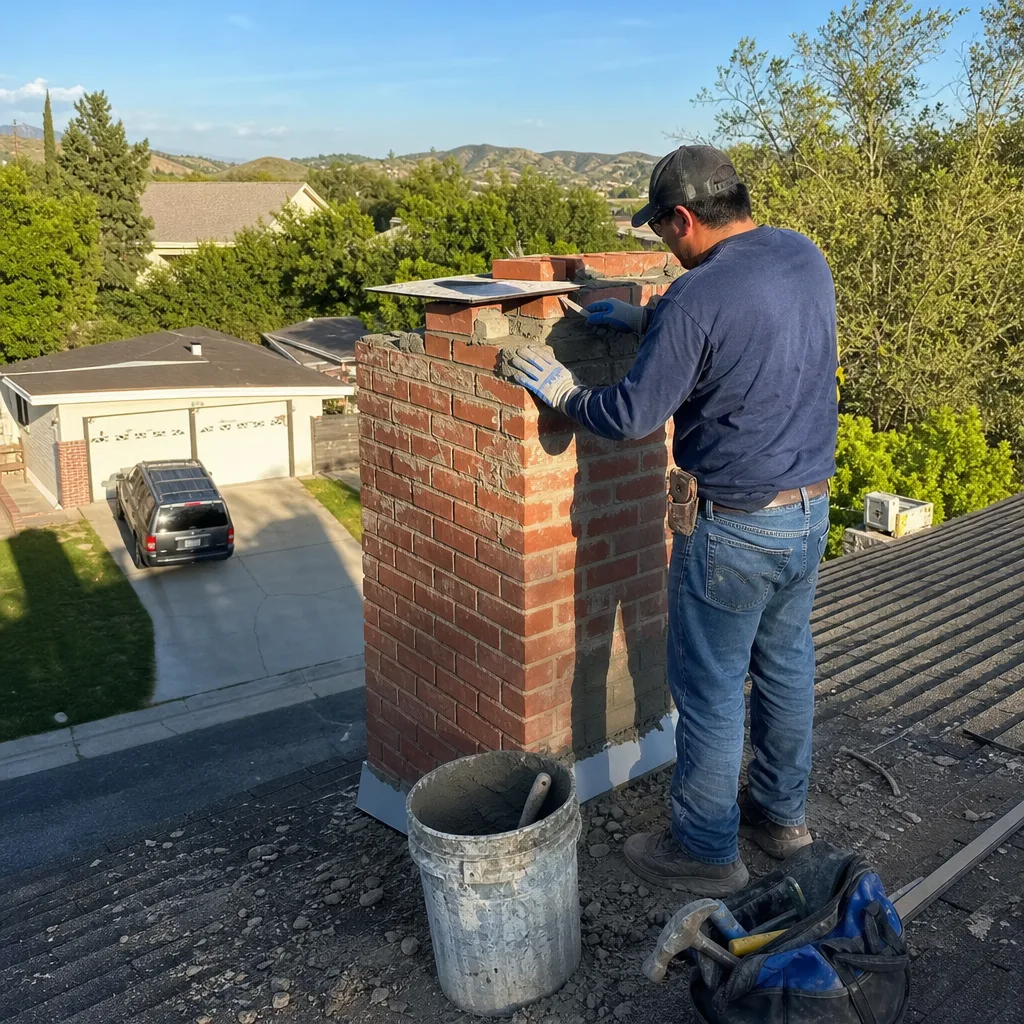
Level 1 sweep and inspection to the NFPA 211 annual standard - flue, crown, cap, and flashing checked and photographed
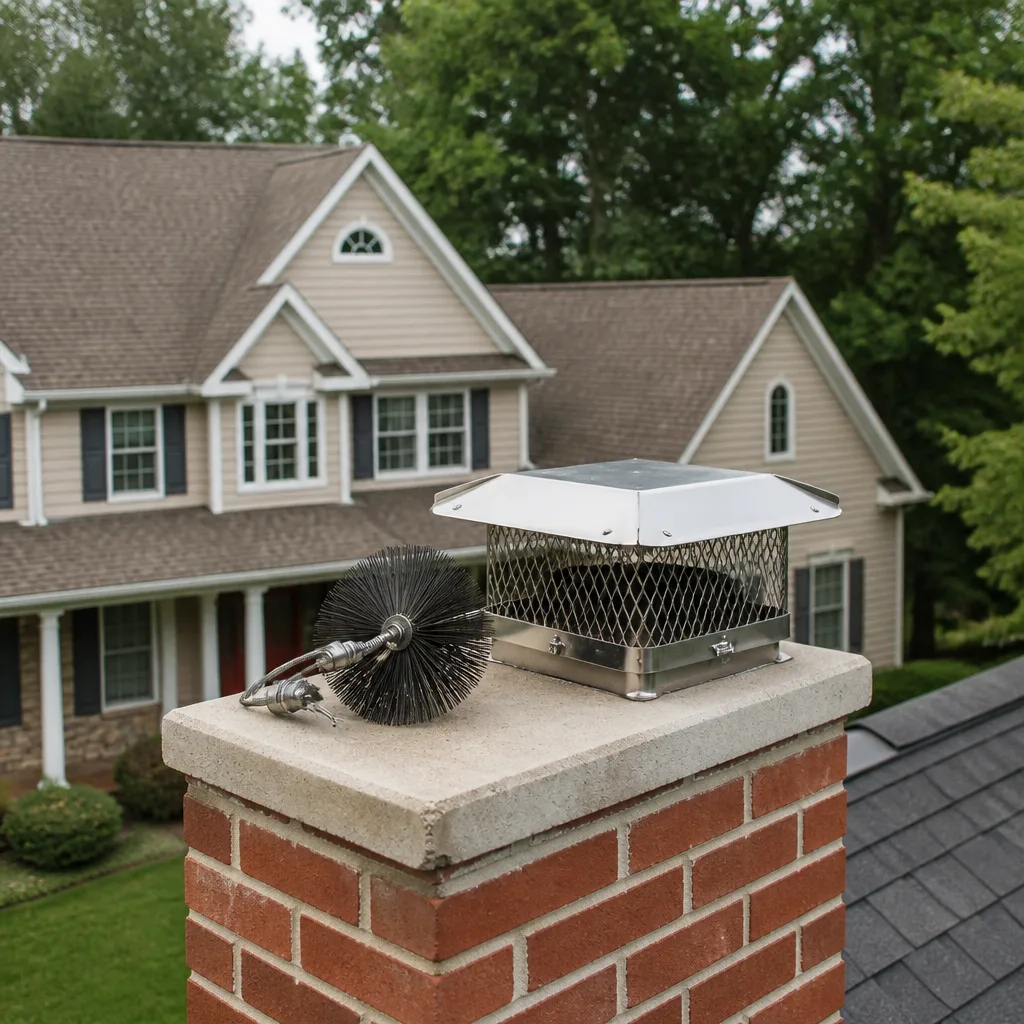
Chimney sweep logs do not sweep chimneys. They loosen some creosote - which then falls where a brush and vacuum still have to collect it.
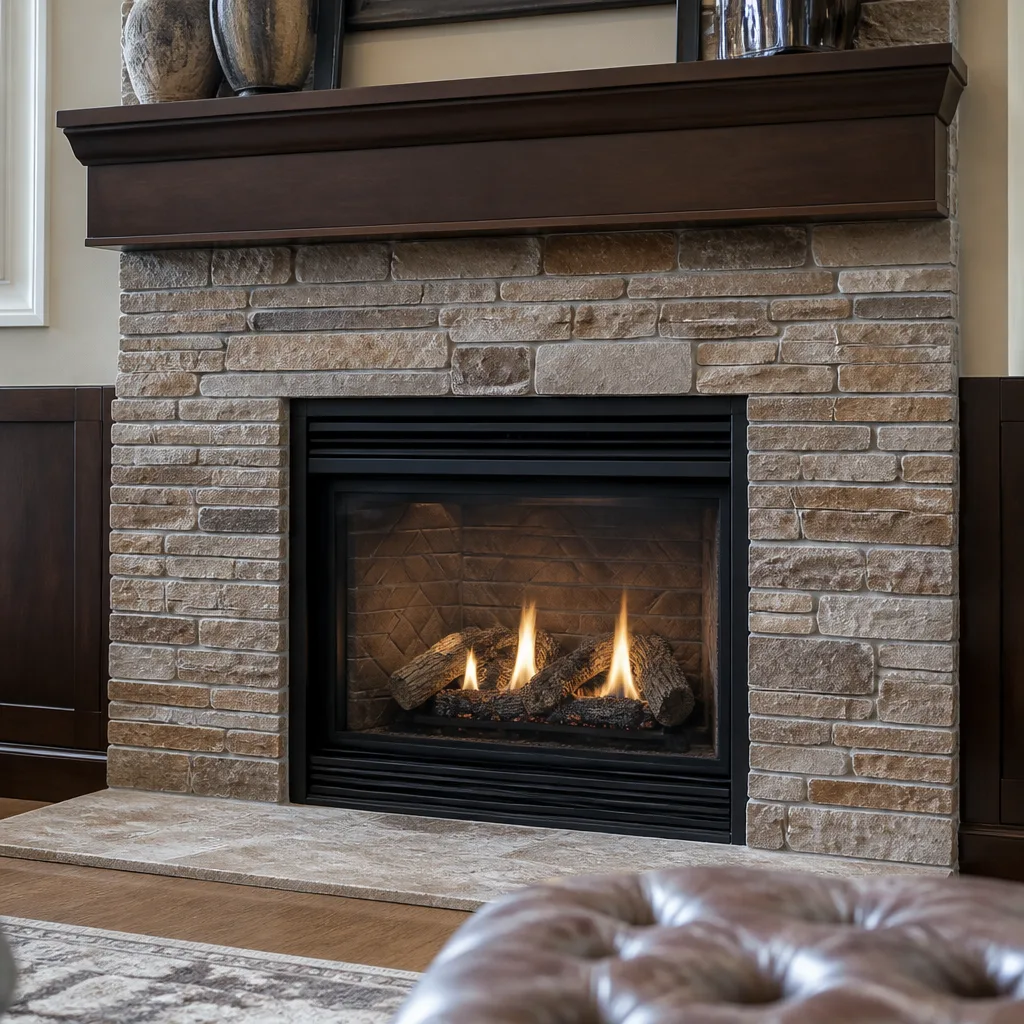
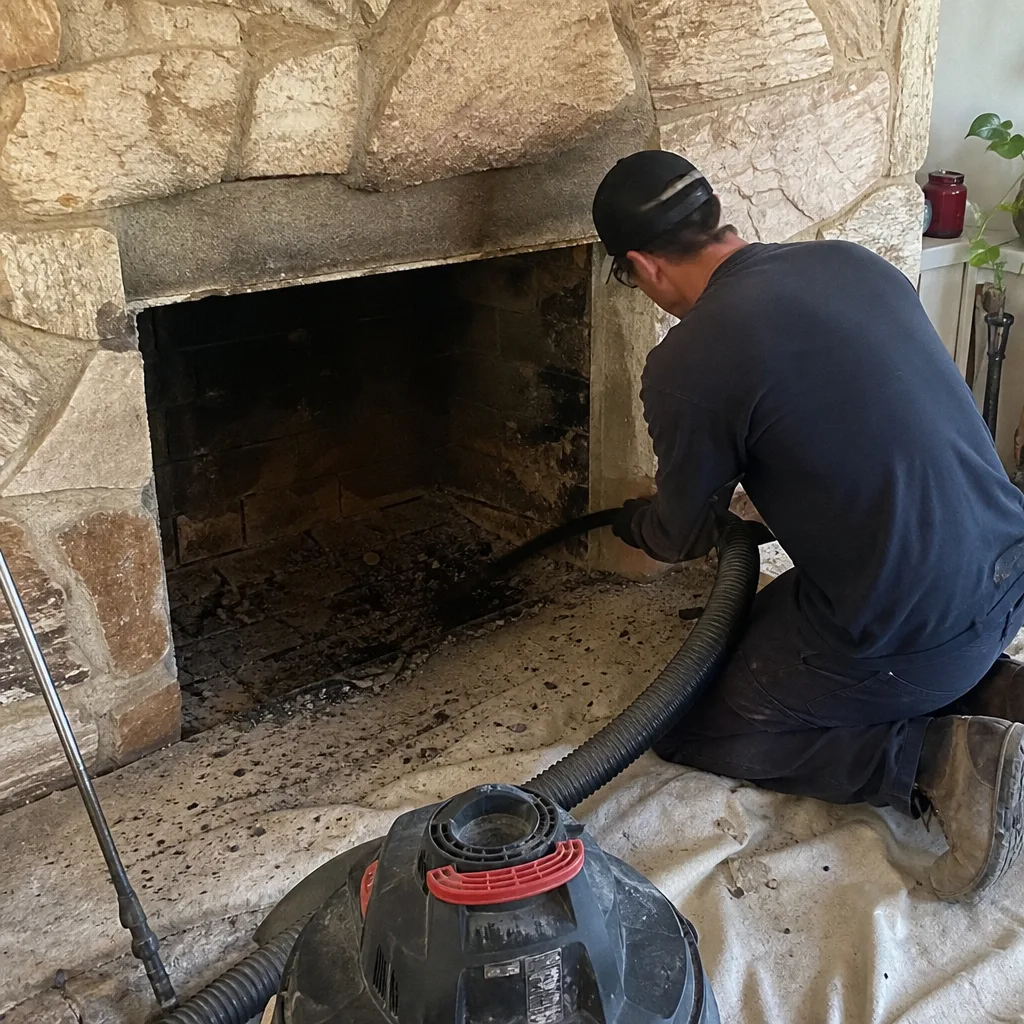 Before
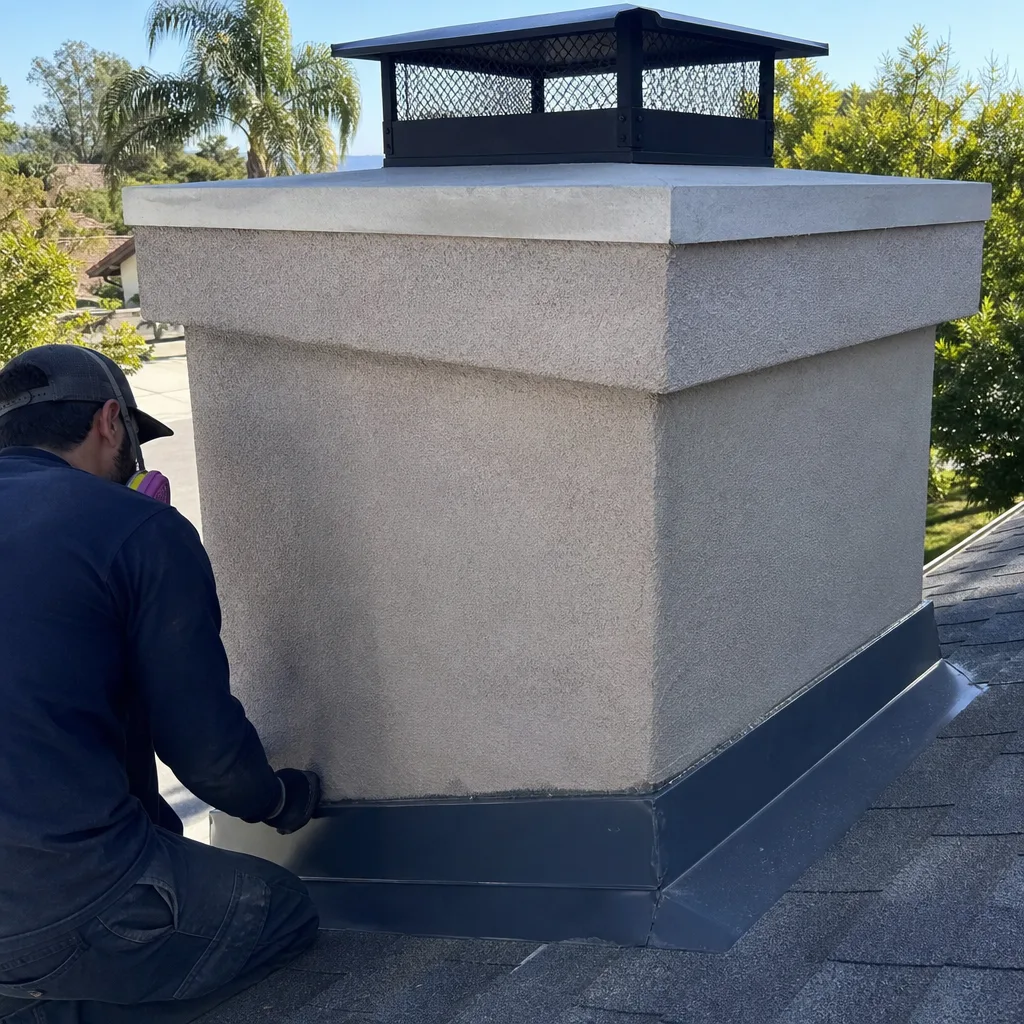 After
After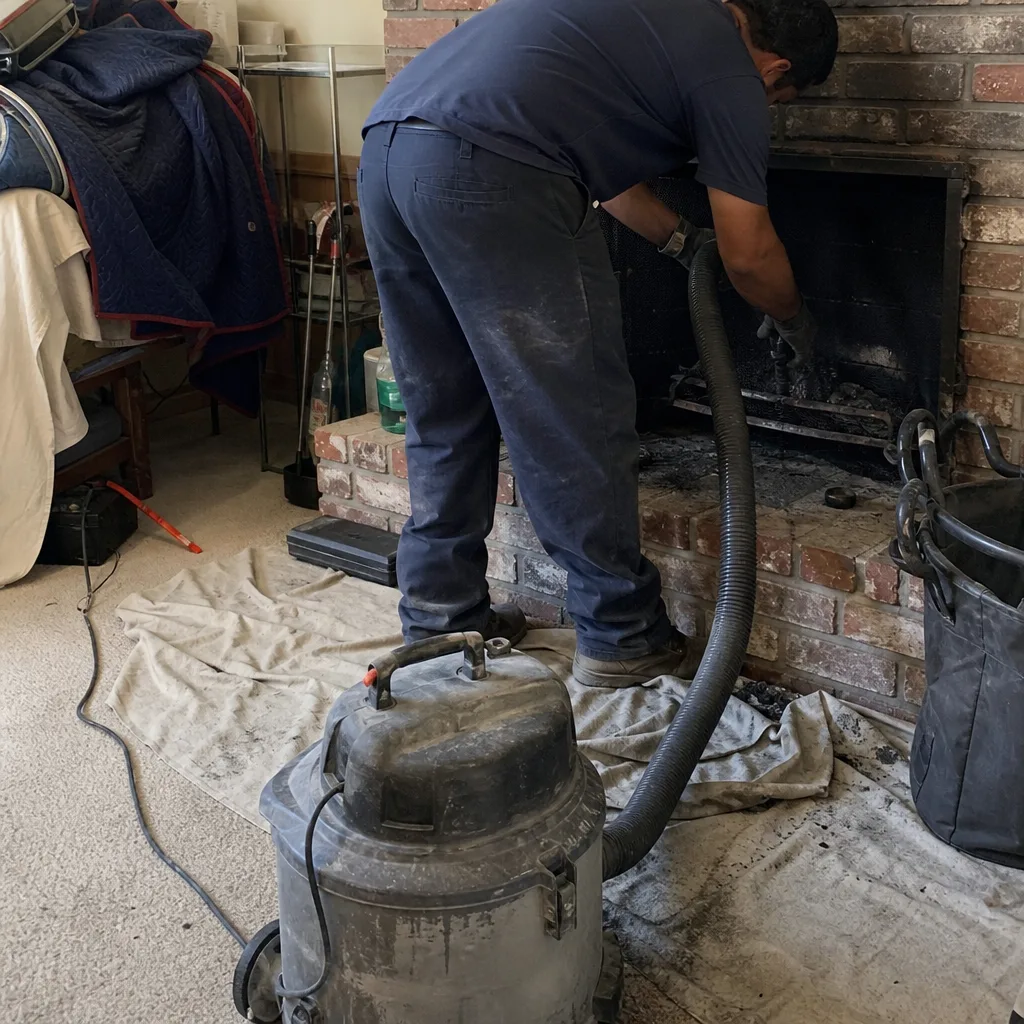 Before
 After
After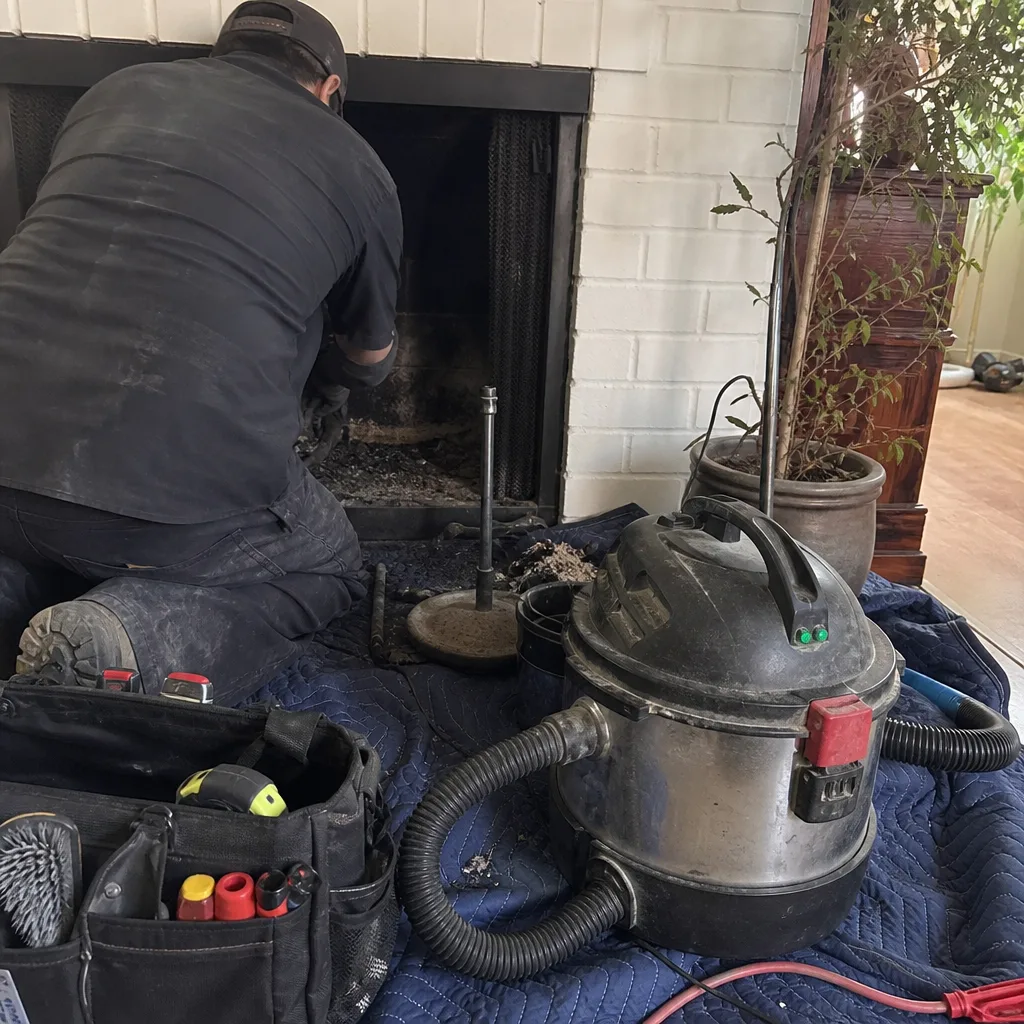 Before
 After
AfterChimney Cleaning Cost Breakdown: The Santa Clarita Homeowner’s Reference for 2026
The $99 chimney cleaning special and the $350 chimney cleaning are both called “cleaning with inspection” on their invoices. One includes a camera scan down the flue and a written report with photos. One includes a flashlight look and a handshake. The invoice won’t tell you which is which unless you know what to look for. In Santa Clarita, where home sales trigger mandatory Level 2 inspections and where Santa Ana wind events can accelerate creosote buildup in wood-burning systems, understanding what each price point actually covers-plus Chimney Cleaning Permits, Codes & Inspections in CA: What You Need to Know-isn’t about finding the cheapest option. It’s about knowing whether you’re buying documentation or buying a guess.
Quick Answer
A complete chimney cleaning in Santa Clarita in 2026 runs between $220 and $450 when it includes a mechanical sweep, NFPA 211 Level 2 camera inspection, written condition report, and photo documentation. A basic sweep without camera verification starts around $79-$150 but leaves you without evidence of flue liner condition, creosote staging, or whether the work was necessary in the first place. The difference isn’t markup. It’s scope.
Table of Contents
- What a Complete Chimney Cleaning Service Actually Includes
- Line-Item Cost Breakdown: Santa Clarita 2026 Market Rates
- Why the Level 2 Inspection Upcharge Exists (And When It’s Required)
- How Creosote Staging Affects Your Final Price
- What a Written Warranty Should Cover (And How to Calculate True Cost)
- How to Use a Prior Inspection Report to Save on Repeat Visits
- Common Mistakes to Avoid
- When to Call a Professional
- Frequently Asked Questions
 Before
 After
AfterWhat a Complete Chimney Cleaning Service Actually Includes
Most homeowners in Santa Clarita assume “chimney cleaning” means one thing. In practice, it describes at least four different service tiers, and the companies selling them rarely explain the gaps.
Here’s what a complete service looks like under NFPA 211 standards, which California home inspectors and insurance adjusters reference:
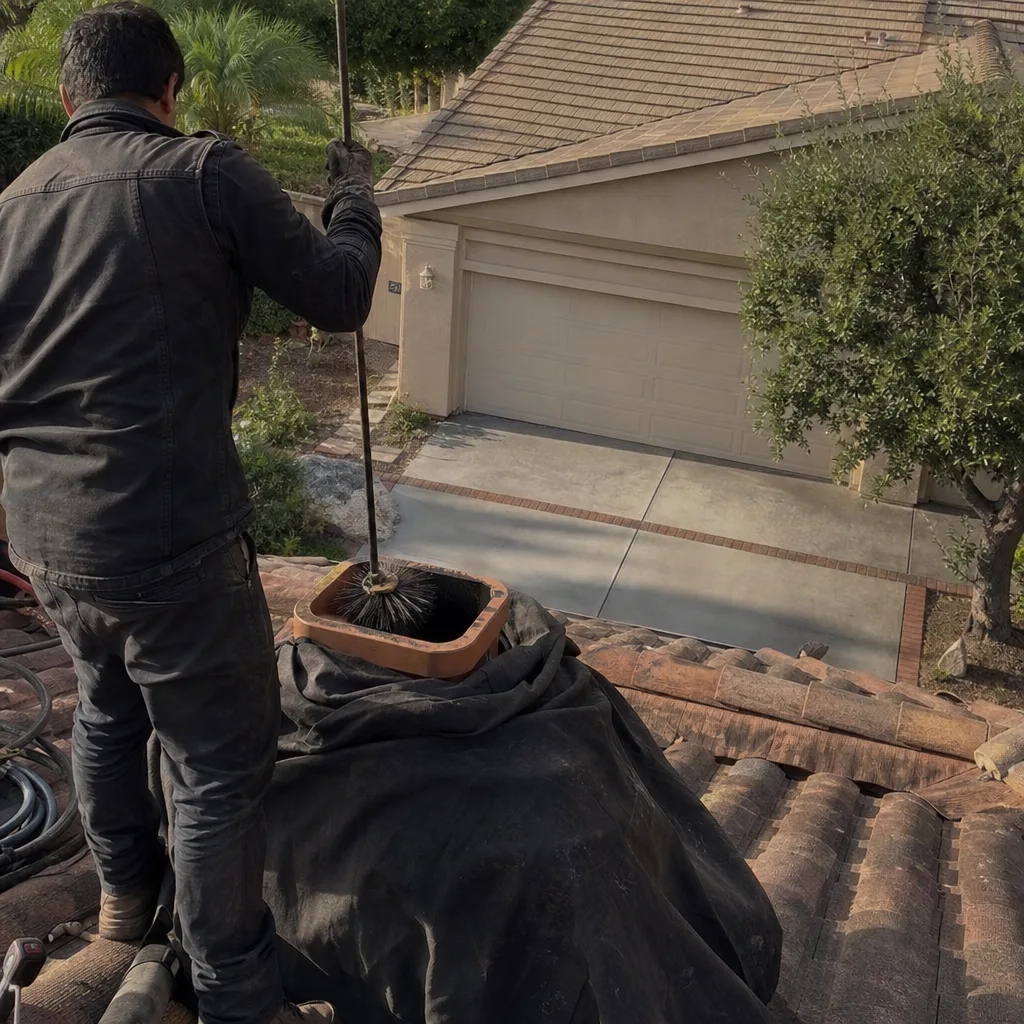
- Mechanical sweep of the flue: Rotary or manual brushes sized to your flue liner diameter, run from firebox to crown, with debris collected at the smoke shelf and damper. This removes Stage 1 and most Stage 2 creosote.
- Smoke chamber and firebox cleaning: The area above the damper and the firebox floor, where ash and pyrolyzed material accumulate. Often skipped in cut-rate services because it requires hand tools and time on your knees.
- NFPA 211 Level 2 internal inspection: A camera scan of the full flue liner length, from firebox to crown, documenting cracks, gaps, spalling, offset joints, and creosote staging. This is not optional for home sales, insurance claims, or after any chimney fire or seismic event.
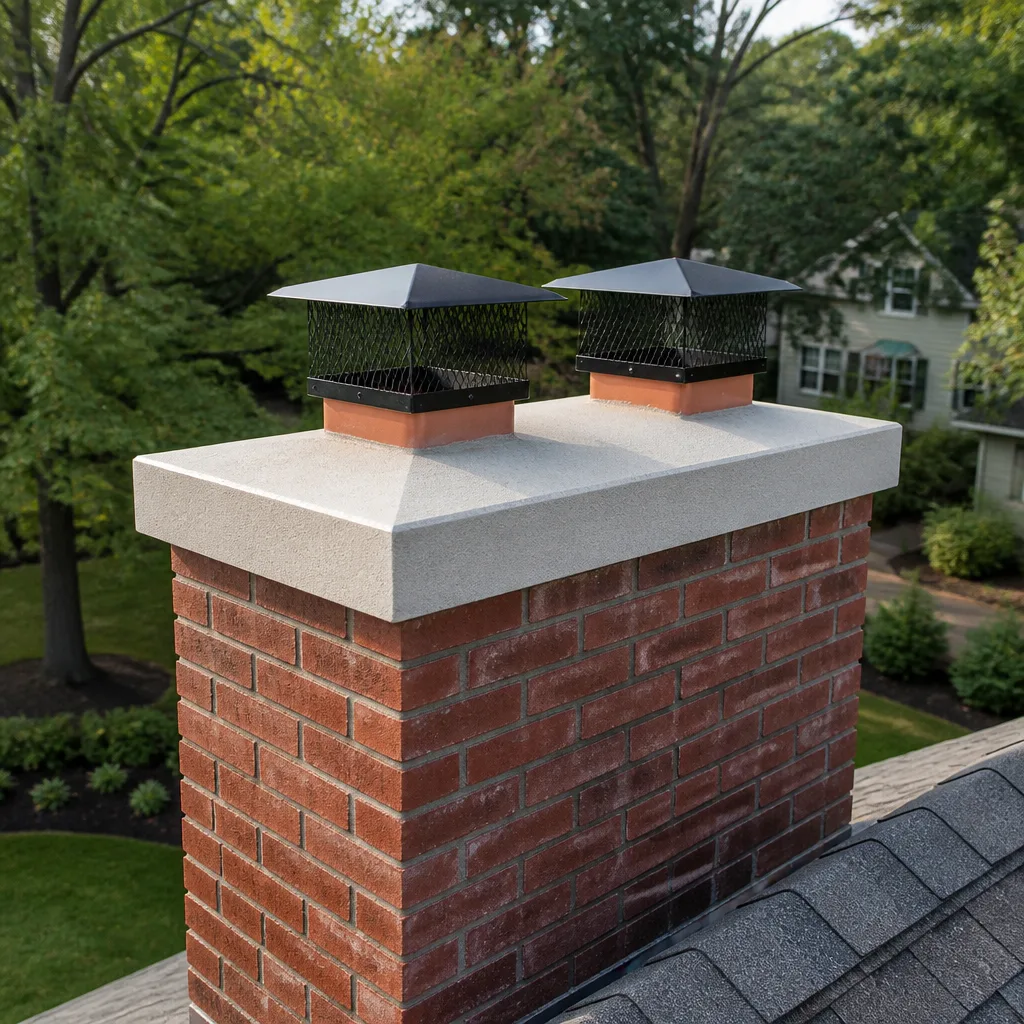
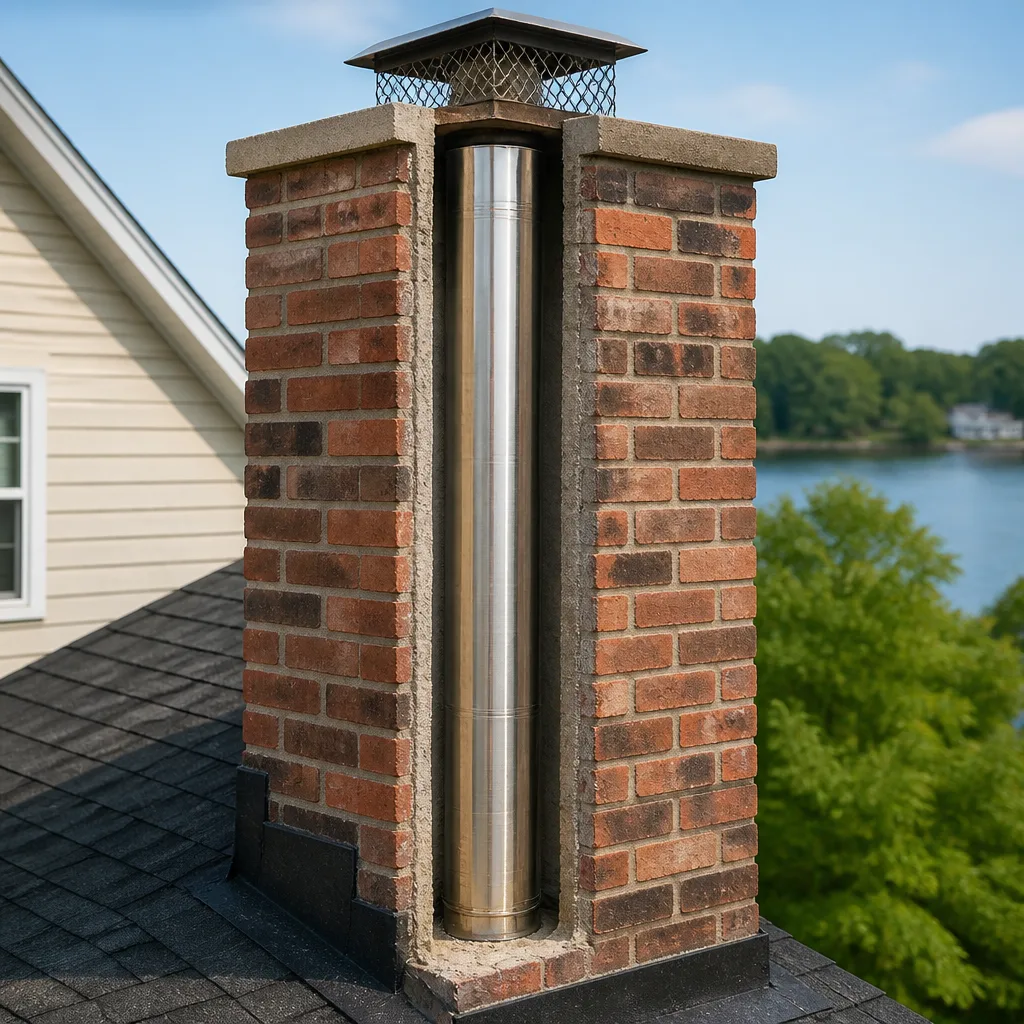
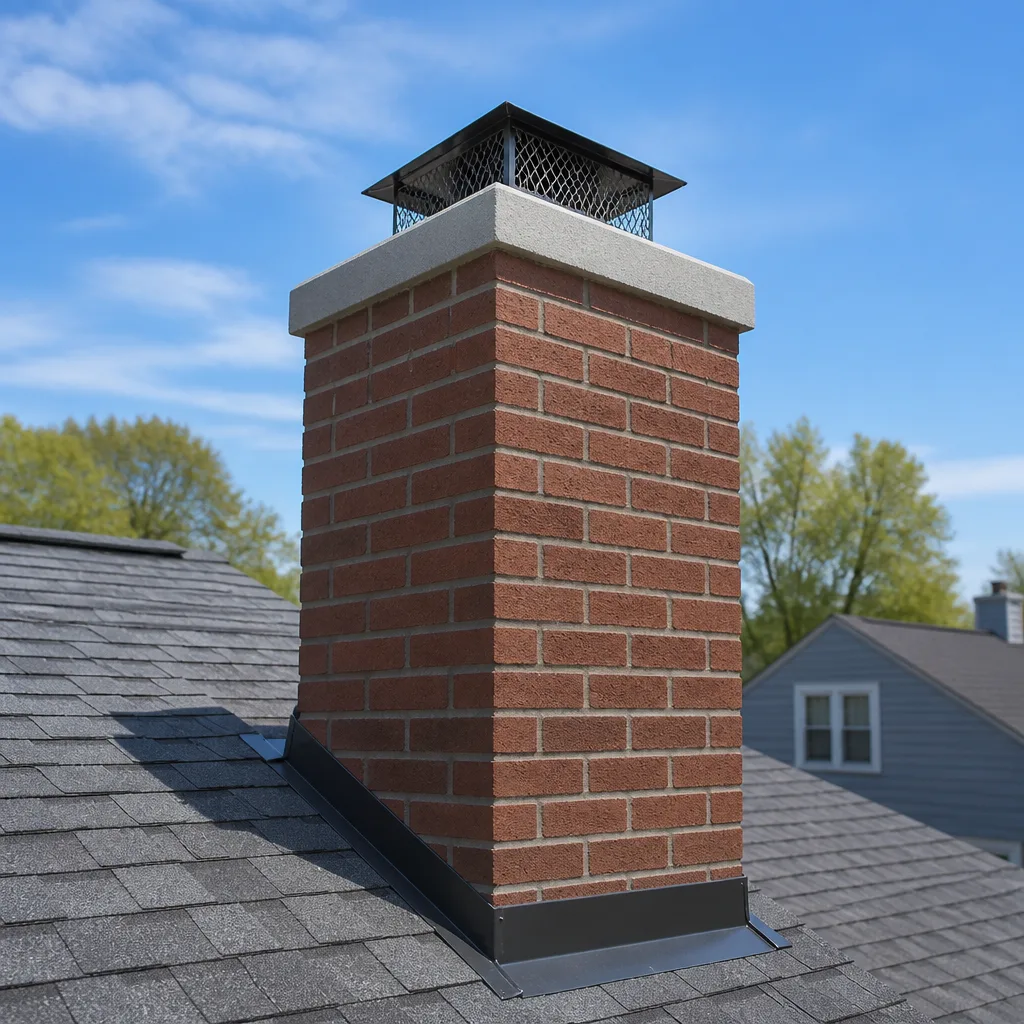
- Exterior visual of cap, crown, and flashing: From ground, ladder, or roof, noting cracks, missing mortar, deteriorated sealant, or animal intrusion.
- Written condition report with photo documentation: A dated record of findings, recommendations prioritized by urgency, and a written price for any repair work before it begins.
At Level Two Chimney Santa Clarita, this full sequence is our default on every visit. Clause 4 of the Haven Standard, established in 2009, requires a documented photo record on every job. Not as an upgrade. As the baseline.
What the $79-$150 tier typically omits: the camera, the written report, the exterior visual, and often the smoke chamber work. You’re paying for a brush run and a verbal “looks fine.” In Valencia or Canyon Country, where many homes were built during the 1990s-2000s construction boom and now trade hands as their first owners downsize, that verbal assurance won’t satisfy a buyer’s home inspector or an insurance underwriter.
Line-Item Cost Breakdown: Santa Clarita 2026 Market Rates
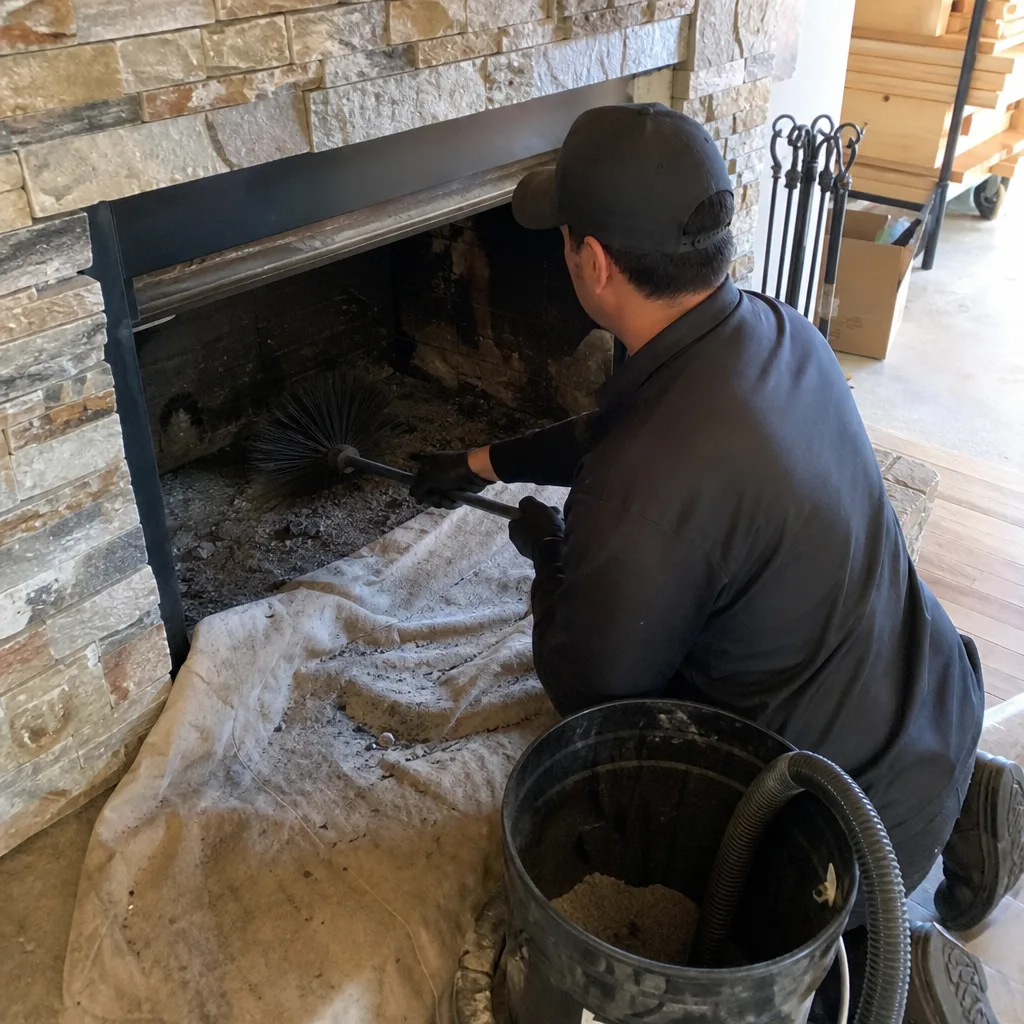
These ranges reflect what we’ve quoted and observed across the Santa Clarita Valley market through early 2026, including Saugus, Newhall, Valencia, and Canyon Country. Prices vary by accessibility (roof pitch, chimney height, whether the flue is lined or unlined) and by the technician’s time on site.
| Service Component | Low Range | High Range | Notes |
|---|---|---|---|
| Basic mechanical sweep (no camera) | $79 | $150 | Brush run only; no documentation; common coupon special |
| Mechanical sweep with Level 1 visual inspection | $150 | $220 | Flashlight look; no flue liner camera; written checklist only |
| Full sweep + NFPA 211 Level 2 camera inspection | $220 | $340 | Camera scan, photo record, written condition report included |
| Stage 2 creosote removal (mechanical + chemical) | $280 | $420 | Requires creosote modifier (PCR or similar) and extended labor |
| Stage 3 glazed creosote removal | $450 | $750 | May require multiple treatments; sometimes necessitates liner replacement |
| Smoke chamber parge coat (if recommended) | $400 | $800 | Corbelling smoothing with Chamber-Tech 2000 or HeatShield |
| Chimney cap replacement (standard stainless) | $180 | $350 | Includes measurement, sourcing, installation; Gelco and Famco common brands |
| Crown crack repair (minor, with CrownCoat or similar) | $250 | $450 | Not structural rebuild; cosmetic/sealing treatment only |
| Written repair estimate (detailed, with photos) | Included | Included | Should be standard with Level 2 service; some competitors charge $75-$125 |
A few Santa Clarita-specific factors push prices toward the high or low end of these ranges:
- Roof access: Two-story homes in Valencia’s hillside developments, or any property with a steep pitch or tile roof, require additional setup time and sometimes a second technician for safety.
- Flue liner type: Clay tile liners, standard in homes built before 2000, are more prone to spalling and require more careful camera interpretation. Stainless steel relining jobs, common in 1980s-1990s remodels, sweep faster but the liner itself can mask crown or shoulder damage.
- Seasonal demand: October through January sees 40% higher call volume in Santa Clarita. Some companies raise rates or reduce scope to fit more appointments. We maintain flat pricing year-round because our scheduling runs on documented condition priority, not calendar pressure.
Materials matter too. We source flue liners and repair materials through DuraFlex, HeatShield, and Copperfield supply networks specifically to keep customer prices honest. A cap quoted at $180 from us uses the same stainless stock as the $280 cap from a competitor buying retail. The difference is procurement, not quality.
Why the Level 2 Inspection Upcharge Exists (And When It’s Required)
The NFPA 211 standard defines three inspection levels. Level 1 is a visual assessment of readily accessible portions. Level 2 adds internal camera examination of the flue liner, smoke chamber, and attic/crawl space connections where accessible. Level 3 involves demolition of building materials and is rare outside fire damage investigations.
Most Santa Clarita homeowners don’t need Level 3. Many need Level 2 and don’t know it. The upcharge, typically $80-$150 above a basic sweep, isn’t a sales tactic. It’s the difference between a documented record and a verbal opinion.
Level 2 is required, not optional, in these situations:
- Real estate transactions: California home inspectors increasingly flag chimneys without recent Level 2 documentation. In Santa Clarita’s active resale market, particularly in Valencia and Saugus where 1990s-built homes are turning over, buyers’ agents regularly request camera evidence.
- Insurance claims: After a chimney fire or suspected fire, insurers require Level 2 documentation before authorizing repairs or continuing coverage. A flashlight inspection won’t suffice.
- Post-earthquake: The 2019 Ridgecrest sequence and smaller local tremors can shift clay tile liners or crack mortar joints. Any seismic event strong enough to rattle dishes warrants Level 2 verification before the next burn season.
- After a chimney fire: Even a small fire (often undetected, noticed only as a “weird smell” or sudden draft change) can crack liners or damage surrounding framing. Level 2 finds what visual inspection cannot.
- New appliance installation: Inserting a wood stove, gas log set, or pellet appliance into an existing flue requires verified liner compatibility. Level 2 provides the measurements and condition data.
Here’s what skipping Level 2 costs retroactively: We’ve been called to homes in Canyon Country where a $150 basic sweep missed a cracked liner, the homeowner completed their sale, and the buyer’s inspector found the defect two months later. The seller paid $1,800 for emergency Level 2 documentation, liner repair negotiation, and a partial credit. The original $150 sweep became a $1,950 problem.
Clause 4 of the Haven Standard requires that photo record on every job precisely because retroactive documentation is always more expensive, more contentious, and less complete than documentation captured during the original visit.
How Creosote Staging Affects Your Final Price
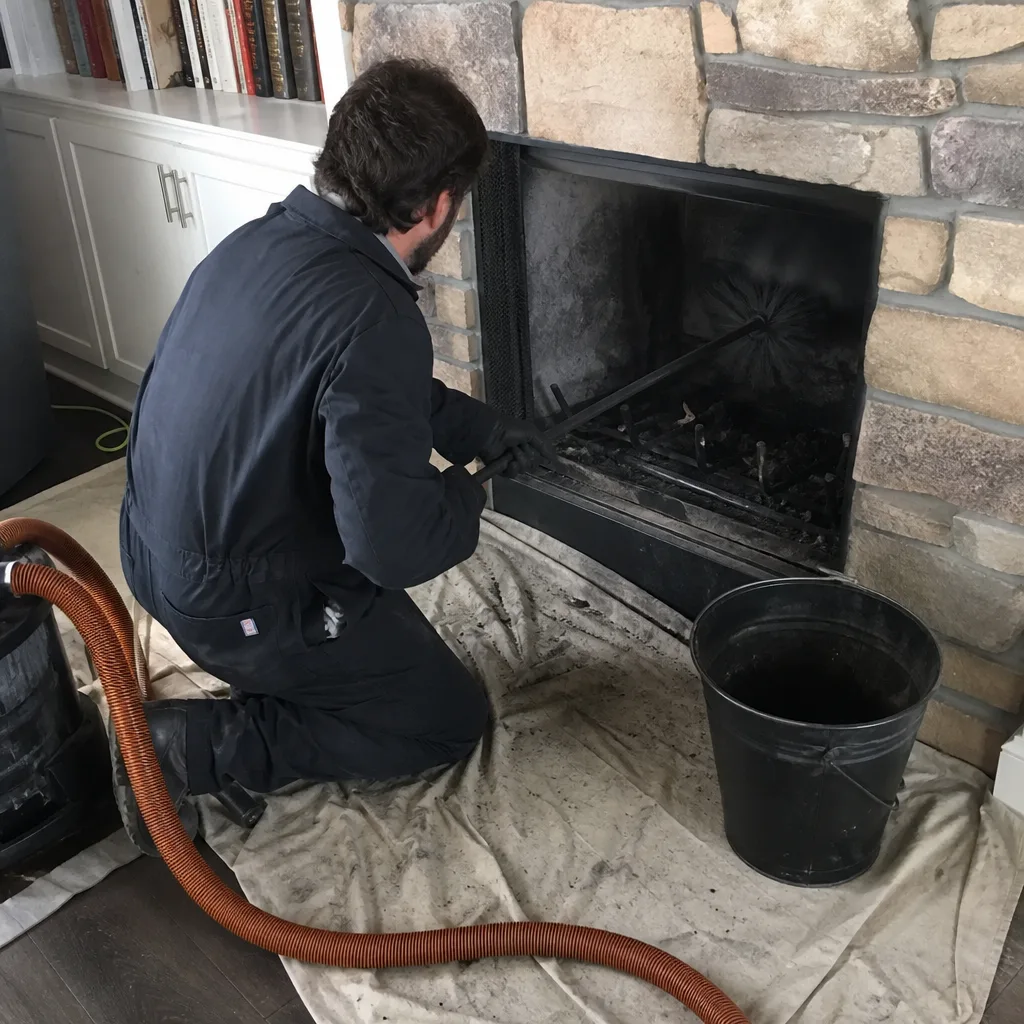
Creosote isn’t one substance. It’s a progression, and each stage requires different removal methods, different time commitments, and different prices. Any quote that doesn’t ask about your burn frequency, fuel type, and whether you’ve had prior sweeps is guessing at the stage, and guessing at the price.
Stage 1 (Soot): Fine, powdery, black or brown. Removes with standard rotary brushes in a routine sweep. Included in base pricing. Common in Santa Clarita homes that burn oak or almond (readily available from local tree services) and sweep annually.
Stage 2 (Crunchy flakes): Hard, porous, tar-like flakes that cling to liner walls. Requires mechanical brushing plus a creosote modifier (PCR, ACS, or similar) applied and allowed to dwell before removal. Adds 45-90 minutes to the appointment and $60-$120 in chemical and labor cost. Common in homes that burn pine or eucalyptus, or that skip 2-3 years between sweeps. The Santa Ana winds that dry our local firewood faster than coastal markets can actually accelerate Stage 2 formation because faster-burning, lower-moisture fires run cooler and deposit more incomplete combustion products.
Stage 3 (Glazed, tar-like): Shiny, hardened, nearly glassy coating. Often requires multiple chemical treatments over several days, or in severe cases, liner replacement if the glaze has compromised the liner surface or if removal would damage clay tiles. This is where $450 becomes $750, or where a $2,500-$4,000 relining conversation begins. Stage 3 is preventable with annual sweeping but becomes likely after 4+ years of neglect, especially with softwoods or smoldering fires.
We ask every Santa Clarita caller: What do you burn, how often, and when was your last sweep? Not to upsell. To bring the right equipment and schedule enough time. A technician who arrives expecting Stage 1 and finds Stage 3 will either rush the job or return for a second visit, and neither serves the homeowner.
Our documented photo record shows creosote staging clearly. When we present a Stage 2 finding with dated images, homeowners understand why the price shifted from the base quote. Without that evidence, it feels like a bait-and-switch. With it, it’s just physics.
What a Written Warranty Should Cover (And How to Calculate True Cost)
The cheap job that needs a repair call within 12 months isn’t cheap. It’s expensive with deferred payment. A written warranty on chimney work should specify three things clearly:
- What is covered: The sweep itself, any repairs performed, and the condition of components addressed. Vague language like “satisfaction guaranteed” without scope definition is not a warranty. It’s a sentiment.
- For how long: Our 365-Day Done Right Promise covers any defect in workmanship or materials for a full year. If it’s not done right, we make it right. Some competitors offer 30 or 90 days, which expires before the next burn season begins.
- What documentation is required to invoke it: A warranty without a baseline record is unenforceable. You need the before photos, the written scope, and the after photos to prove what condition existed and what work was performed.
Calculate true cost this way: Job A costs $180 with no written warranty, no photo record, and a 30-day verbal promise. Job B costs $280 with a 365-Day Done Right Promise, full documentation, and materials sourced through DuraFlex and HeatShield supply networks. If Job A requires a $150 return visit for a missed smoke chamber issue or a cap that wasn’t sealed properly, its true cost is $330. Job B, done correctly once, remains $280.
In Santa Clarita’s climate, where summer heat bakes crown sealant and winter thermal cycling stresses mortar joints, a one-year warranty isn’t generous. It’s the minimum interval needed to catch seasonal failure modes.
We deliver the written price, written scope, and written warranty before any work starts. Haven Standard Clause 1, H.A.V.E.N. “Have it in writing,” exists because verbal assurances evaporate when the technician drives away.
How to Use a Prior Inspection Report to Save on Repeat Visits
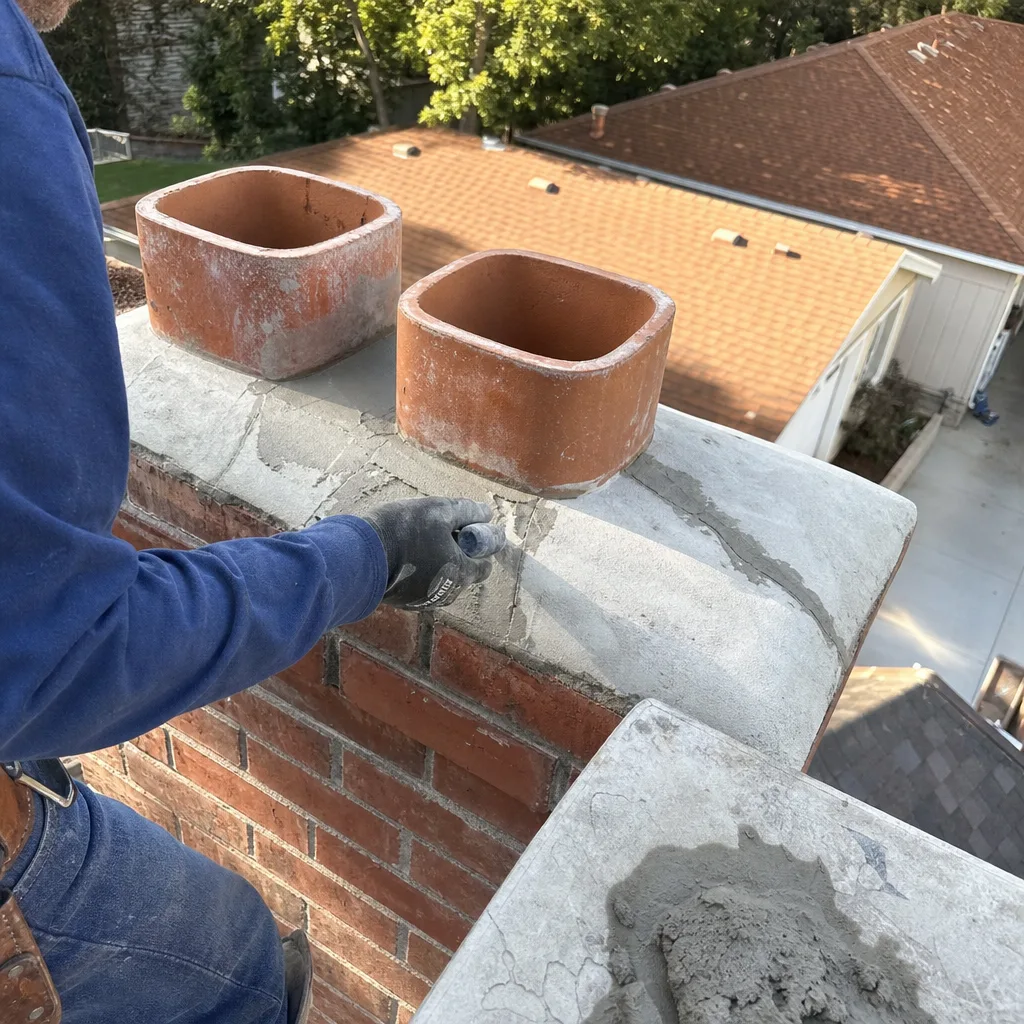
This is the point most competitors won’t explain, because it reduces their revenue. A documented baseline condition report lets you pay only for what changed, not for a full re-inspection of unchanged components.
Here’s how it works in practice:
- Present your prior report at booking: If we swept and inspected your Valencia home in October 2024 and you’re calling for a 2026 sweep, we pull that record. We know your flue liner was sound, your crown had minor cracking we monitored, and your cap was new.
- We verify changes, not baseline: The 2026 appointment focuses on creosote accumulation since the last burn season, crown crack progression, and any new damage. We don’t re-document the entire system from scratch unless we find changes that warrant it.
- You save on scope, not on quality: The camera still runs. The photo record still updates. But the technician’s time is directed at delta, not repetition, and that efficiency passes through in pricing.
We’ve seen homeowners in Newhall and Saugus save $60-$100 on repeat visits this way. More importantly, they maintain continuous documentation. A gap in your chimney record, like a gap in medical records, forces the next provider to start over at full diagnostic scope.
The Haven Standard’s archive practice, continuous since 2009, means our 38,000+ job records are searchable by address. Even if you don’t have your prior report handy, we likely do. This is unusual in the industry. Most sweep companies discard records after one or two years, or keep them in paper files that don’t travel to the technician’s truck.
For chimney repair in Santa Clarita, a documented baseline is even more critical. Repair quotes without prior condition context are easily inflated. With dated photos showing crack width, spall depth, or liner offset, you have negotiation leverage and scope clarity.
Common Mistakes to Avoid
- Booking on price alone without asking what’s included. The $99 special in Santa Clarita often excludes the smoke chamber, omits the camera, and delivers a checklist with checkmarks, not photos. Ask specifically: Is the camera scan included? Is the report written or verbal?
- Assuming all “inspections” are equal. A Level 1 visual inspection and a Level 2 camera inspection are different services with different documentation value. Don’t let an invoice conflate them.
- Ignoring creosote staging in the quote process. If a company quotes $150 without asking what you burn or when you last swept, they’re planning to rush the job or add charges on arrival. A legitimate provider adjusts scope before the appointment.
- Accepting verbal warranties. In California, home improvement contracts over $500 must be in writing. A verbal “we’ll take care of you” has no legal standing and no documentation trail.
- Skipping service because the chimney “looks fine” from the street. Liner damage, creosote buildup, and smoke chamber deterioration are invisible without internal examination. Santa Clarita’s dry climate doesn’t prevent creosote; it can accelerate it by encouraging faster, cooler burns with dry fuel.
- Not requesting the prior report when selling a home. Buyers’ inspectors in Valencia and Canyon Country increasingly request Level 2 documentation. Having it ready accelerates sale timelines and prevents last-minute credits.
- Hiring unlicensed operators for repair work. California requires a C-29 masonry contractor license for structural chimney repairs. A sweep license alone doesn’t qualify. Verify license classification before authorizing crown rebuilds, relining, or structural work.
When to Call a Professional
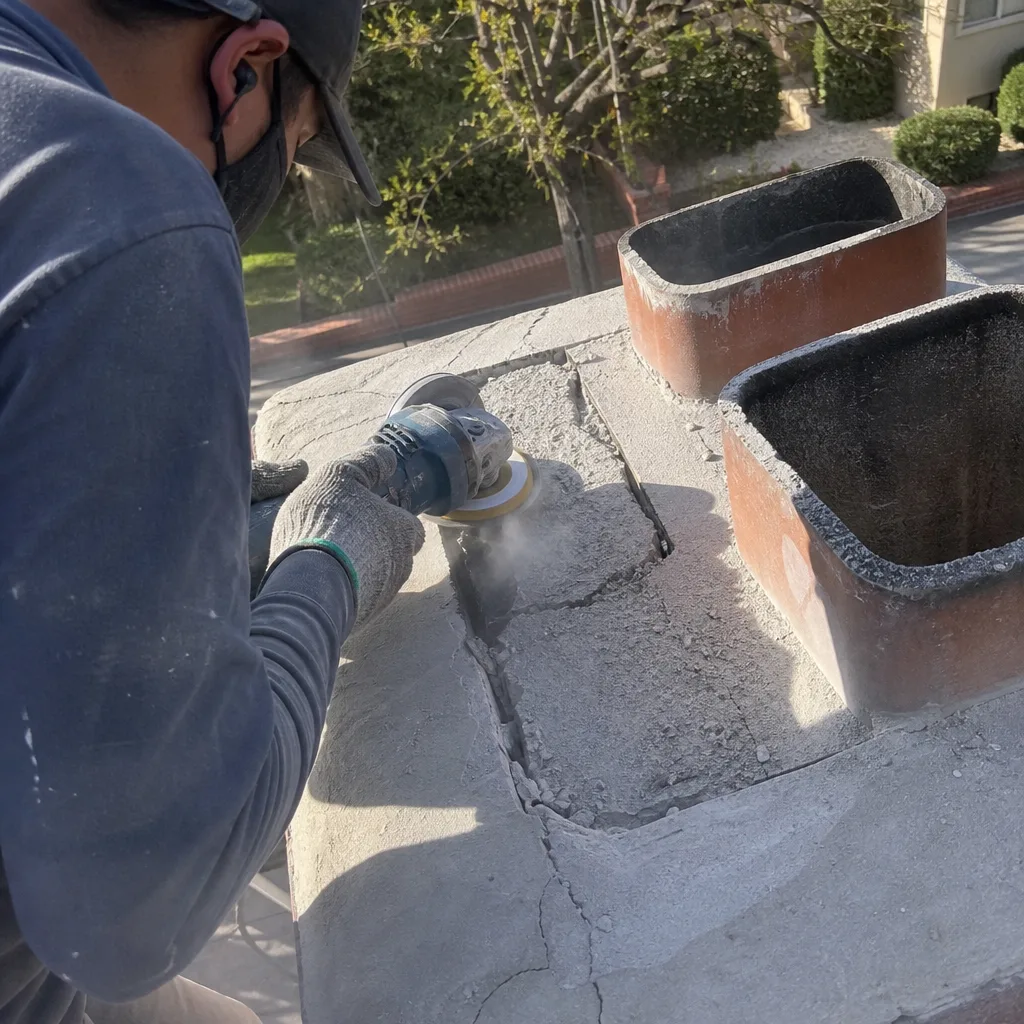
Call for service before the situation becomes urgent. In Santa Clarita, where burn season runs roughly November through March, October appointments book fastest but also allow time for any recommended repairs before first use.
Specific triggers: visible creosote flakes falling into the firebox, a persistent smoky odor when the fireplace isn’t in use, draft problems after Santa Ana wind events, any suspected chimney fire (discolored mortar, warped metal, sudden draft change), or before listing your home for sale. See our Chimney Cleaning Warning Signs: A Santa Clarita Homeowner’s Reference Guide for a full checklist.
For fireplace services in Santa Clarita or any chimney concern, Level Two Chimney Santa Clarita offers free estimates. Calls are answered live 24 hours a day, 7 days a week. Reach us at (747) 294-2146.
Frequently Asked Questions
A complete chimney sweep with NFPA 211 Level 2 camera inspection, written report, and photo documentation in Santa Clarita typically costs $220-$340 in 2026. Basic sweeps without camera verification run $79-$150 but provide no documentation of flue liner condition or creosote staging. Call (747) 294-2146 for a written estimate specific to your system.
You need a new liner when the existing one is cracked, spalled, or improperly sized for your appliance, and when that condition is documented by camera inspection. We don’t recommend liner replacement without photo evidence you can see. In Santa Clarita’s 1990s-built homes, clay tile liners often show spalling or offset joints that warrant stainless steel relining with DuraFlex or similar materials. Call (747) 294-2146 for a free second opinion on any liner replacement quote.
The NFPA 211 standard recommends annual inspection, with cleaning frequency determined by creosote accumulation, not calendar alone. Most Santa Clarita homeowners who burn wood 2-3 times weekly need annual sweeping. Those who burn occasionally may extend to every 2-3 years with Level 2 inspection to verify. Dry local firewood and Santa Ana wind patterns can accelerate buildup, so annual verification is the safer default. Our Chimney Cleaning & Sweep Maintenance Checklist for Santa Clarita Homeowners breaks down the full seasonal routine.
Skipped cleaning allows creosote to progress from Stage 1 (removable by brushing) to Stage 2 or 3 (requiring chemical treatment or liner replacement). The immediate risk is chimney fire, which can crack liners and damage surrounding structure. The slower risk is carbon monoxide infiltration through liner defects, particularly dangerous in Santa Clarita’s tightly sealed modern homes. The financial risk is emergency service pricing and potential insurance disputes without documentation. Call (747) 294-2146 to schedule before accumulation becomes hazardous.
Level 1 is a visual assessment of readily accessible portions with a flashlight. Level 2 adds a camera scan of the full flue liner interior, smoke chamber examination, and documentation of findings with photos. Level 2 is required for home sales, insurance claims, after chimney fires or earthquakes, and before new appliance installation. In Santa Clarita’s active real estate market, Level 2 documentation is increasingly expected by buyers and their inspectors.
Yes. A documented baseline from a prior Level 2 inspection allows the technician to focus on changes rather than full re-documentation, reducing scope and cost on repeat visits. At Level Two Chimney Santa Clarita, our records from 38,000+ jobs since 2009 are searchable by address. Even if you don’t have your report, we likely do, and we’ll use it to direct our time efficiently.
The Bottom Line
Chimney cleaning prices in Santa Clarita range from $79 to $450 and beyond because they describe different services, not different markups on the same service. The complete package, mechanical sweep plus NFPA 211 Level 2 camera inspection, written report, and photo documentation, runs $220-$340 and provides evidence you can use for insurance, real estate, and warranty purposes. The cut-rate alternative provides a brush run and a handshake. Know which you’re buying before you book. For more guides & resources, explore our blog. And know that a written price before work starts, a documented record when it’s done, and a 365-Day Done Right Promise aren’t extras. They’re the minimum standard for work you can verify and stand behind.
Written by Corrine Halstead, Owner at Level Two Chimney Santa Clarita, serving Santa Clarita since 2009.