
Last updated September 21, 2026
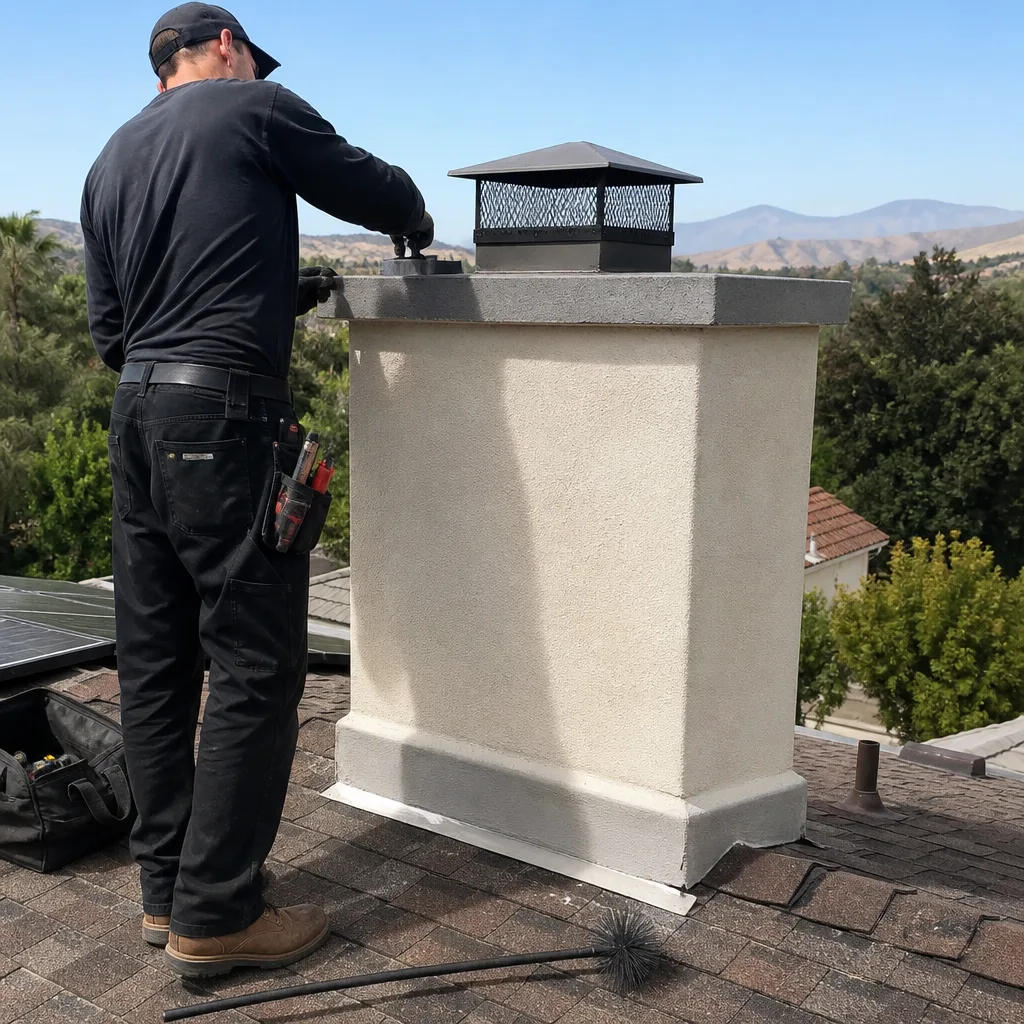
Level 1 sweep and inspection to the NFPA 211 annual standard - flue, crown, cap, and flashing checked and photographed
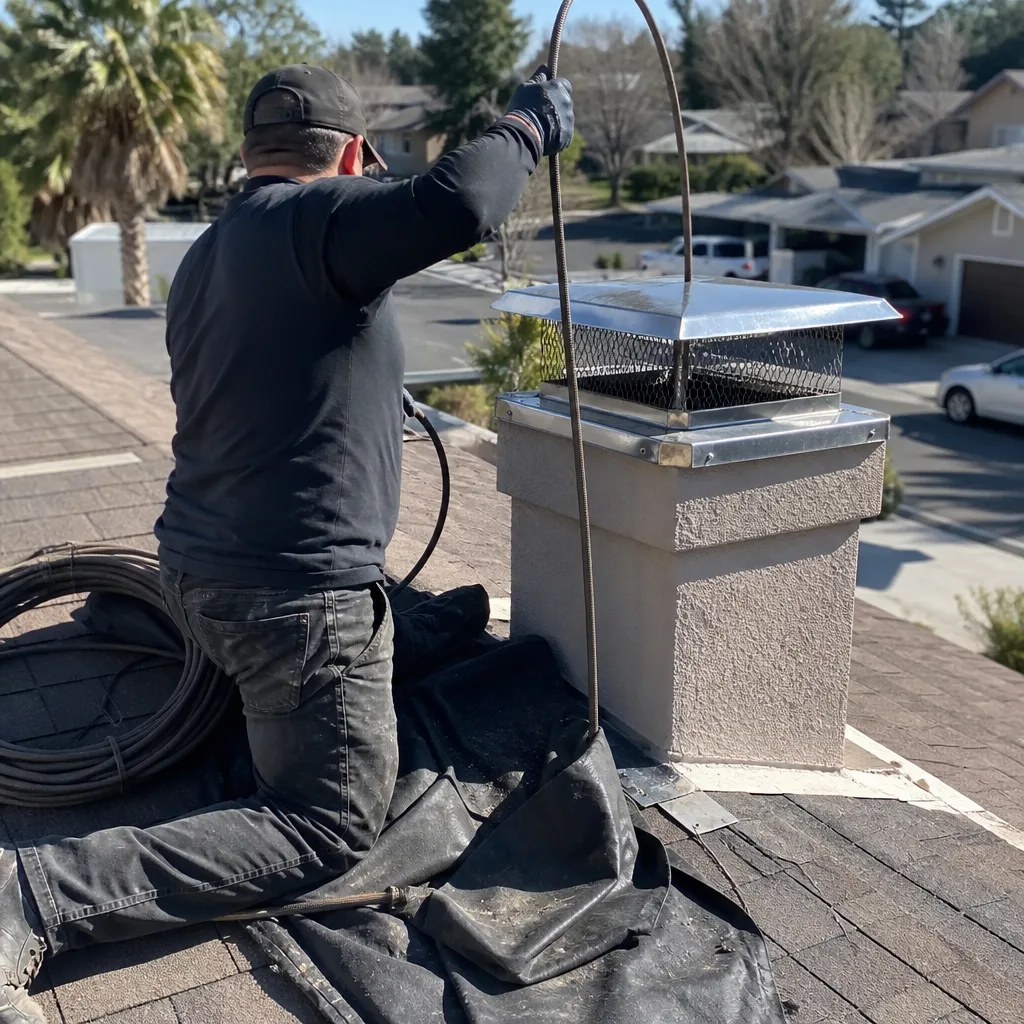
Chimney sweep logs do not sweep chimneys. They loosen some creosote - which then falls where a brush and vacuum still have to collect it.
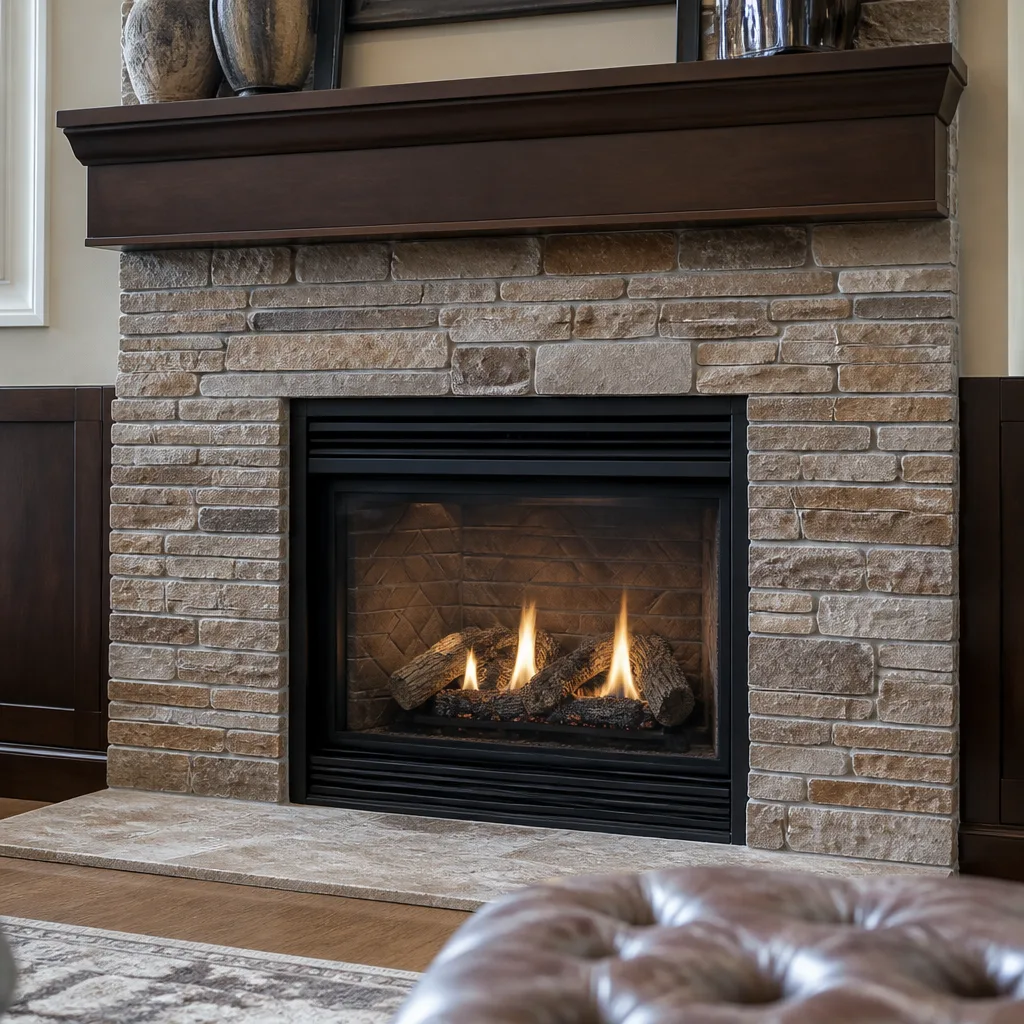
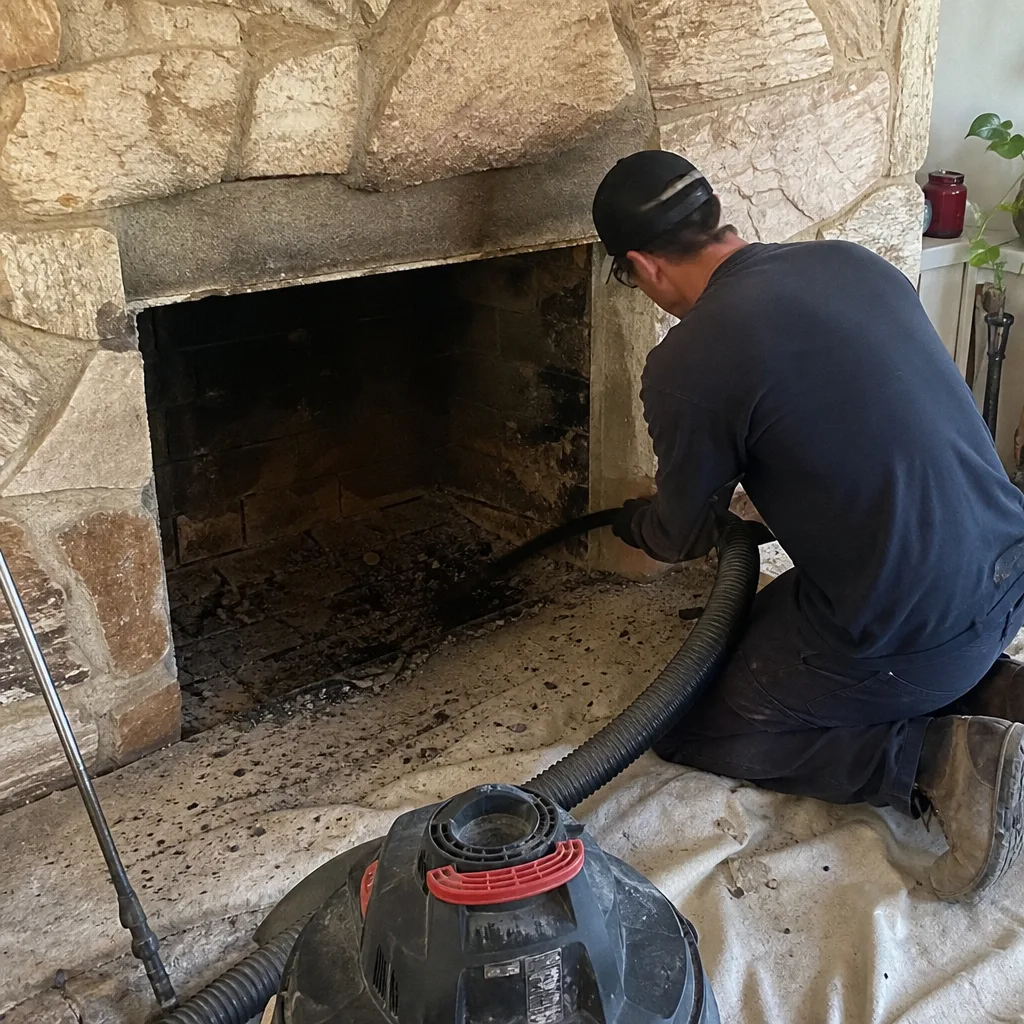 Before
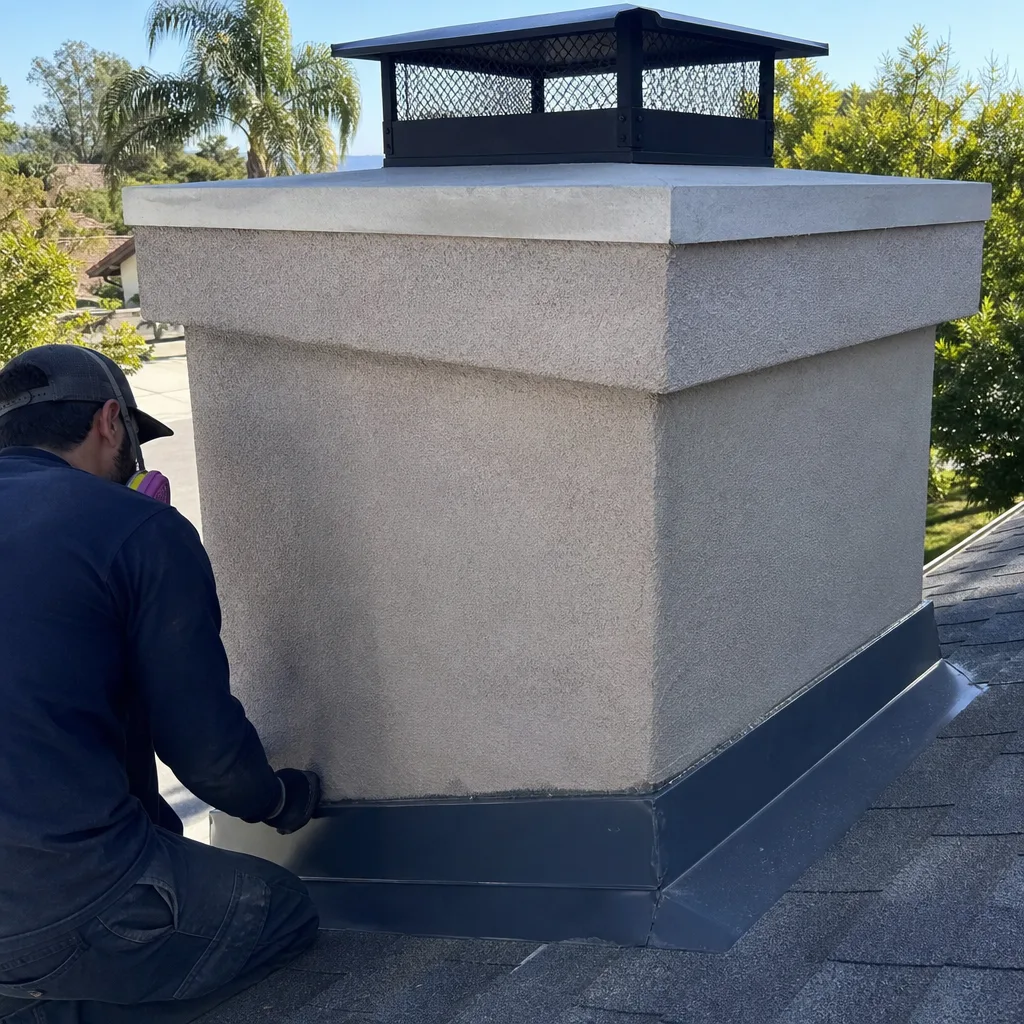 After
After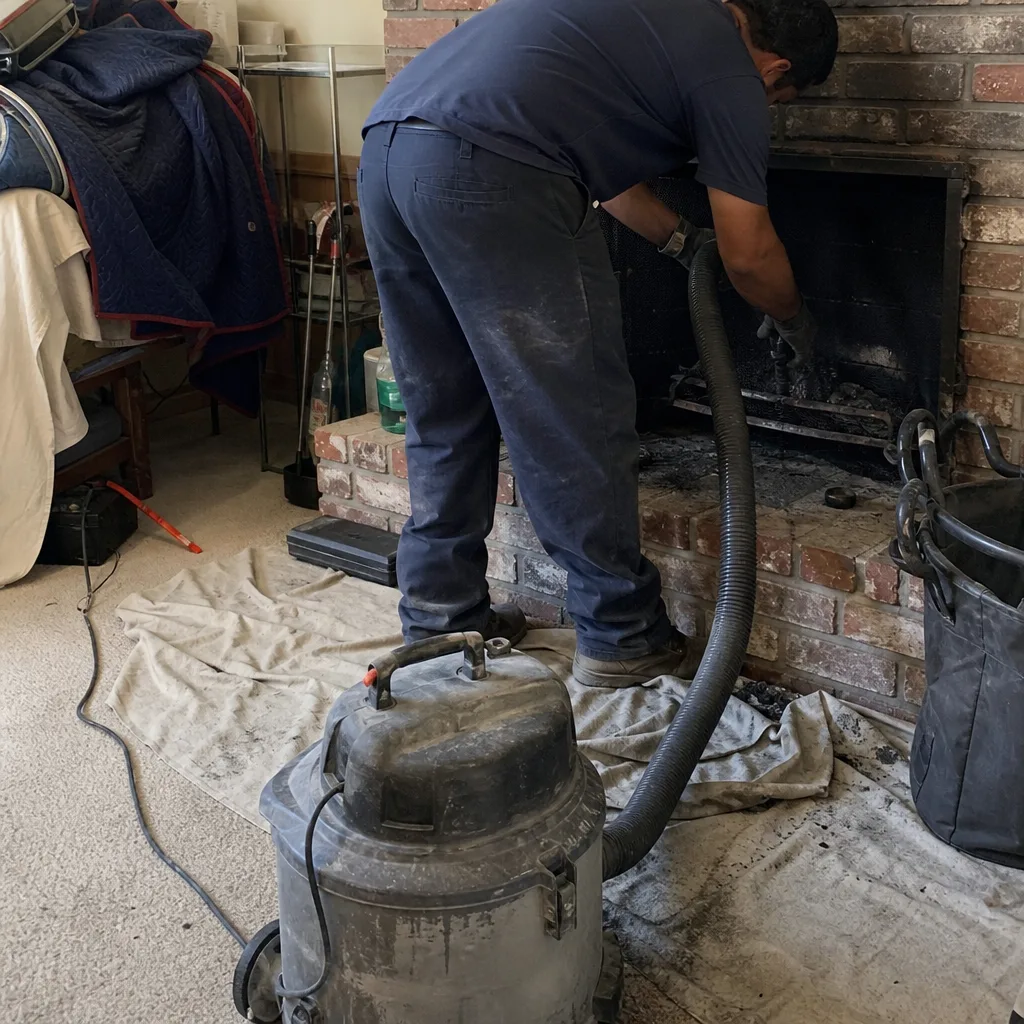 Before
 After
After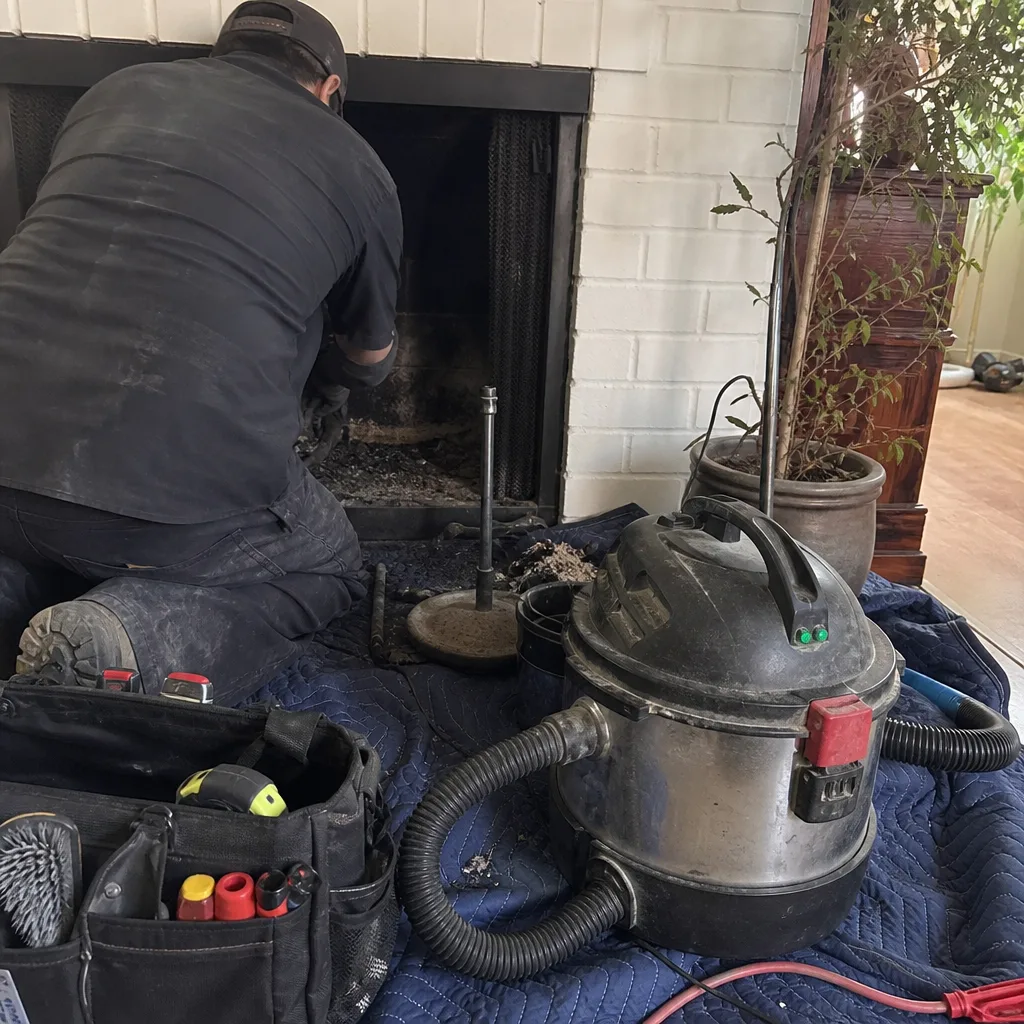 Before
 After
AfterChimney Cleaning Permits, Codes & Inspections in CA: What You Need to Know
In California, a chimney relining job done without a permit doesn’t just violate code - it can void your homeowner’s insurance coverage for a fire that starts in that flue, because the insurer will ask for inspection records that were never created. Most Santa Clarita homeowners assume chimney cleaning requires a permit; it doesn’t. But the line between routine maintenance and regulated repair is exactly where unscrupulous contractors blur scope, skip inspections, and leave you holding the risk. This guide draws that line using California Building Code sections, Los Angeles County procedures, and real permit thresholds so you know when to demand a permit number and when to refuse work that lacks one.
Quick Answer
Routine chimney cleaning and sweeping in California require no building permit. However, any repair, relining, appliance connection, or structural modification to a chimney or fireplace does require a permit under California Building Code Sections R1001 and R1003, enforced locally by the Level Two Chimney Santa Clarita home city’s Building and Safety Division. A documented NFPA 211 Level 2 inspection with camera-scan photos satisfies insurer due-diligence requirements without needing a permit, but the repair work it recommends cannot legally proceed without one.
Table of Contents
- Cleaning vs. Repair: Where the Permit Line Actually Sits
- California Building Code Sections That Govern Chimney Work
- NFPA 211 vs. California Code: Which Standard Applies When
- Los Angeles County and Santa Clarita Permit Jurisdiction
- How Unpermitted Work Voids Your Insurance Coverage
- How to Pull an Open-Permit Search on a Santa Clarita Address
- What a Level 2 Inspection Produces for Code and Insurance Records
- Hiring a Contractor: Red Flags and Documentation to Demand
 Before
 After
AfterCleaning vs. Repair: Where the Permit Line Actually Sits
The single most expensive misunderstanding we see in Santa Clarita homes is the assumption that “chimney service” is one category. It isn’t. California law treats routine maintenance and regulated construction as entirely separate activities, and the cost of confusing them falls on the homeowner.
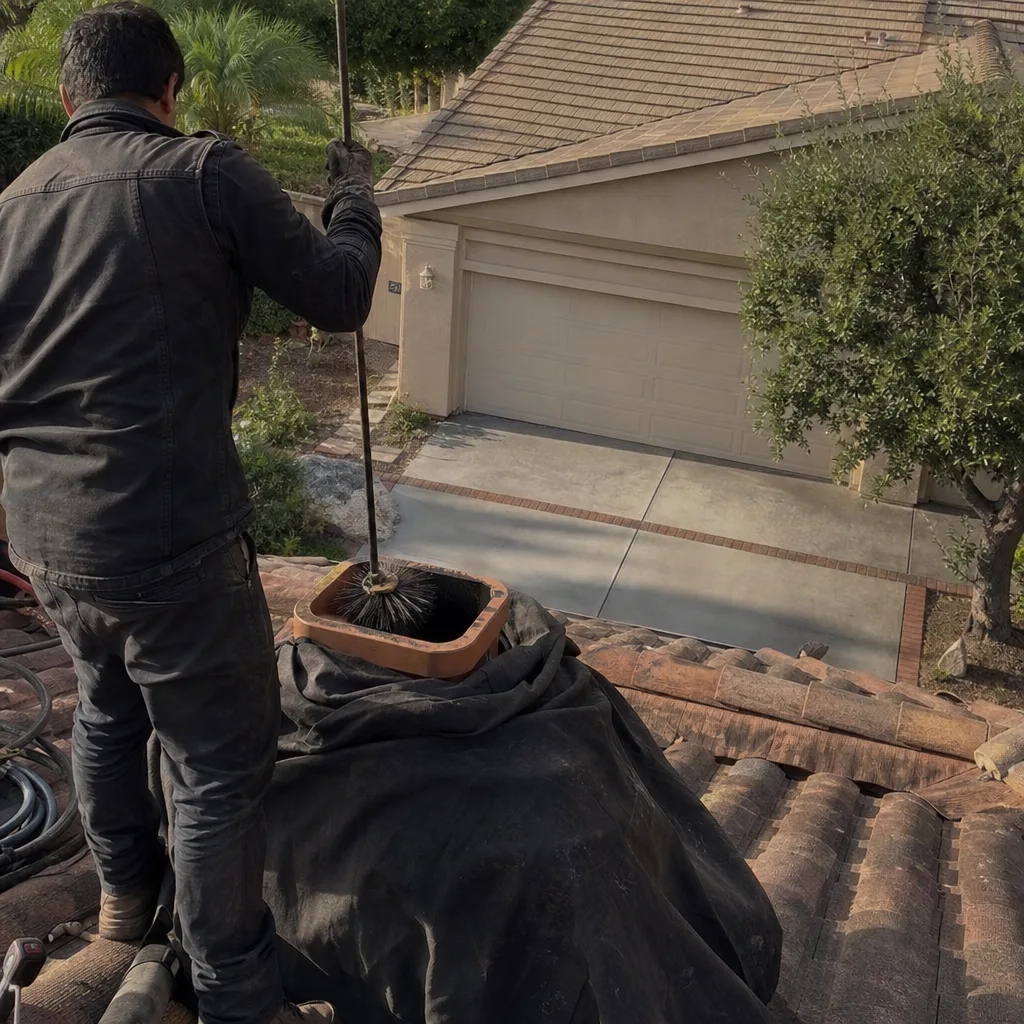
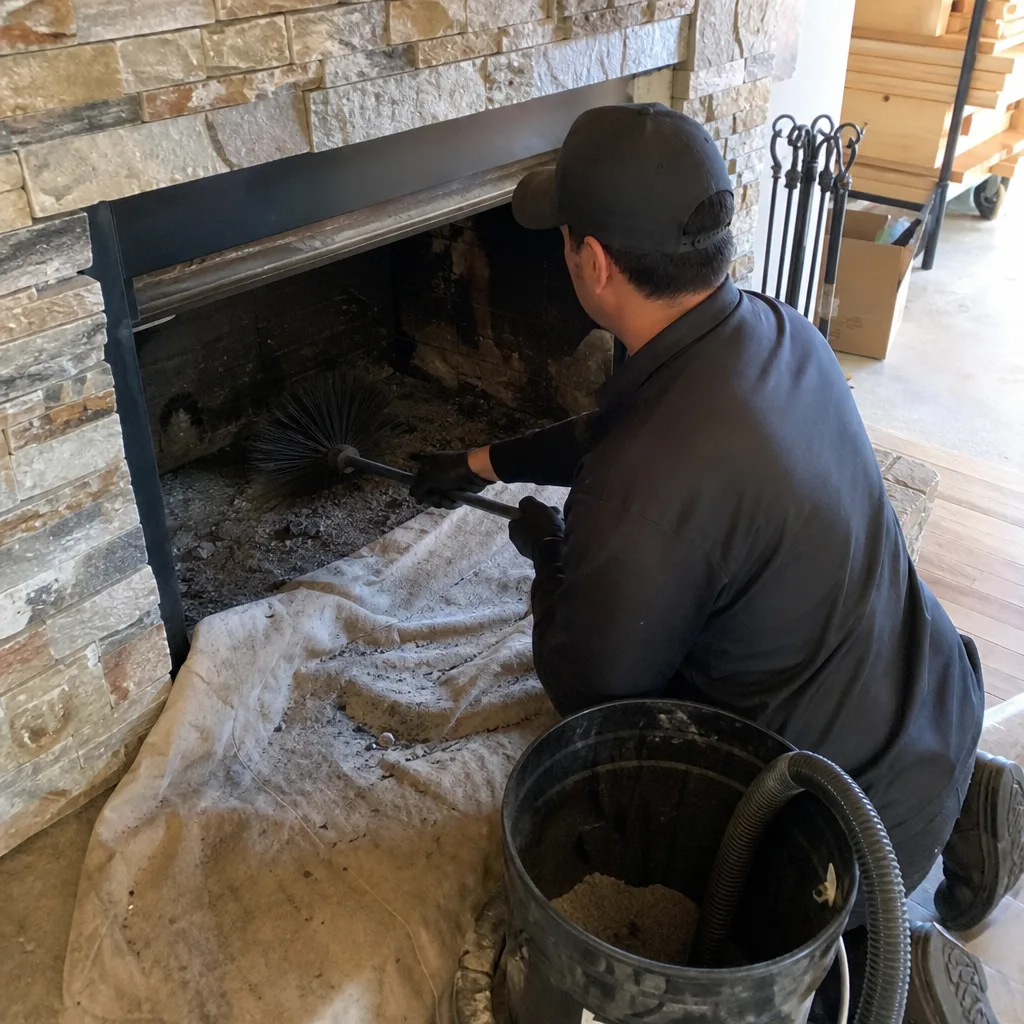
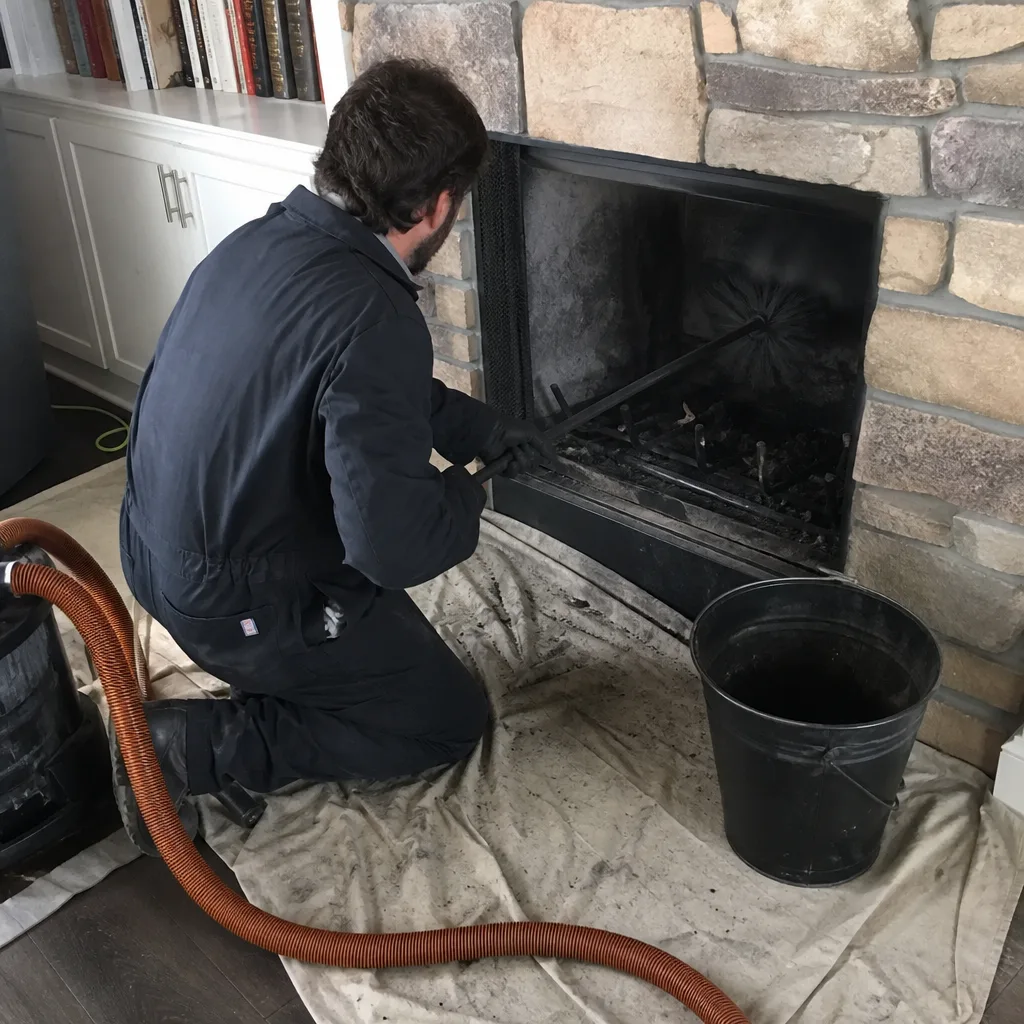
Chimney cleaning and sweeping - no permit required. Removing soot, creosote buildup, and debris from a flue, firebox, or smoke chamber is maintenance. A sweep using brushes, vacuums, and chemical treatments to address Class I or II creosote (the flaky or tar-like deposits from normal wood burning) does not alter the structure, appliance, or venting path. No permit. No inspection. No documentation filed with the city.
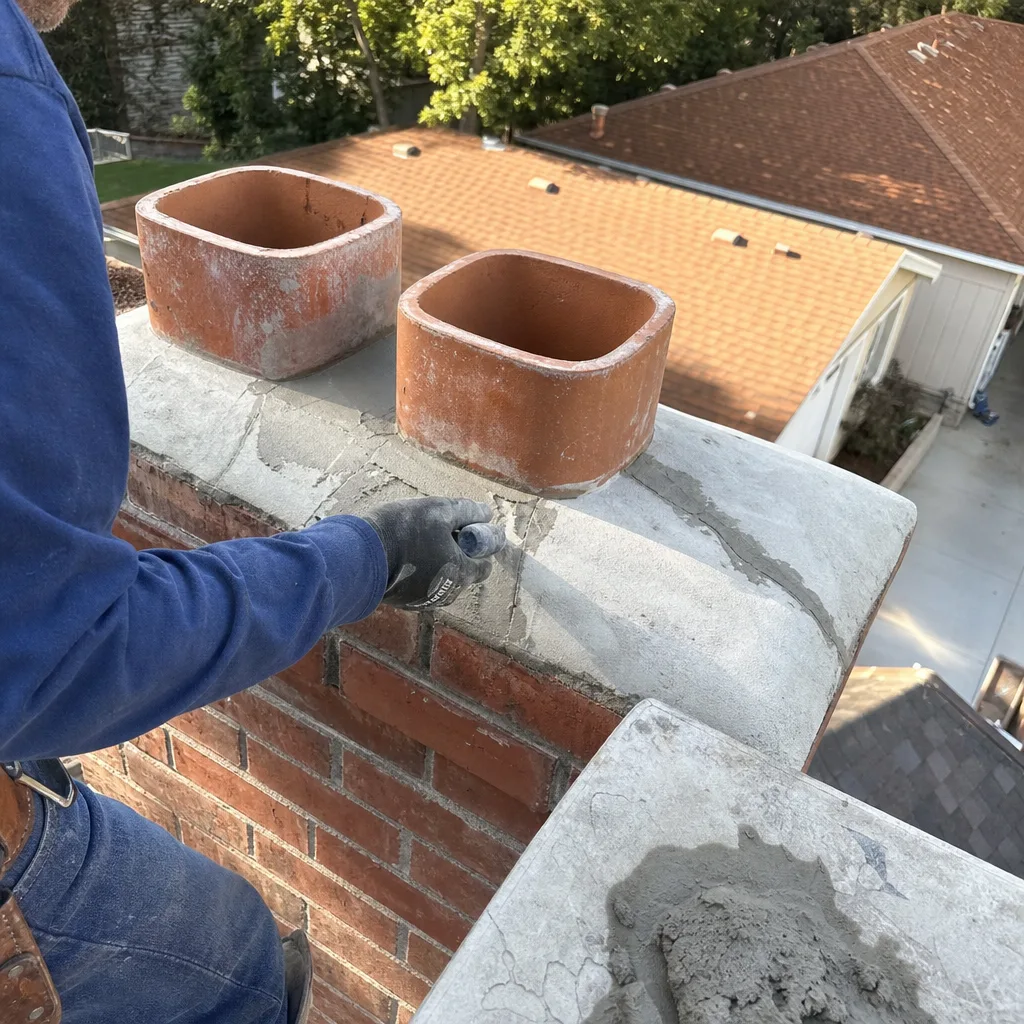
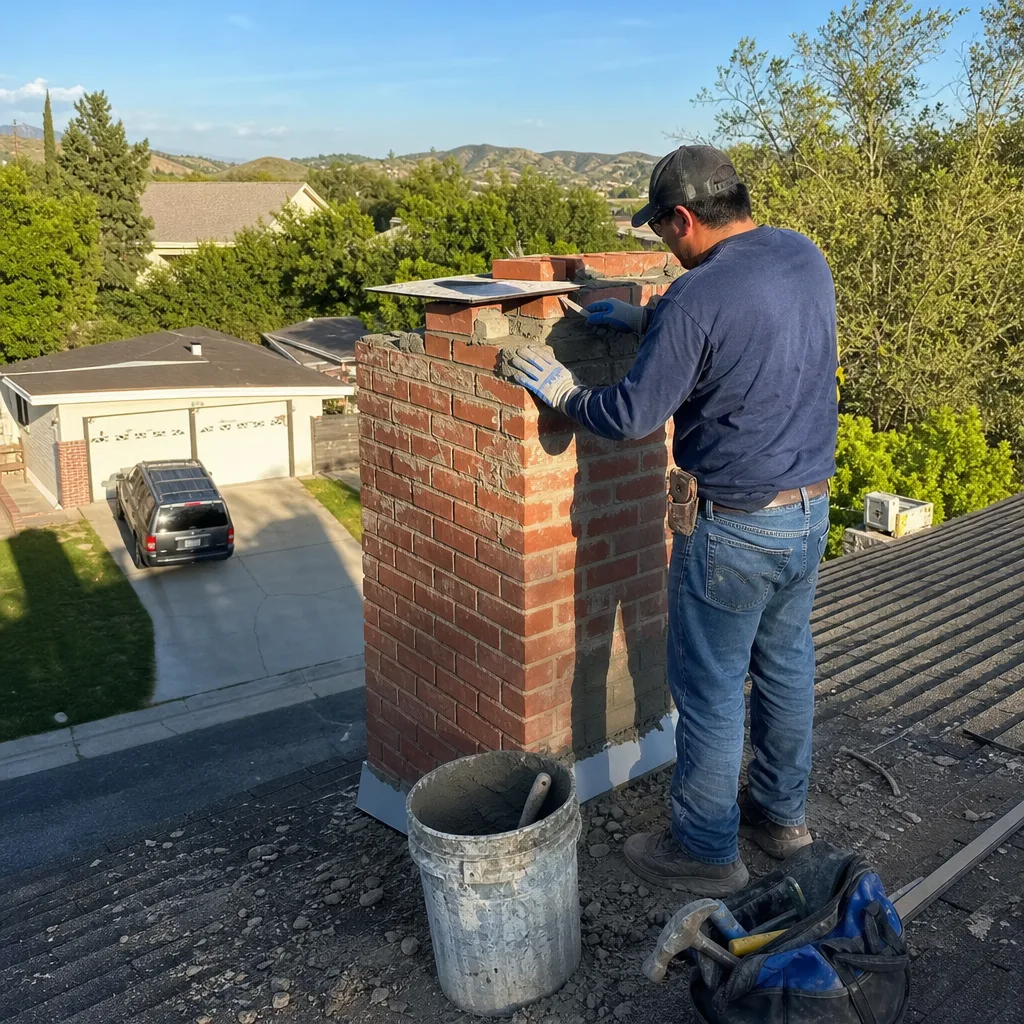
Chimney repair and modification - permit required. Once a technician touches the liner, mortar, crown, cap, or appliance connection, they’ve crossed into regulated work. Specific triggers include:
- Installing, replacing, or repairing a flue liner of any material, including stainless steel inserts from DuraFlex or Olympia Chimney
- Repointing or rebuilding masonry above the roofline
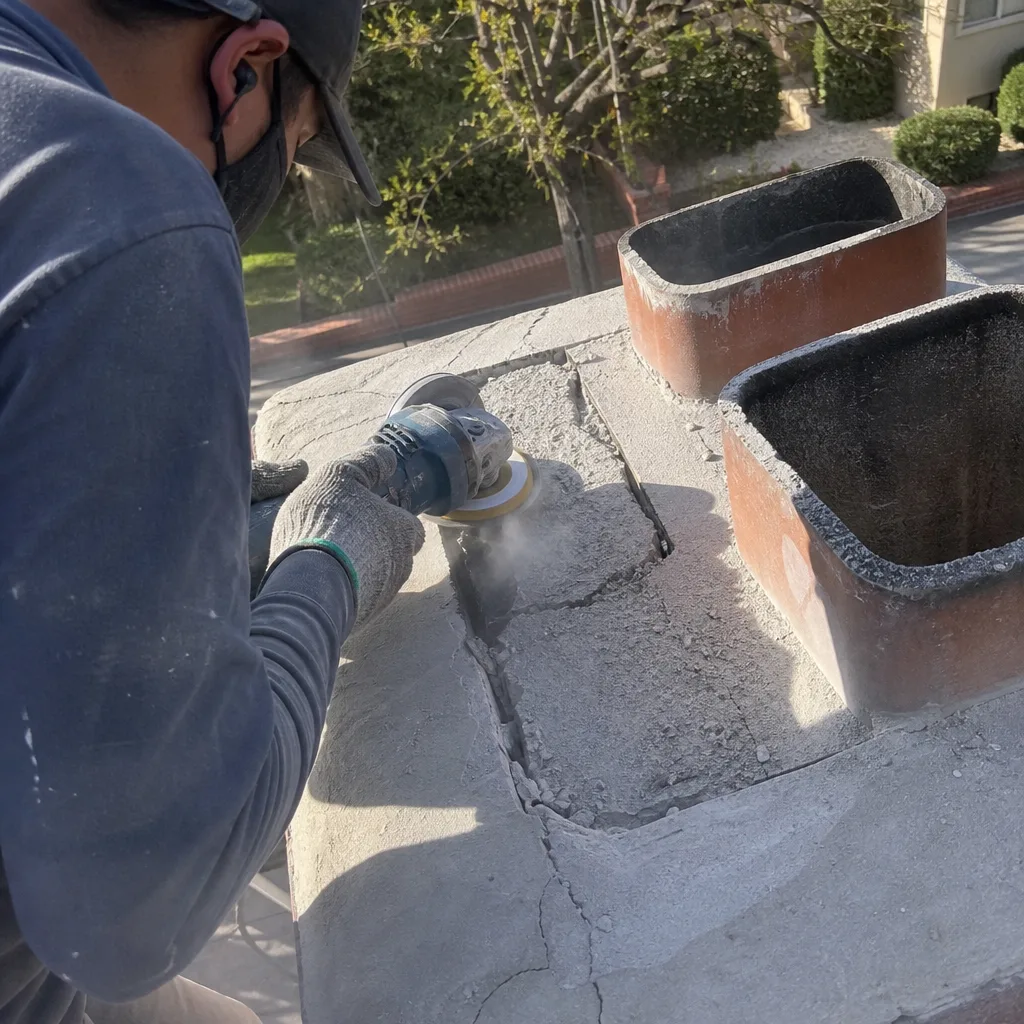
- Replacing a damaged crown or installing a new chimney cap that requires structural anchoring
- Connecting a new gas or wood appliance to the flue system
- Repairing spalling brick, deteriorated mortar joints, or smoke chamber parging (the smooth coating that directs smoke upward)
- Any modification to clearances to combustibles, including framing or insulation adjustments
In Santa Clarita’s dry climate, we regularly see contractors offer “a sweep and inspection” that quietly includes crown sealing with HeatShield or smoke chamber parging. Understanding the full scope of The Complete Guide to Chimney Cleaning in Santa Clarita helps homeowners recognize when maintenance crosses into regulated repair. The homeowner thinks they’re paying for maintenance. The contractor knows they’re performing repair work that requires a permit and often skips it to keep the price low and the job fast. We’ve found unpermitted liner installations in Valencia, unsealed smoke chamber repairs in Canyon Country, and crown rebuilds in Saugus with no city inspection record. Each leaves the homeowner exposed.
The test is simple: if the scope changes the chimney’s structure, materials, or venting capacity, it needs a permit. If you’re unsure, ask directly. A legitimate contractor names the permit requirement before work starts.
California Building Code Sections That Govern Chimney Work
California adopts the International Building Code with state amendments, published as the California Building Code (CBC) and California Residential Code (CRC). Chimney-specific provisions appear in several sections that every homeowner should recognize by number.
CRC Section R1001 - Masonry Fireplaces. Governs construction standards for new and repaired masonry fireplaces, including wall thickness, hearth extension dimensions, and clearance to combustibles. Any repair affecting these dimensions triggers permit and inspection requirements.
CRC Section R1003 - Masonry Chimneys. Specifies liner requirements, minimum flue sizes, height above roof penetrations, and structural support. Relining a flue to accommodate a new insert, resizing for a changed appliance, or repairing a liner that no longer meets R1003’s dimensional standards requires a permit.
CRC Section R1004 - Factory-Built Fireplaces. Factory-built units (common in Santa Clarita tract homes built 1985-2005) must be installed and repaired per manufacturer listings, typically UL 127 or UL 1482. Any deviation, including aftermarket liner installation, requires engineering review and permit.
CRC Section G2427 (formerly G2428) - Venting of Appliances. Governs connection of gas appliances to chimney flues, including liner sizing, vent connectors, and draft requirements. Gas log set installation in an existing fireplace often requires permit verification that the flue is properly sized for the combined load.
California Health and Safety Code Section 13146.1. Requires local enforcement agencies to inspect upon complaint or as part of sale transactions. This is the statute that lets a buyer’s inspector, or the city itself, flag unpermitted chimney work and require corrective permits with full inspection fees.
Los Angeles County, which includes Santa Clarita, enforces these codes through the Los Angeles County Building and Safety division for unincorporated areas and through individual city building departments for incorporated cities. Santa Clarita incorporated in 1987 and operates its own Building and Safety Division at City Hall on Citrus Street. Permit applications for chimney work route through this office, with inspections scheduled through the city’s online portal.
Permit fees in Santa Clarita for residential chimney repair typically run $150-$400 depending on scope, plus plan check fees if engineering drawings are required. The permit itself is a public record, permanently attached to the property’s Assessor Parcel Number (APN).
NFPA 211 vs. California Code: Which Standard Applies When
Homeowners encounter two standards with similar numbers and very different legal weight. Confusing them is common, and some contractors exploit the confusion.
NFPA 211: Standard for Chimneys, Fireplaces, Vents, and Solid Fuel-Burning Appliances. Published by the National Fire Protection Association, this is a consensus standard - a best-practice document developed by industry stakeholders. It specifies inspection levels (Level 1, 2, and 3), cleaning frequencies, and acceptable conditions. NFPA 211 is referenced by California code but is not itself law. Compliance is voluntary unless adopted by reference in a local ordinance or contract.
California Building Code / Residential Code. These are adopted laws, enforceable by building officials with the power to issue correction notices, red tags, and penalties. CBC/CRC incorporate NFPA 211 by reference for certain provisions, but they also add California-specific amendments, particularly for seismic bracing (relevant in Santa Clarita’s earthquake zone) and wildfire-urban interface zones.
Here’s how they interact in practice:
| Activity | Governing Standard | Legal Force | Documentation Required |
|---|---|---|---|
| Annual chimney sweep | NFPA 211 (recommended) | Voluntary | Company invoice, photo record |
| Level 2 inspection for real estate transaction | NFPA 211 | Contractual (often required by insurer or buyer) | Written report, camera footage |
| Flue liner replacement | CRC R1003 | Mandatory | Building permit, inspection sign-off |
| Smoke chamber parging | CRC R1001 | Mandatory | Building permit, inspection sign-off |
| Gas appliance connection | CRC G2427 | Mandatory | Building permit, mechanical inspection |
| Crown rebuild | CRC R1003 | Mandatory | Building permit, inspection sign-off |
When we perform a Chimney Cleaning & Sweep in Santa Clarita, we work to NFPA 211 standards because that’s the appropriate benchmark for maintenance. When we identify liner deterioration that requires replacement, we stop and explain that CRC R1003 now governs, a permit is required, and our written scope will specify the permit process. Clause 1 of the Haven Standard requires that written price and written scope before work starts - and that scope explicitly states when permit work is involved.
A contractor who says “we follow NFPA 211” for a liner replacement is telling you about their installation practice, not their legal compliance. The permit is still required.
Los Angeles County and Santa Clarita Permit Jurisdiction
Santa Clarita sits at a jurisdictional intersection that confuses even some local contractors. Understanding which agency issues permits and conducts inspections prevents costly misdirection.
City of Santa Clarita Building and Safety Division. For properties within city limits - which includes most of Valencia, Saugus, Canyon Country, and Newhall - all chimney repair permits route through the city. The division issues permits, reviews plans, and schedules field inspections. Final inspection approval generates a Certificate of Completion that becomes part of the property record.
Los Angeles County Fire Department - Health Hazardous Materials Division. Overlaps with city jurisdiction for specific fire safety concerns. If a chimney inspection reveals a hazardous condition that poses immediate fire risk (severe creosote blockage, damaged liner with open combustion exposure), the County Fire Department can issue an abatement order independent of the permit process. This is rare in routine residential work but becomes relevant in rental properties, multi-family units, and commercial installations.
Los Angeles County Regional Planning - for unincorporated pockets. Some addresses on the edges of Santa Clarita proper, particularly near Sand Canyon and areas north of Soledad Canyon Road, remain unincorporated county territory. These properties require Los Angeles County Building and Safety permits, not city permits. The permit application process and fee schedule differ.
How to determine your jurisdiction:
- Check your property tax bill. The taxing agency name indicates incorporation status - “City of Santa Clarita” or “Los Angeles County.”
- Search your address on the Level Two Chimney Santa Clarita home city’s website boundary map, or call Santa Clarita Building and Safety at (747) 294-2146.
- For properties near city boundaries, request a jurisdiction letter from the city - it’s free and resolves ambiguity before permit application.
In our experience across Santa Clarita’s neighborhoods, the most common jurisdictional confusion involves properties in the newer developments north of Copper Hill Drive, where annexation occurred in phases through the 1990s and 2000s. We’ve arrived at jobs where the homeowner obtained a county permit for city property, or vice versa, requiring restart of the application process. We verify jurisdiction as part of our pre-work documentation - another reason written scope review before scheduling matters.
Santa Clarita’s specific climate conditions also affect code interpretation. The city sits in a high wind zone (110 mph design wind speed per ASCE 7) and a moderate seismic zone. Chimney crowns and caps must withstand Santa Ana wind gusts that regularly exceed 50 mph in canyon corridors. Our material specifications for Gelco caps and custom flashing account for these loads, and permit inspectors verify anchorage adequacy during final inspection.
How Unpermitted Work Voids Your Insurance Coverage
This is where the abstract becomes concrete, and where Santa Clarita homeowners discover the cost of a contractor who “saved” them the permit fee.
Standard homeowner’s insurance policies contain a concealment or fraud clause and a maintenance and construction compliance clause. The first voids coverage for intentional misrepresentation. The second limits or excludes coverage for damage arising from work that violated applicable building codes. Chimney fires caused by unpermitted modifications are a textbook exclusion scenario.
Here’s the sequence we see in claims disputes:
- Homeowner has chimney “repaired” by a contractor who skips the permit to offer a lower price.
- Fire occurs in the flue, damaging the chimney, roof, and interior.
- Insurer’s adjuster requests permit records and inspection sign-offs for the repair work.
- No records exist. The insurer denies the claim under the construction compliance exclusion, or reduces payment to the cost of repairing only the original, permitted condition.
- Homeowner sues the contractor, who may be uninsured, unlicensed, or judgment-proof.
In California, insurers have become increasingly aggressive about this exclusion. The 2017-2018 wildfire seasons and subsequent litigation tightened underwriting scrutiny. A 2022 California Department of Insurance bulletin reminded carriers of their duty to investigate code compliance in fire claims. We’ve reviewed claim denials where the absence of a permit for a liner installation - work done five years before the fire - became the sole basis for denial.
The critical point: the insurer doesn’t need to prove the unpermitted work caused the fire. They need only prove the work was unpermitted and the policy excludes such losses. The burden shifts to the homeowner to demonstrate compliance, which is impossible without records.
Our documented photo records under Haven Standard Clause 4 serve a secondary purpose here. While a Level 2 inspection itself doesn’t require a permit, the dated, geotagged photos of existing conditions can establish the pre-repair state of a chimney. If subsequent unpermitted work by another contractor causes damage, our records help the homeowner prove what existed before. We’ve provided these records for insurance disputes in Stevenson Ranch and Westridge.
How to Pull an Open-Permit Search on a Santa Clarita Address
Before buying a home in Santa Clarita, or before hiring a contractor for chimney work, you should verify whether open or expired permits exist. Unpermitted work from prior owners becomes your problem at closing, and open permits can block new permit issuance until resolved.
Step-by-step: Santa Clarita permit search
- Visit the Santa Clarita Building and Safety portal. The city maintains an online permit history search at the Community Development Department section of santa-clarita.com. No account required for basic searches.
- Enter the property address. Use the exact street address as it appears on tax records. The system will not auto-correct “St.” versus “Street.”
- Review permit history. Look for permits with type descriptions including “CHIM,” “FIREPLACE,” “MECH” (mechanical, for gas appliance connections), or “ROOF” (if chimney work was part of a larger roofing permit).
- Check status fields. “FINAL” means inspected and approved. “EXPIRED” means work was not completed or inspected within the permit’s valid period (typically 180 days in Santa Clarita, extendable). “ISSUED” or “IN REVIEW” means active.
- Request a written status letter. For pending purchases, email Building and Safety with the APN and request a written confirmation of no open permits. There’s a small fee, typically $25-$50, and a 3-5 day turnaround.
For Los Angeles County unincorporated properties:
- Use the LACounty.gov Building and Safety “Property Information” tool.
- Search by address or APN. County records are less detailed than Santa Clarita’s but show permit type and status.
- For properties in the county’s jurisdiction, call the Santa Clarita Valley field office at (747) 294-2146 for assistance.
Red flags in permit history:
- Multiple expired permits for the same scope - suggests repeated failed inspections or contractor abandonment
- Permits with no final inspection - work may be incomplete or concealed
- No permits for visible chimney modifications - strong indicator of unpermitted work
- Permits in a different owner’s name with no transfer documentation - may indicate undisclosed work
We provide free permit history review as part of our pre-purchase Chimney Repair in Santa Clarita consultations. Bring the address; we’ll identify what should exist and what gaps warrant investigation before closing.
What a Level 2 Inspection Produces for Code and Insurance Records
The NFPA 211 Level 2 inspection is the standard we established as default practice in 2009, years before it became Haven Standard Clause 4. It occupies a unique position: comprehensive documentation without permit requirement, producing records that satisfy insurer due-diligence and support code-compliance verification for subsequent permit work.
What a Level 2 inspection includes:
- Visual examination of accessible interior and exterior chimney components
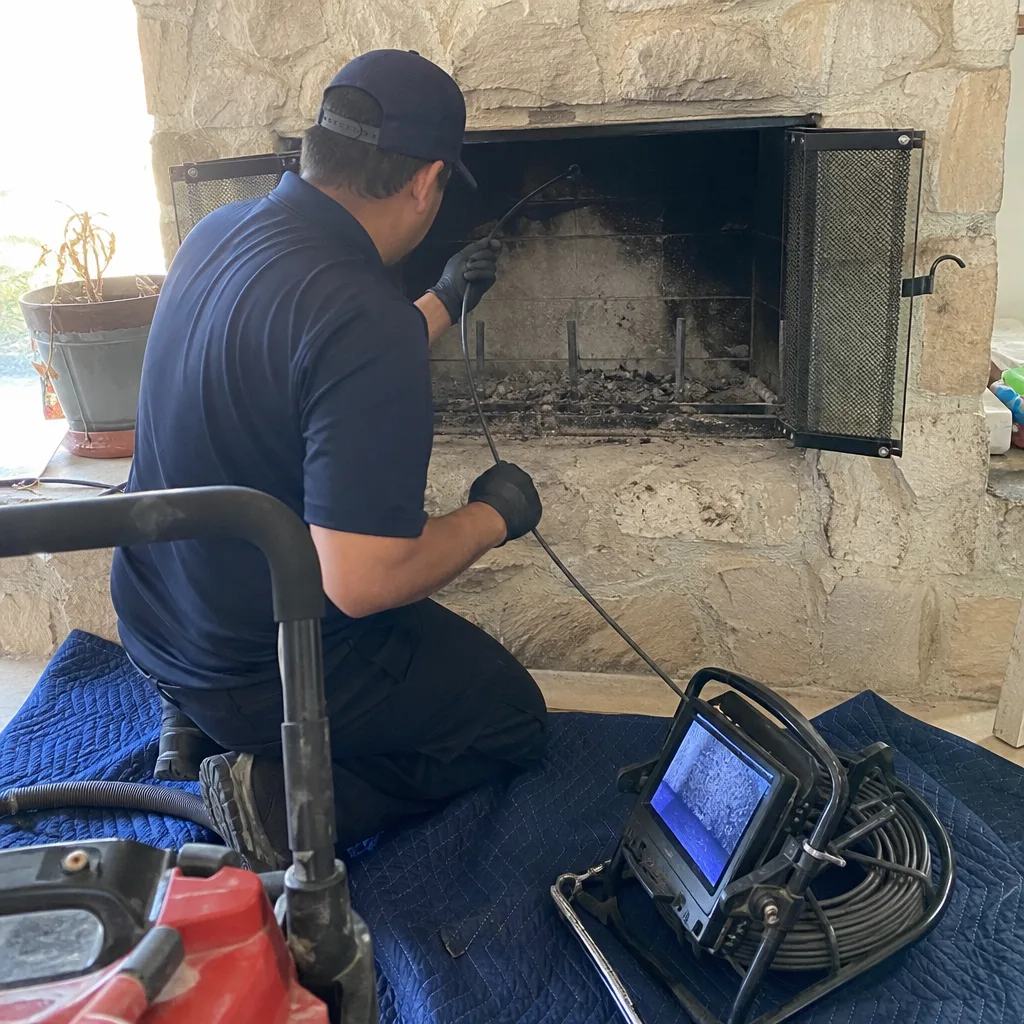
- Camera-scan of the flue liner interior, from firebox to crown, with video recording
- Smoke chamber and firebox condition assessment
- Crown, cap, and flashing integrity check
- Clearance to combustibles verification in accessible areas
- Appliance connection and venting path review
- Documentation of creosote classification (Class I, II, or III) and recommended cleaning scope
What the homeowner receives:
- Written report with findings, recommendations, and priority rankings
- Digital photo record and video file of flue interior
- Written scope and written price for any recommended work, with permit requirements explicitly noted
- Written warranty on any work performed
The Level 2 inspection does not require a permit because it is diagnostic, not modificatory. It examines existing conditions without altering them. This distinction matters for timing: a homeowner can obtain a Level 2 inspection at any time, including during a real estate transaction’s contingency period, without triggering the permit timeline.
For insurance purposes, the Level 2 record serves several functions. It establishes baseline conditions for future claims. It demonstrates due diligence in maintenance, countering insurer arguments of negligence. And when repair work is needed, the inspection report provides the documentation that supports permit application and contractor scope definition.
In Santa Clarita’s competitive real estate market, we’ve performed Level 2 inspections for buyers in Valencia’s gated communities, Canyon Country equestrian properties, and Newhall’s historic district. Each produced records that either cleared the contingency or identified unpermitted work requiring seller correction. The camera footage is particularly valuable - it shows what no flashlight inspection can, and it timestamps conditions in a way that protects all parties.
Clause 4 of the Haven Standard requires this photo record on every job, without exception. Not as an upsell. Not as an option. As standard practice since 2009, maintained in our archive for customer access.
Hiring a Contractor: Red Flags and Documentation to Demand
The permit system only works if contractors participate honestly. In Santa Clarita’s chimney service market, we’ve identified consistent patterns that separate legitimate operators from those who shift risk to homeowners.
Red flags during quote process:
- Refusal to specify in writing whether work requires a permit
- Statement that “permits aren’t needed for this kind of job” without citing code section
- Price significantly below competitors for scope that clearly involves liner or masonry work
- Request for cash payment or payment to individual rather than company
- No license number displayed on quote, vehicle, or website (California requires C-29 Masonry or C-61/D-49 Sweeper specialty license for chimney work)
- No proof of workers’ compensation insurance - critical in California, where homeowner liability for uninsured worker injury is substantial
Documentation to demand before work begins:
- Written scope of work with each task itemized and permit status noted
- Written price with payment schedule - Haven Standard Clause 1 requires this before any work starts
- Permit application number or confirmation that permit will be pulled before work commences
- Certificate of insurance naming you as additional insured for the project duration
- Copy of contractor’s license verified at cslb.ca.gov
- Written warranty on materials and workmanship, with duration and coverage specified
Our process at Fireplace Services in Santa Clarita follows this sequence on every job: inspection, written findings, written scope with permit determination, written price, customer authorization, permit pull (when required), scheduled work, final inspection, documentation delivery. No shortcuts. No surprises.
The 365-Day Done Right Promise applies to all work, but it cannot remedy insurance denial from unpermitted work performed by another contractor. We can repair the chimney; we cannot retroactively create permit records that don’t exist. This is why we emphasize permit verification during our free second opinion service - bring us a competitor’s written quote, and we’ll identify permit gaps before you commit.
Common Mistakes to Avoid
- Assuming “licensed and insured” means permit-compliant. A contractor can hold a valid CSLB license and still skip permits to cut costs. License verification and permit compliance are separate checks - do both.
- Accepting verbal assurance that a permit “isn’t needed.” California code sections are public record. A contractor who won’t cite the specific exemption they’re relying on is avoiding accountability.
- Paying in full before final inspection. Santa Clarita allows partial payment at rough inspection and balance at final. Full prepayment removes leverage to ensure permit completion.
- Skipping permit research before home purchase. Unpermitted chimney work discovered after closing becomes the buyer’s expense to legalize. The $50 permit status letter is cheap insurance.
- Confusing a “sweep” with a “repair” in scope documents. Contractors sometimes use maintenance terminology for work that triggers permit requirements. Read the task list, not the headline.
- Failing to request camera documentation. Without dated photos of flue conditions, you cannot prove pre-existing damage or demonstrate maintenance diligence to insurers.
- Ignoring Santa Clarita’s wind and seismic requirements. Standard California specifications may not account for local conditions. Verify your contractor’s material specs include appropriate anchorage and bracing.
When to Call a Professional
Call a professional when any of these conditions apply: you’re buying or selling a home and need documented chimney condition; you’ve been told you need repair work but haven’t received a written scope citing code requirements; you suspect previous work was unpermitted; or you’re preparing for burning season and want verification that your system is safe to operate. Browse our more guides & resources for additional homeowner education.
In Santa Clarita, where temperatures drop into the 30s on winter nights and fireplace use extends from October through March, pre-season inspection is the norm among informed homeowners. But the call should also happen when something changes - a new appliance installation, visible masonry damage after wind events, or smoke odor when the fireplace isn’t in use.
Level Two Chimney Santa Clarita offers free estimates in Santa Clarita - call (747) 294-2146. Every estimate includes a preliminary scope discussion, permit requirement assessment, and written price before any commitment. Live phone support runs 24 hours a day, 7 days a week, with background-checked, uniformed technicians and license information displayed on every page.
Frequently Asked Questions
No. Routine chimney cleaning and sweeping, including creosote removal and debris clearing, is maintenance work that does not require a building permit under California Residential Code. However, if the “cleaning” includes liner repair, smoke chamber parging, or crown sealing, it crosses into regulated repair and requires permitting. Call (747) 294-2146 for a free scope assessment if you’re unsure where your job falls.
Permitted chimney repair in Santa Clarita typically ranges from $1,200 for minor crown and cap work to $4,500-$7,500 for stainless steel liner replacement with permit and inspection fees included. Permit fees add $150-$400 depending on scope. Level Two Chimney Santa Clarita provides a written price before work starts that itemizes labor, materials from suppliers like Famco or Olympia Chimney, permit costs, and inspection scheduling - no call-for-quote ambiguity. Call (747) 294-2146 for an exact quote; estimates are free.
NFPA 211 recommends annual inspection, with cleaning frequency determined by creosote accumulation, not calendar alone. In Santa Clarita’s dry climate with hard water mineral content, we often see accelerated masonry deterioration that increases debris accumulation. Most wood-burning households need sweeping every 1-2 cords burned, typically annually for regular use. Gas fireplaces require less frequent cleaning but still need annual inspection for venting integrity. A Level 2 inspection with camera scan determines actual condition rather than guessing.
Skipped maintenance allows creosote buildup, which ignites at approximately 451°F and burns at temperatures exceeding 2,000°F, damaging liners and penetrating to framing. In Santa Clarita’s older neighborhoods like Newhall, we’ve seen unlined chimneys from pre-1940 construction where skipped maintenance led to pyrolysis of adjacent wood framing - a hidden fire risk that camera inspection reveals before catastrophe. Carbon monoxide infiltration from blocked or damaged flues presents the more common danger: odorless, invisible, and fatal at concentrations above 400 ppm. The cost of maintenance is fractional compared to structural fire damage or health consequences.
You need a new liner when the existing liner is damaged, improperly sized for the connected appliance, or absent entirely - conditions a Level 2 camera inspection confirms with visual evidence. In Santa Clarita, we regularly find clay tile liners cracked by thermal cycling or earthquake stress, and unlined brick chimneys in homes built before 1940 that never had proper protection. We do not recommend liner replacement without camera documentation you can review yourself, and we specify when conditions allow monitored use versus immediate replacement. A free second opinion on any written estimate is always available.
Request the permit application number and verify it directly with Santa Clarita Building and Safety at (747) 294-2146 or through the city’s online portal. The permit should show your address, the contractor’s license number, scope matching your written contract, and status progressing from “ISSUED” to “FINAL.” Never accept a contractor’s claim that “the permit is in process” without an application number you can independently verify. Final inspection approval is the only status that confirms code-compliant completion.
The Bottom Line
California chimney cleaning requires no permit; California chimney repair always does, and the line between them is where homeowners get hurt. Know the code sections that govern your project. Verify jurisdiction - city or county - before application. Pull permit history before buying. Demand camera documentation for every inspection. And never accept a price that omits permit costs without explicitly stating why the work is exempt. The documentation you require today is the protection you’ll need when an insurer asks for it tomorrow.
Written by Corrine Halstead, Owner at Level Two Chimney Santa Clarita, serving Santa Clarita since 2009.