
Last updated September 21, 2026
Level 1 sweep and inspection to the NFPA 211 annual standard - flue, crown, cap, and flashing checked and photographed
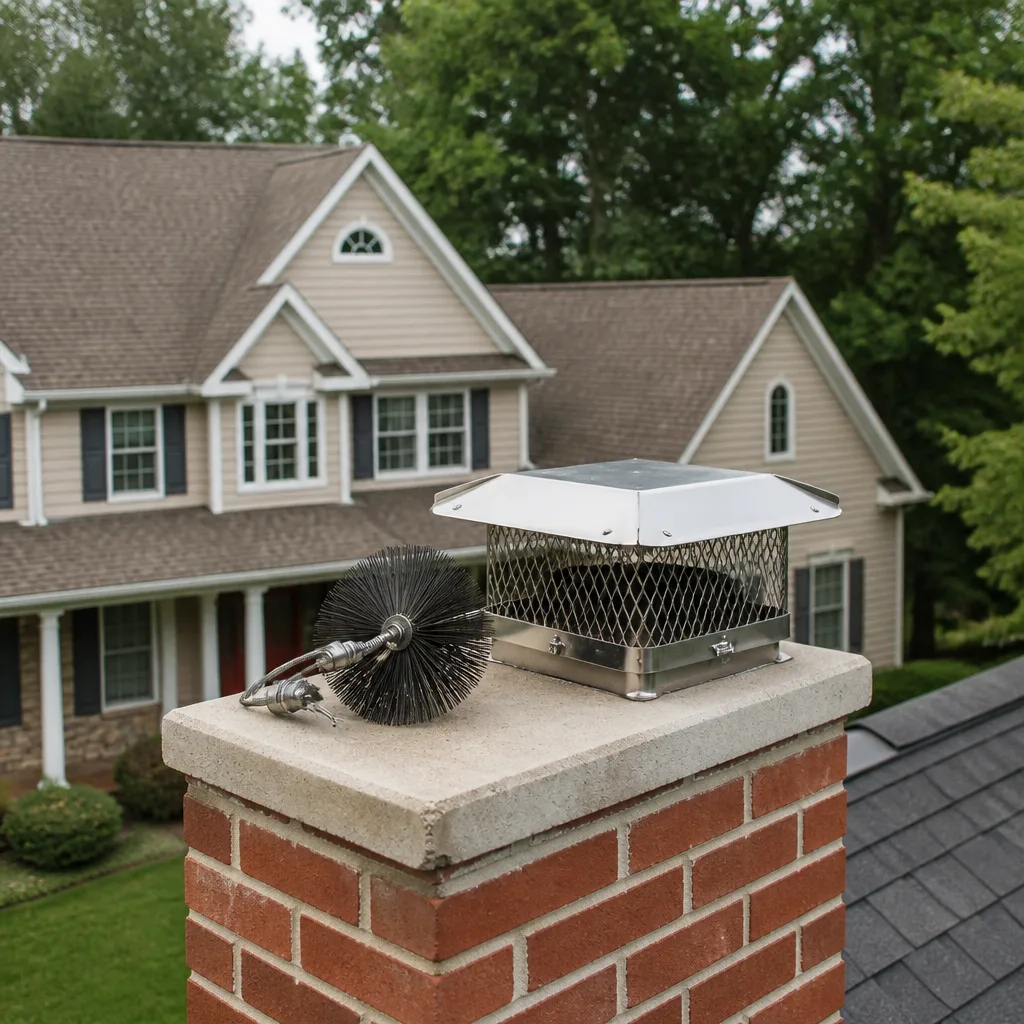
Chimney sweep logs do not sweep chimneys. They loosen some creosote - which then falls where a brush and vacuum still have to collect it.
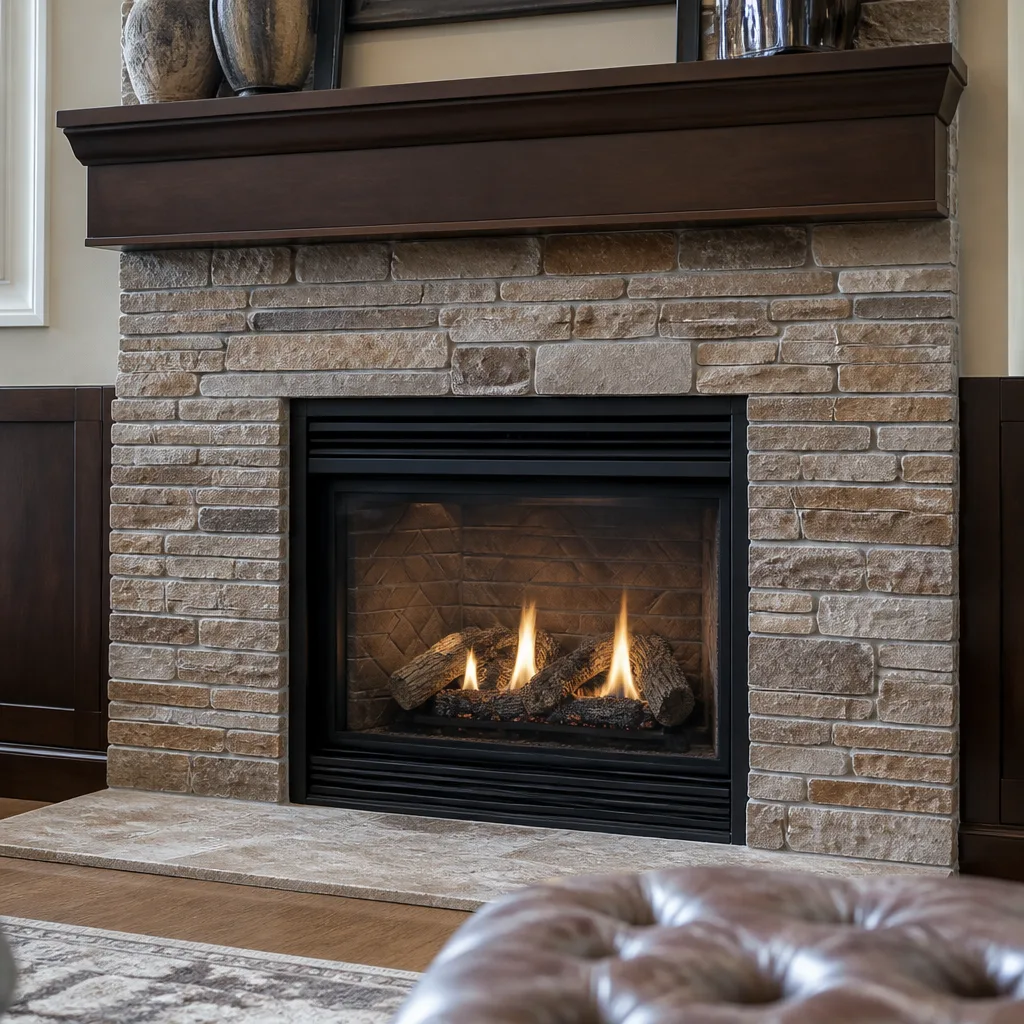
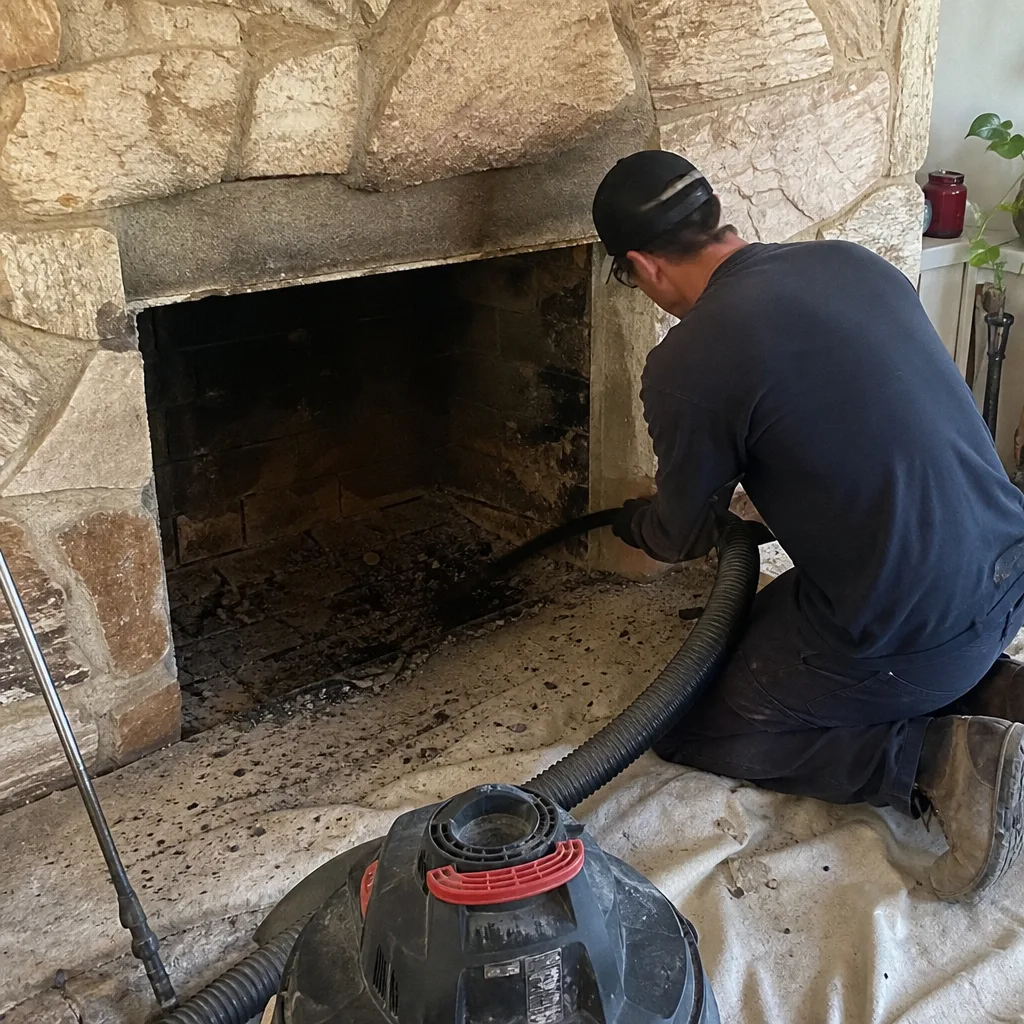 Before
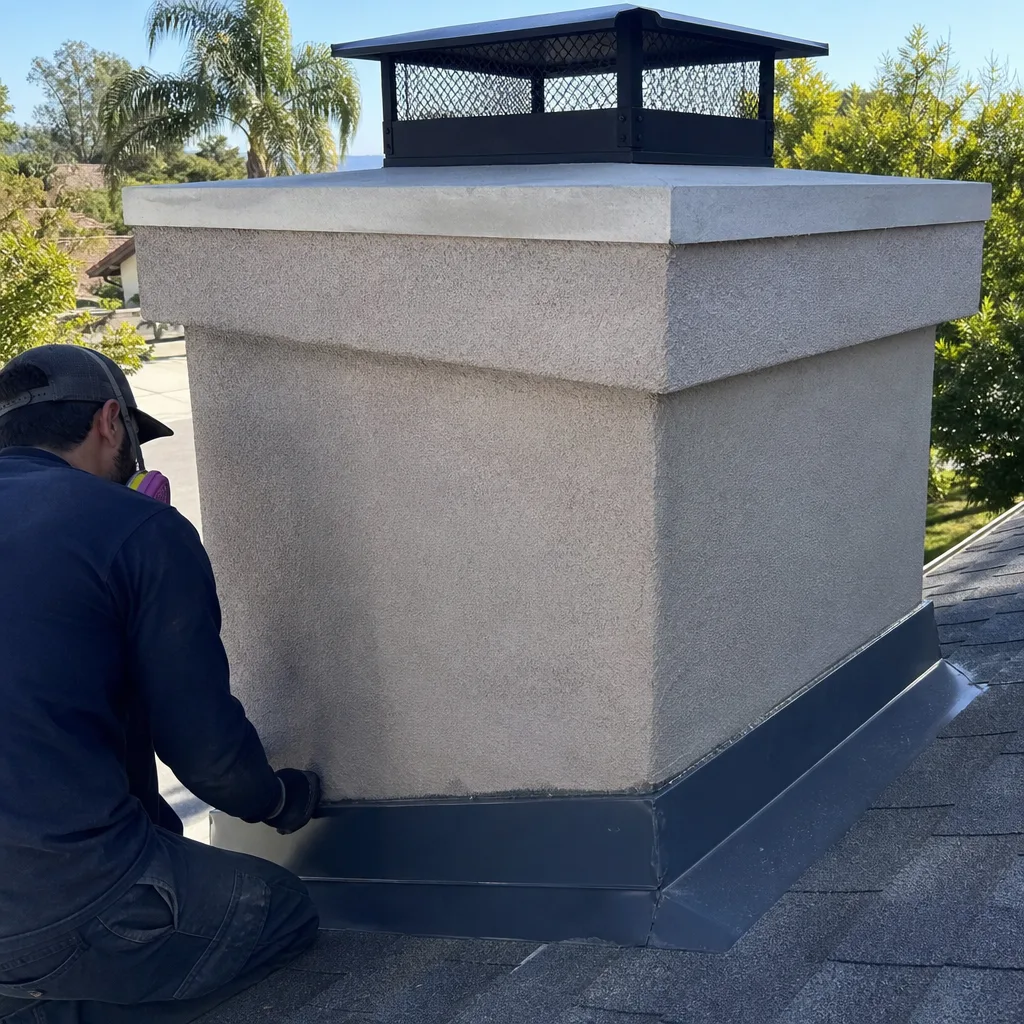 After
After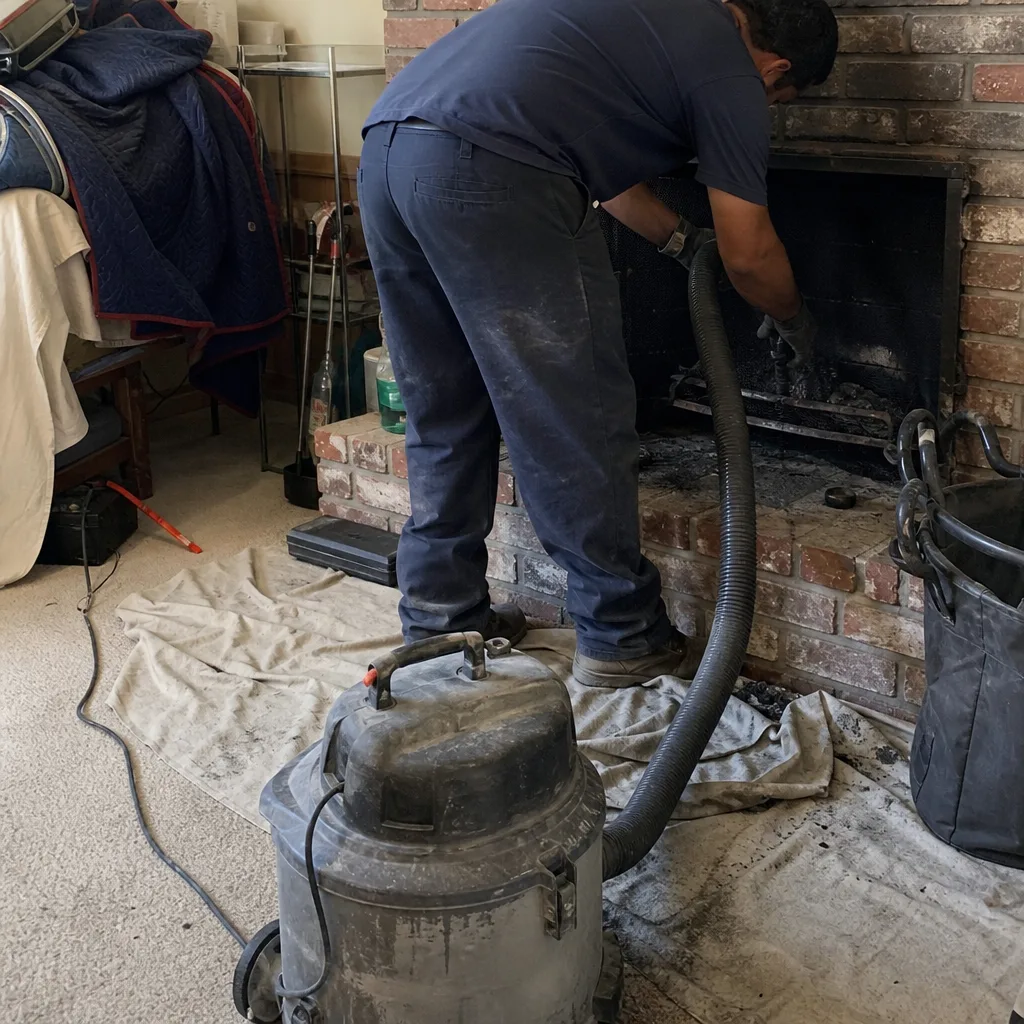 Before
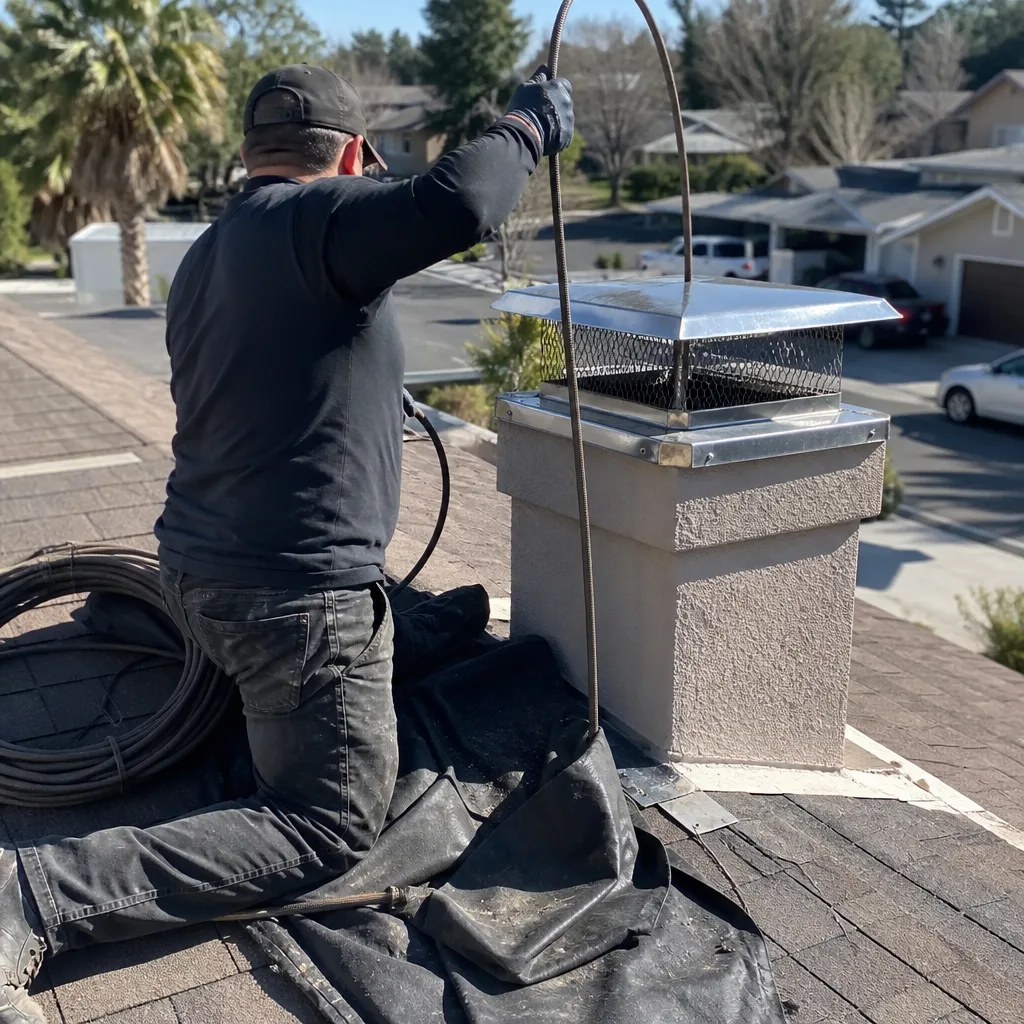 After
After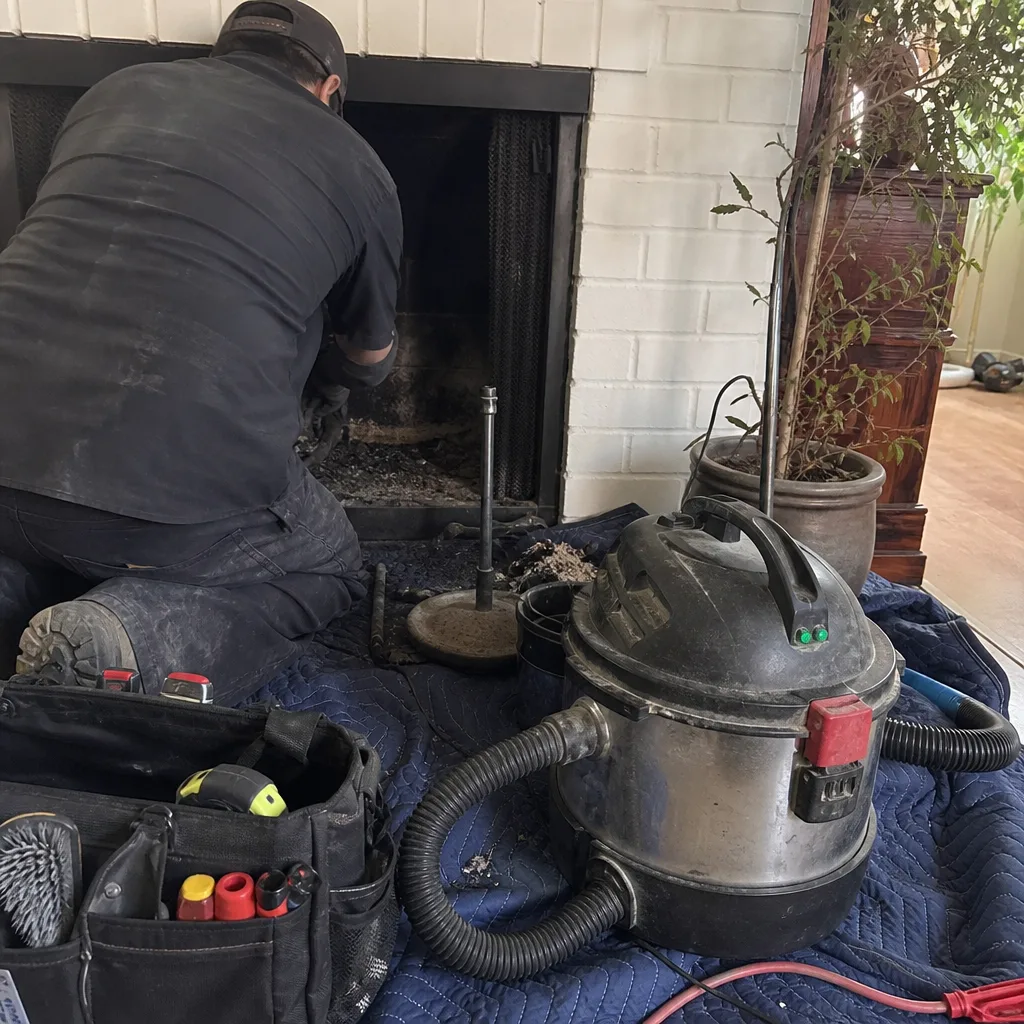 Before
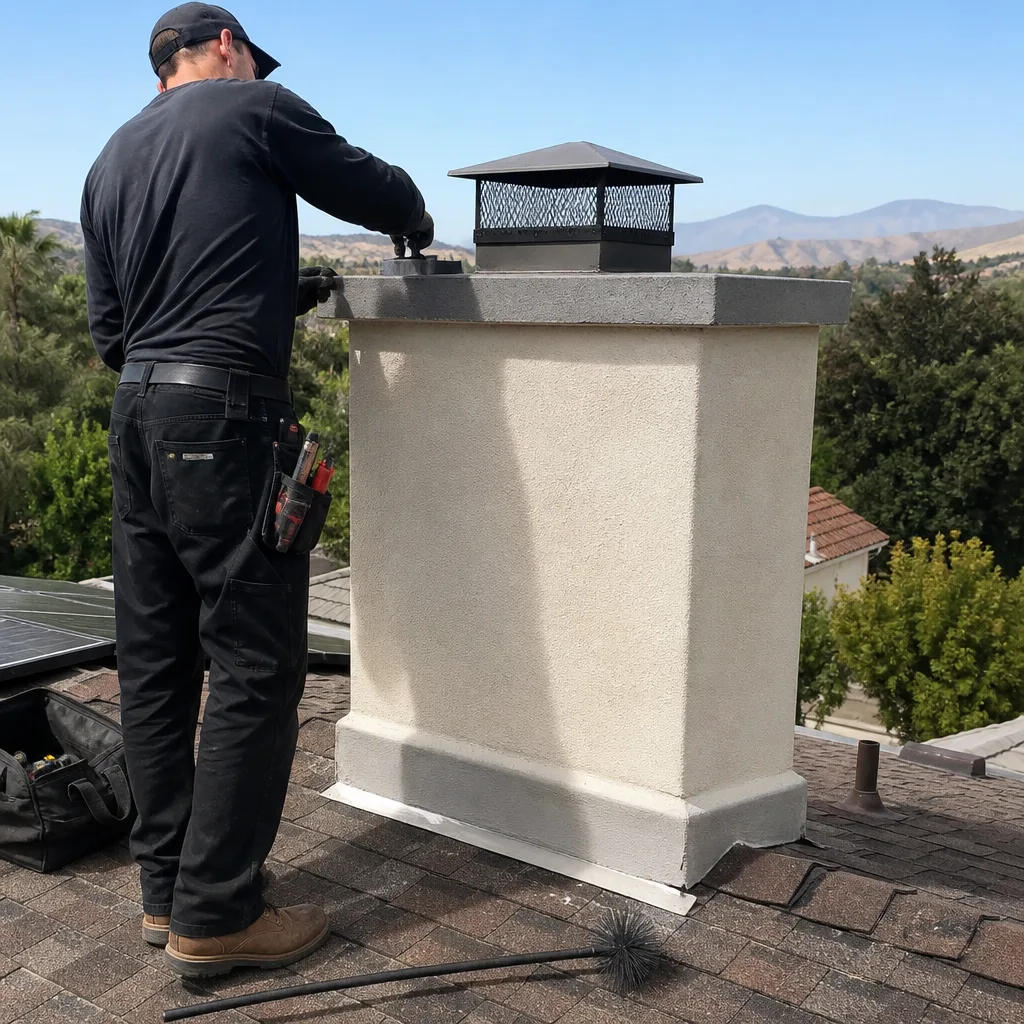 After
AfterChimney Cleaning & Sweep Maintenance Checklist for Santa Clarita Homeowners
The most dangerous entry on most chimney checklists is “no visible damage.” In Santa Clarita, where winter burn season runs October through April and summer temperatures regularly hit triple digits, the cracked flue tile or deteriorated liner that starts a house fire is almost never visible from the firebox opening or the rooftop. We’ve completed more than 38,000 chimney inspections since 2009, and the majority of serious defects we’ve documented were found only after the camera went down the flue. This guide draws a clear boundary between what you can observe yourself, what requires a sweep’s tools and training, and what demands a camera inspection. You’ll learn the exact pass-fail criteria for each level, how Santa Clarita’s climate affects maintenance timing, and how to use your past inspection reports as a baseline so no sweep is guessing about your chimney’s condition.
Quick Answer
Santa Clarita homeowners should perform monthly visual checks of the firebox, damper, and exterior cap or crown during burn season, schedule Chimney Cleaning & Sweep services with creosote staging classification annually before first use, and request a camera-scan inspection (NFPA 211 Level 2) every three to five years or before any home sale. A proper checklist separates owner-level observation from sweep-level diagnosis from camera-only structural findings, and documents each result so future inspections compare against prior condition rather than starting from zero.
Table of Contents
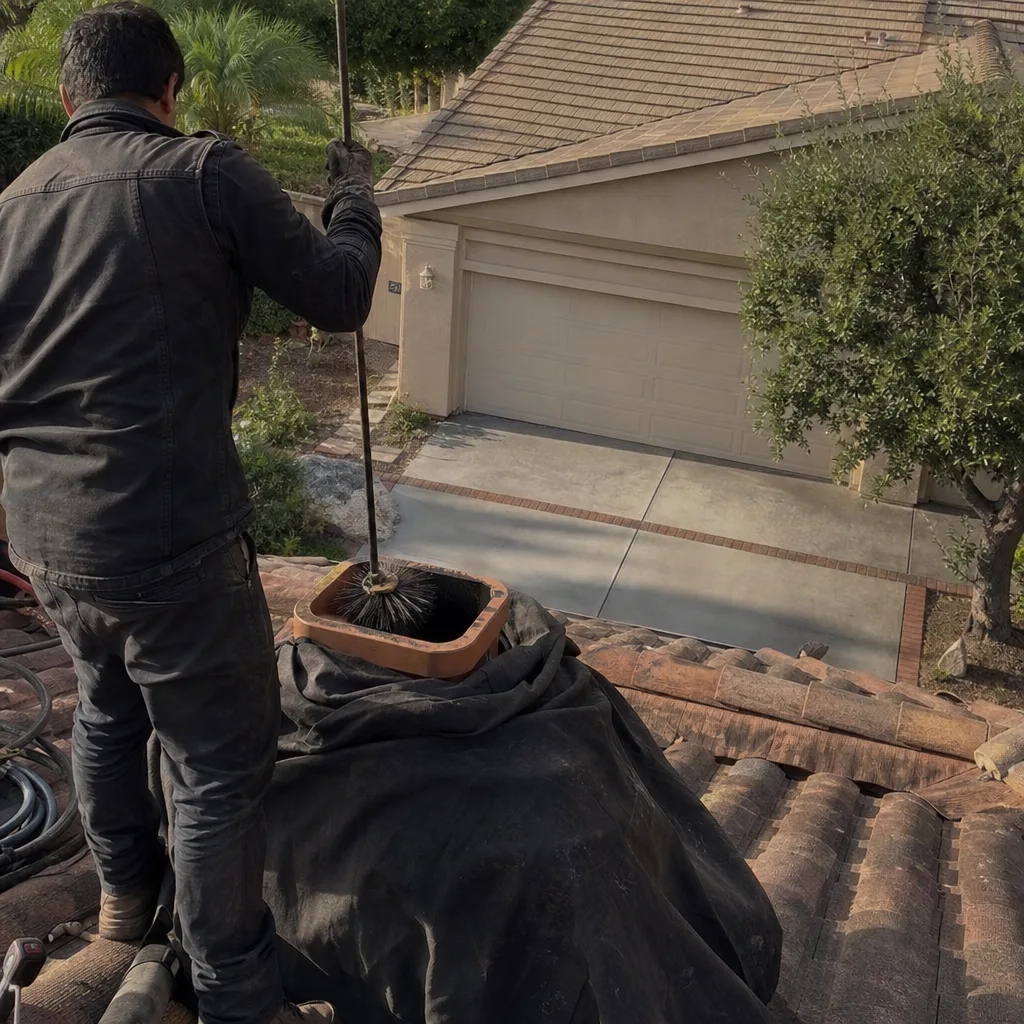
- Why Most Checklists Fail: The Visibility Problem
- Owner-Level Checks: What You Can See Without Tools
- Sweep-Level Checks: Equipment, Training, and Classification
- Camera-Only Findings: Structurally Significant, Completely Invisible
- Santa Clarita Burn Season and Maintenance Frequency
- Documenting Your Baseline: Using Past Reports
- Common Mistakes to Avoid
- When to Call a Professional
- Frequently Asked Questions
- The Bottom Line
 Before
 After
AfterWhy Most Checklists Fail: The Visibility Problem
Most chimney maintenance checklists published online mix three distinct inspection levels into one undifferentiated list. The result is false confidence. A homeowner ticks every box, assumes the system is safe, and never realizes that the most serious defects live in places no eye can reach.
Here’s how the failure happens. A typical list includes items like “check for cracks,” “inspect the flue,” and “look for creosote buildup.” But “check for cracks” in the firebox is visible to any homeowner with a flashlight. “Inspect the flue” from the firebox opening reveals perhaps the first eighteen inches of liner. The remaining fifteen to twenty-five feet of terracotta, stainless steel, or aluminum liner, where heat stress and thermal cycling do their damage, remains completely unseen. “Look for creosote buildup” is worse, because creosote stages from powdery soot (Stage 1) to tar-like glaze (Stage 2) to hardened, ignitable shell (Stage 3), and only Stage 1 is reliably visible to an untrained eye.
In Santa Clarita specifically, this visibility problem is amplified by two factors. First, our dry Santa Ana wind cycles and wide temperature swings between summer and winter create more thermal stress on masonry and liner materials than in consistently humid or consistently cool climates. Second, many Santa Clarita homes in neighborhoods like Valencia, Saugus, and Canyon Country were built during the 1980s and 1990s construction boom, meaning original terracotta liners are now thirty to forty years old, well past their designed service life for wood-burning applications.
Our approach at Level Two Chimney Santa Clarita home divides every inspection into three distinct domains: owner-level, sweep-level, and camera-only. Each domain has specific tools, specific training requirements, and specific documentation standards. This checklist follows that same structure.
Owner-Level Checks: What You Can See Without Tools
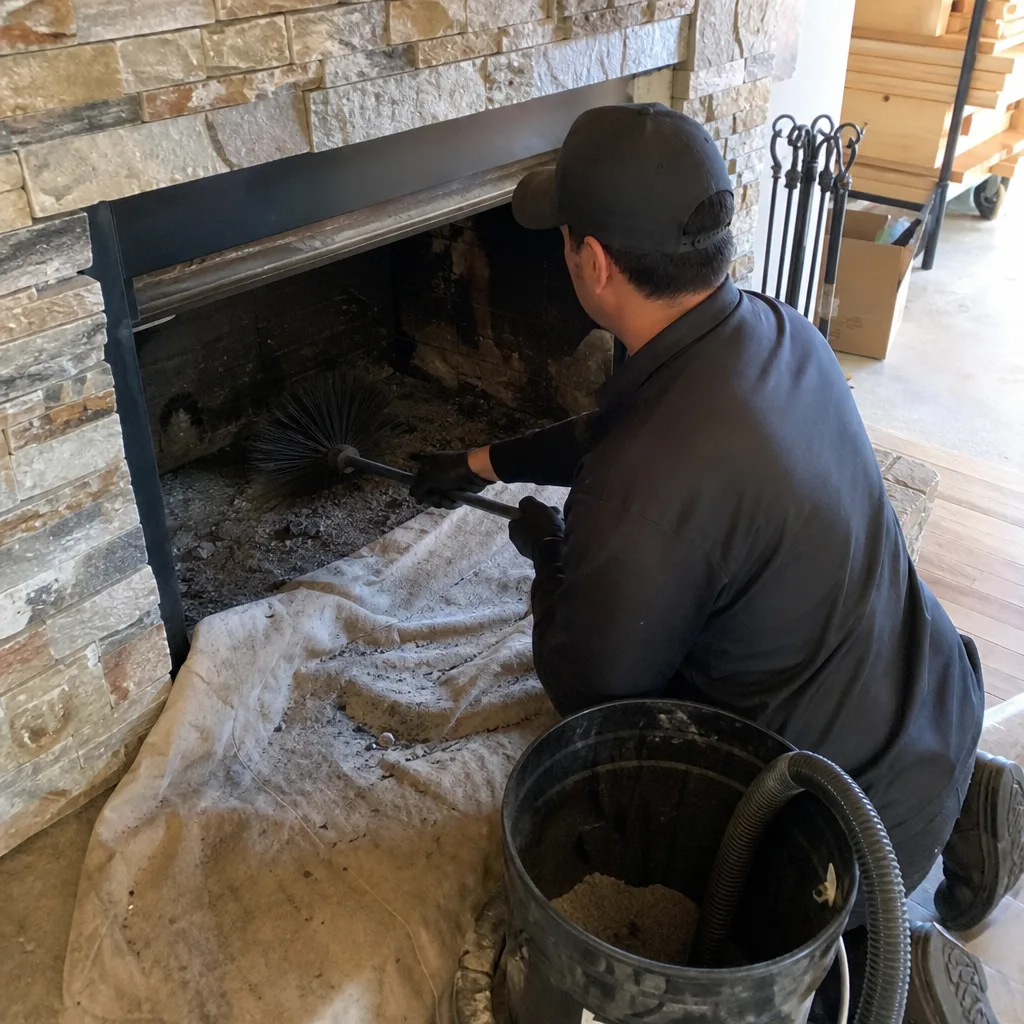
These checks require no special equipment beyond a flashlight and your normal senses. Perform them monthly during burn season (October through April in Santa Clarita) and after any seismic event or severe windstorm.
Firebox Inspection
The firebox is the masonry or metal chamber where combustion occurs. Stand at the opening and shine your flashlight across all surfaces.
- Pass: All firebrick or refractory panels are intact with no cracks wider than a nickel. Mortar joints are tight. No white or gray powdery residue (efflorescence) on brick faces.
- Fail: Any crack through a firebrick or panel, gaps in mortar joints, or missing material. Efflorescence indicates moisture migration through the masonry, which accelerates deterioration.
If you find a fail condition, stop using the fireplace and schedule a professional evaluation. A cracked firebox can allow combustion gases or stray embers to reach combustible framing.
Damper Operation
The damper is the metal plate that seals the flue when the fireplace is not in use and opens to allow exhaust during a fire.
- With the fireplace cold, reach inside and verify the damper closes fully. You should feel no draft from above.
- Open the damper completely. It should move smoothly without grinding or sticking.
- Visually confirm the damper plate is not warped, rusted through, or missing sections.
Pass: Full range of motion, complete seal when closed, intact metal.
Fail: Stuck or frozen damper, visible gaps when closed, warped or deteriorated plate. A failed damper wastes heated air up the flue or fails to exhaust smoke during a fire.
Exterior Cap and Crown (Ground-Level or Binocular View)
From the ground or a safe ladder position, examine the chimney top.
- Cap: Present, securely attached, with intact mesh sides. No visible rust holes or separations from the flue tile.
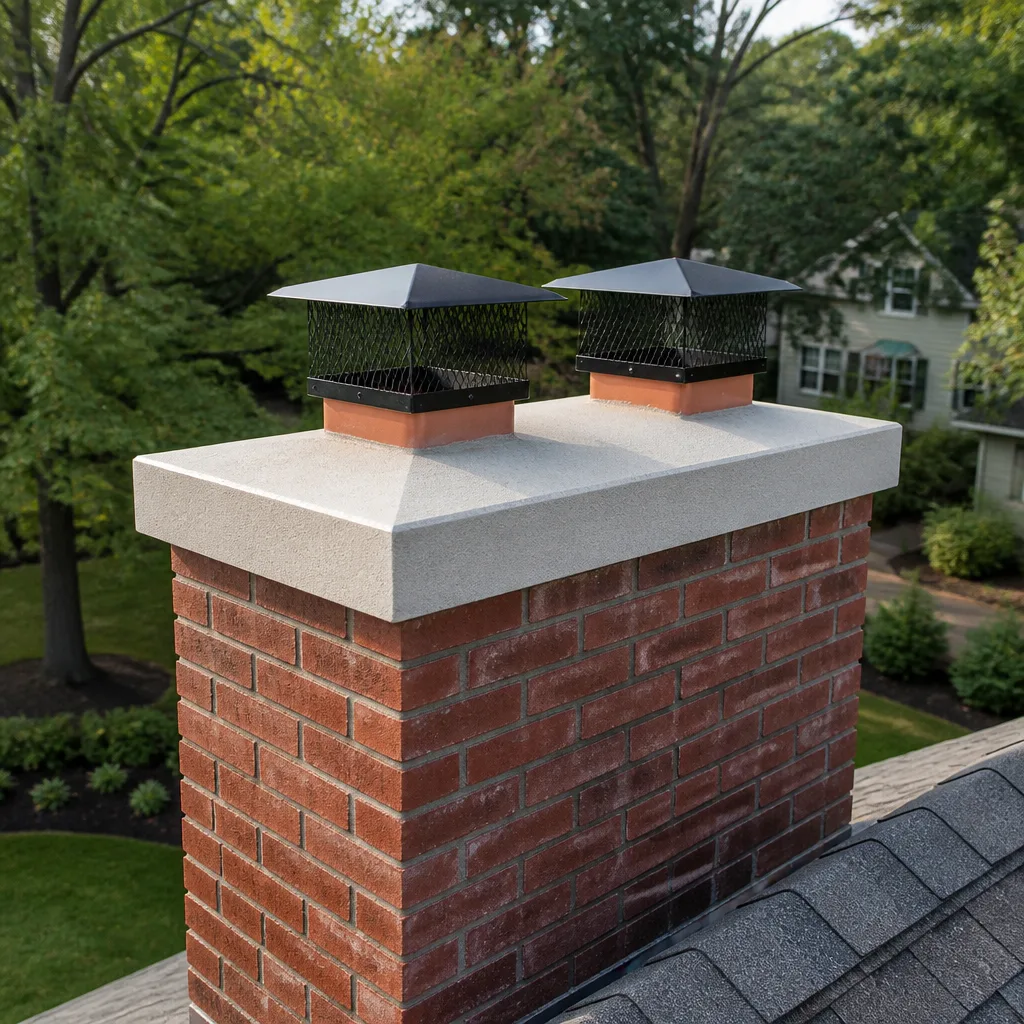
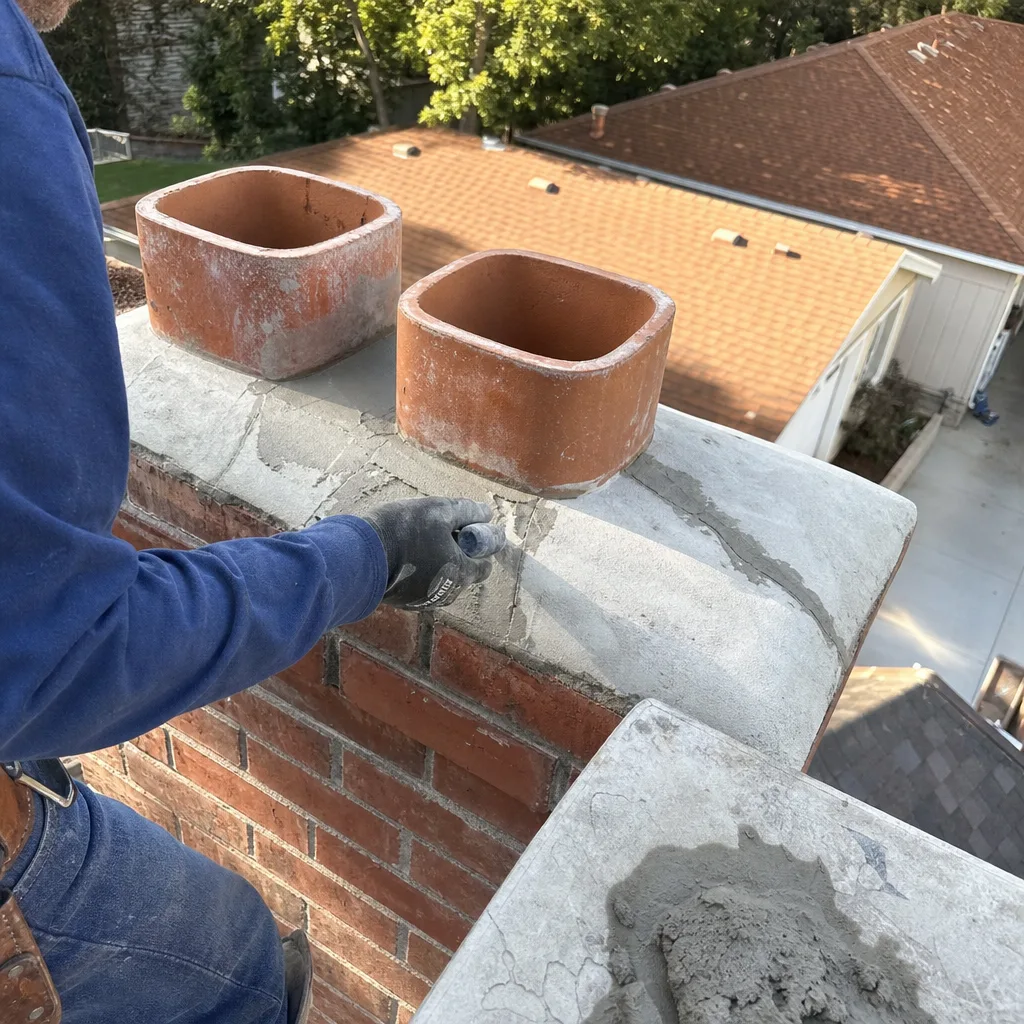
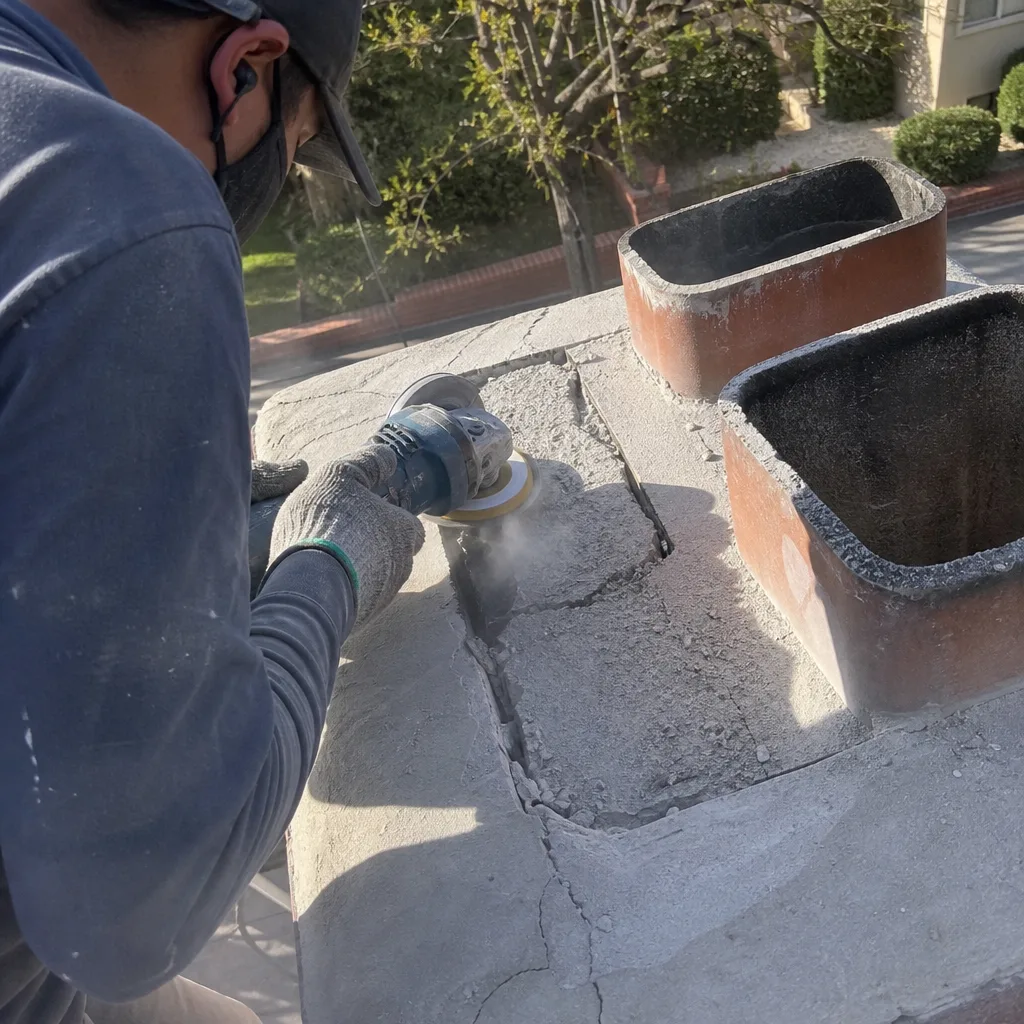
- Crown: The concrete slab that tops a masonry chimney should slope away from the flue opening with no visible cracks, spalling (surface flaking), or pooling areas.
In Santa Clarita, crown deterioration accelerates when summer heat follows winter rain. Water enters hairline cracks, freezes during cold snaps, and expands the crack network. We’ve replaced crowns in Stevenson Ranch and Newhall where this cycle repeated for just three seasons before the crown failed completely.
Exterior Masonry or Stucco (Visible Portions)
Walk the perimeter and look for:
- Spalling brick faces or crumbling mortar joints
- Stucco cracks that align with the chimney structure
- Leaning or separation from the house wall
- Staining below the chimney shoulder, indicating water runoff
Pass: Plumb alignment, intact surfaces, no active water staining.
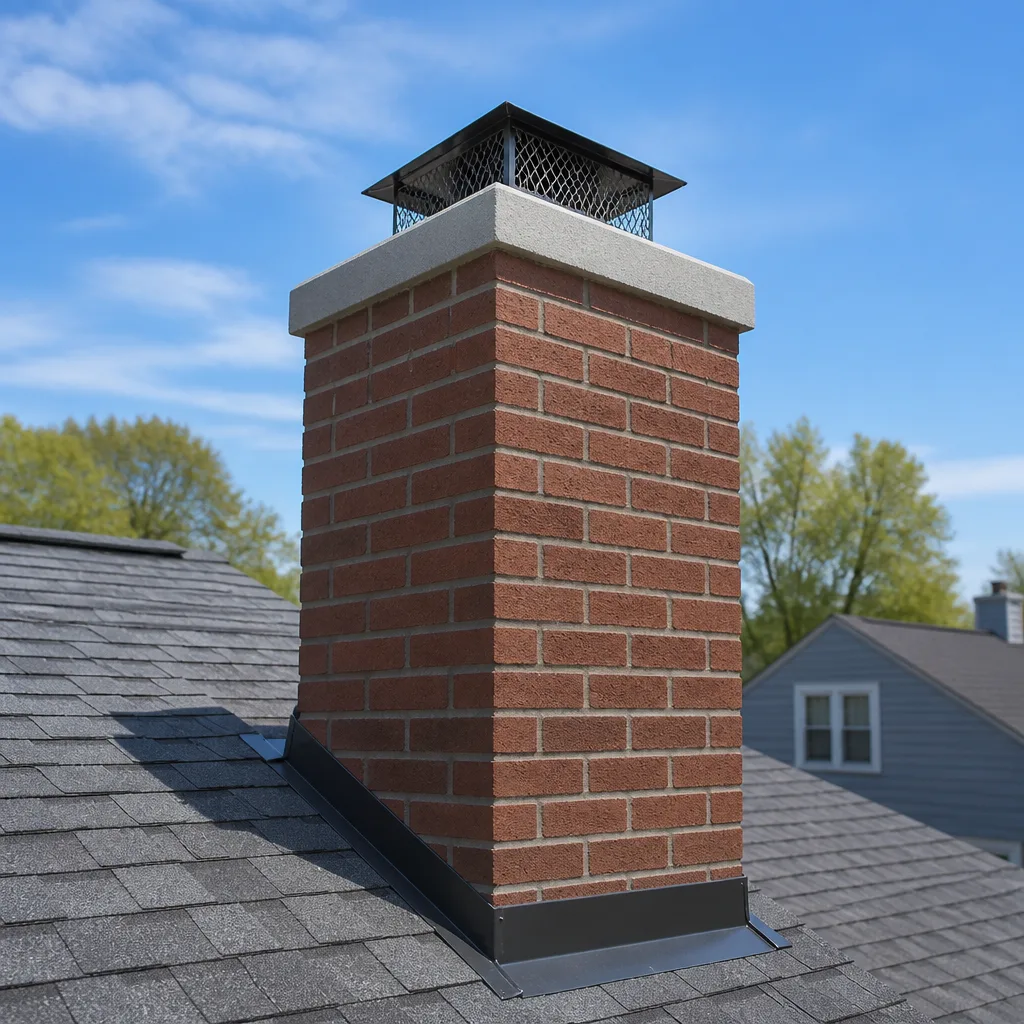
Fail: Any leaning, significant cracking pattern, or ongoing moisture damage. These conditions indicate structural or waterproofing failure requiring professional assessment.
Smoke and Odor During Operation
This is not a scheduled check but an ongoing observation. Your fireplace should draw smoke up the flue without spillage into the room. You should not smell smoke in upstairs rooms or detect a persistent ashy odor when the fireplace is cold.
Smoke spillage suggests draft problems, flue obstruction, or negative pressure in the house. Persistent cold-weather odor often indicates creosote accumulation or animal nesting. Both warrant professional evaluation.
Sweep-Level Checks: Equipment, Training, and Classification
These checks require specialized tools, physical access to the full flue length, and training to interpret what is found. They are not DIY tasks. A Chimney Cleaning & Sweep in Santa Clarita should include all of the following as standard practice.
Creosote Staging Classification
Creosote is not a single substance. The Chimney Safety Institute of America defines three stages, and each requires different removal methods:
- Stage 1: Sooty, powdery, easily brushed away. Normal byproduct of wood combustion. Removed with standard sweep brushes.
- Stage 2: Shiny, tar-like, flakes in brittle layers. Requires more aggressive mechanical cleaning, often with chains or whips on a rotary driver.
- Stage 3: Hardened, glazed, ignitable shell. Cannot be brushed off. Requires chemical treatment to alter composition before mechanical removal, or in severe cases, liner replacement.
The critical point: Stage 3 creosote is a concentrated fuel source. Ignition temperature is approximately 451°F, and a chimney fire can exceed 2,000°F, cracking terracotta liners and damaging surrounding structure. Only a sweep with proper staging training can distinguish Stage 2 from Stage 3 reliably, because the difference is texture and adhesion, not just color. See our Chimney Cleaning Warning Signs: A Santa Clarita Homeowner’s Reference Guide for additional warning indicators.
In our Santa Clarita work, we see accelerated Stage 3 formation in two scenarios. First, homeowners burning unseasoned or soft wood (pine is common in local firewood lots) that burns cool and deposits more incomplete combustion byproducts. Second, fireplaces with poor draft design that never reach adequate flue temperatures to drive complete combustion. Both are correctable once identified.
Smoke Chamber Evaluation
The smoke chamber is the area above the damper and below the flue tile, where smoke collects and is funneled into the flue. It is inaccessible to homeowner inspection without disassembly.
A sweep evaluates:
- Parged (smoothed) surfaces versus corbelled brick steps that create turbulence
- Cracks or gaps in the chamber walls that allow heat and gases to reach framing
- Depth and slope relative to the fireplace opening
NFPA 211 requires the smoke chamber to be parged smooth, with walls no steeper than 45 degrees from vertical. Many older Santa Clarita homes fail this criterion by design, not by deterioration, and correction with a chamber sealant product like HeatShield restores safety without reconstruction.
Connector Pipe Integrity (Factory-Built Fireplaces and Inserts)
Factory-built fireplaces and wood stove installations use metal connector pipes to link the appliance to the flue liner. These pipes are not permanent structural elements and do deteriorate.
A sweep checks for:
- Corrosion, particularly at joints and elbows
- Proper clearance to combustibles (typically 18 inches for single-wall pipe, reduced for listed double-wall)
- Secure mechanical fastening at each joint
- Listed cap and storm collar installation
We’ve found disconnected or corroded connector pipes in Santa Clarita homes where a homeowner or handyman performed an insert installation without proper inspection access. The result is exhaust leakage into wall cavities or attics.
Flue Obstruction and Draft Measurement
A sweep verifies the flue is clear of nests, debris, and structural collapse, then measures draft pressure with a manometer. Adequate draft for a residential wood-burning fireplace is typically 0.02 to 0.04 inches of water column negative pressure. Below this range, smoke spillage is likely. Above it, excessive draft can over-drive the fire and accelerate creosote formation.
Draft problems in Santa Clarita often trace to two sources: negative pressure from modern airtight home construction and HVAC imbalance, or topographical wind effects in canyon-adjacent neighborhoods like Sand Canyon and Fair Oaks Ranch.
Camera-Only Findings: Structurally Significant, Completely Invisible
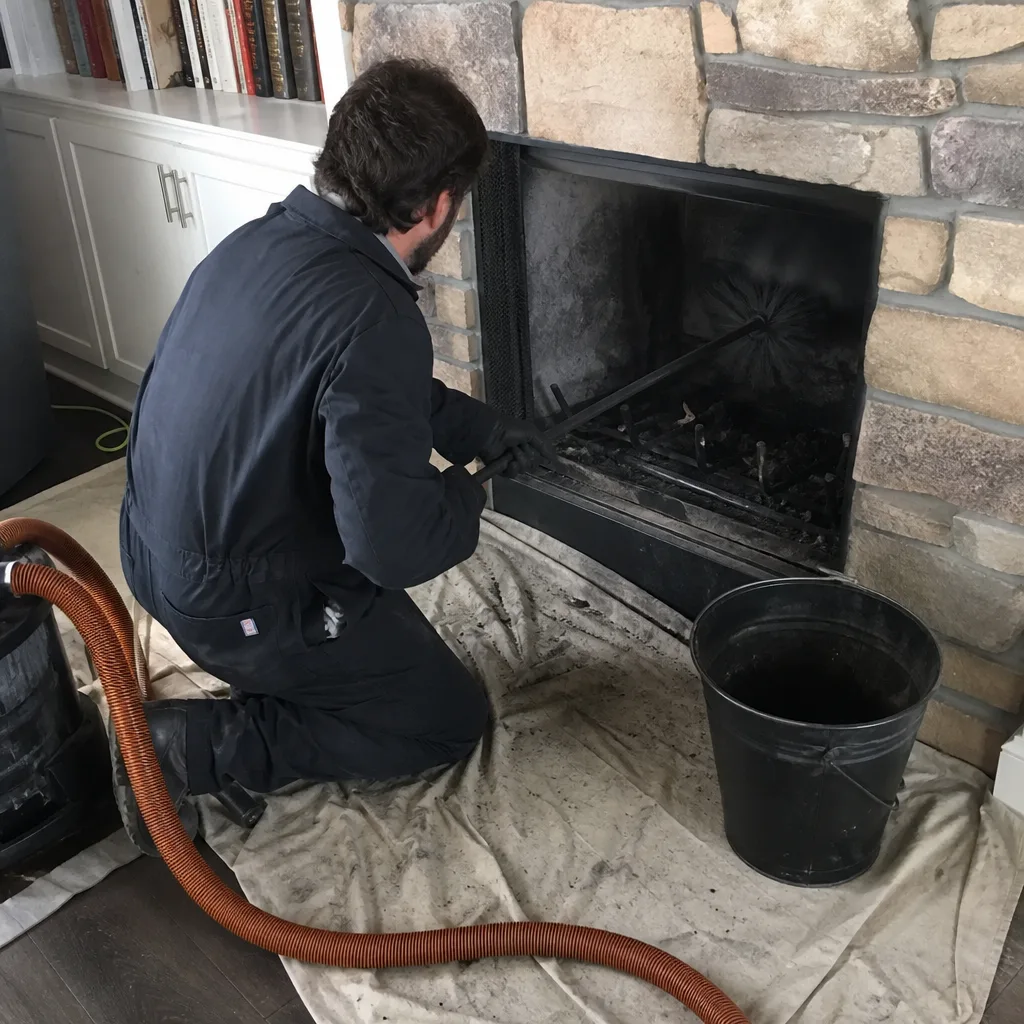
This is where most checklists, and most casual inspections, fail completely. The following conditions are not visible from the firebox opening, not visible from the roof, and not detectable by any sweep method that does not include a camera lowered through the full flue length. At Level Two Chimney Santa Clarita home, Clause 4 of the Haven Standard requires a documented photo record on every job, a practice we’ve maintained since 2009.
Cracked or Deteriorated Flue Liner Tiles
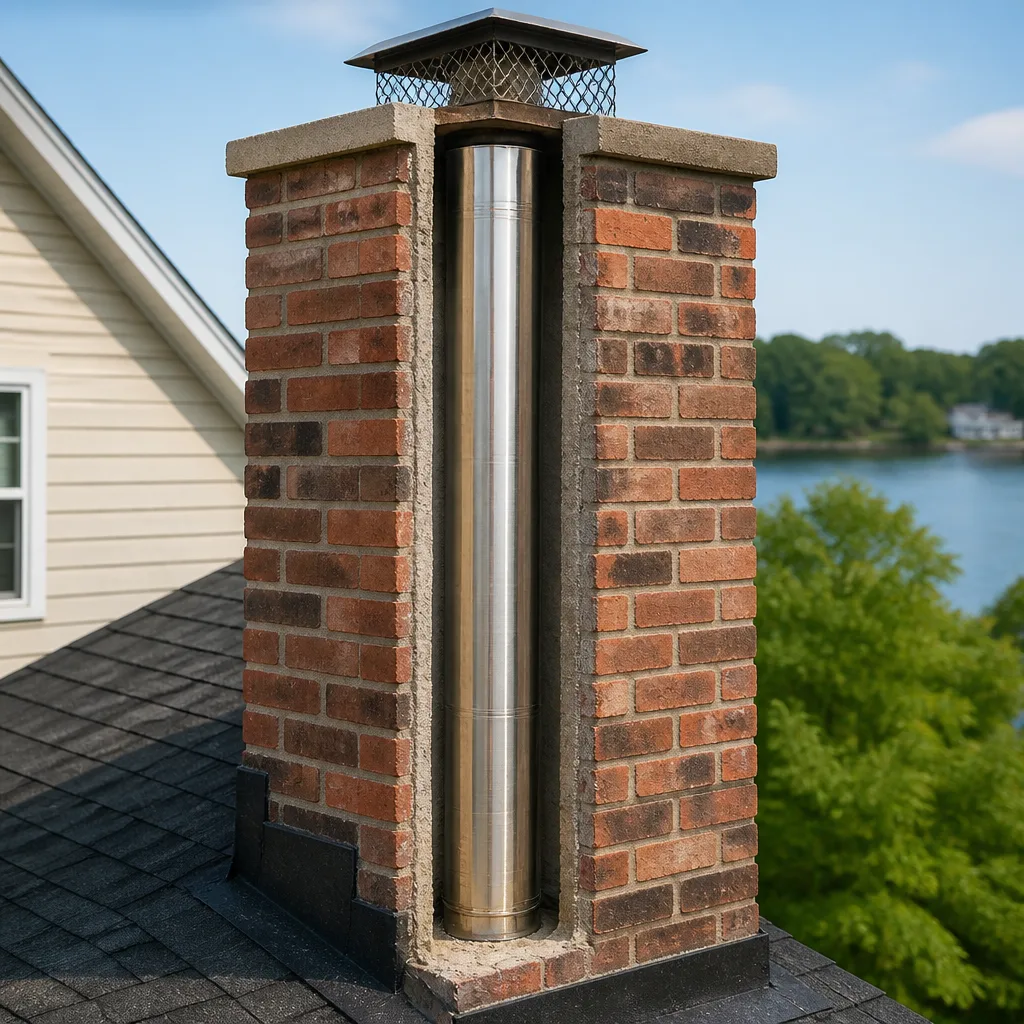
Terracotta flue tiles crack from thermal shock, settlement, or chimney fire damage. A crack can be hairline or gaping, vertical or horizontal, single or multiple. The significance is uniform: combustion gases, including carbon monoxide, can escape the flue and enter the chimney structure or living space. Embers can contact combustible framing.
Camera documentation shows the exact location, orientation, and extent of each crack. We mark footage with depth measurements so repair scope is precise. Options include DuraFlex stainless steel liner insertion, Olympia Chimney relining systems, or complete reconstruction for severely damaged structures.
Missing Mortar Between Flue Tiles
Flue tiles are stacked with mortar joints between sections. Over decades, mortar deteriorates from acid condensation and thermal cycling. Gaps allow the same gas and ember migration as cracks, but are often more extensive. A camera reveals whether gaps are isolated or systematic, which determines whether spot repair or full relining is appropriate.
Liner Displacement or Offset
Settlement or poor original construction can cause flue tiles to shift, creating steps or misalignments that catch creosote, obstruct draft, and create turbulence that accelerates deposition. These offsets are invisible from either end of the flue. Camera footage measures the offset dimension and determines whether the flue can be cleaned safely or must be relined.
Spalling and Glazing on Liner Interior
Spalling is surface flaking of terracotta or refractory material, creating roughness that traps creosote. Glazing is a glassy deposit from prior chimney fires or sustained over-firing, which reduces flue diameter and alters draft characteristics. Both conditions are camera-diagnosed and inform whether cleaning alone is sufficient.
Water Intrusion Evidence
Staining, efflorescence, or active moisture on the interior flue surface indicates crown failure, flashing defects, or condensation problems. Interior water damage is rarely visible externally until it is advanced. Camera documentation establishes the intrusion point and extent before masonry repair is specified.
Photo Record as Legal and Insurance Documentation
Under Haven Standard Clause 4, every camera inspection produces a dated, geotagged photo record stored in our archive. For Santa Clarita homeowners, this documentation serves multiple purposes: insurance claim support after a chimney fire, disclosure documentation for home sale, baseline comparison for future inspections, and warranty validation for liner installations using Gelco or other listed components.
Santa Clarita Burn Season and Maintenance Frequency
National guidance often states “have your chimney inspected annually.” For Santa Clarita’s specific climate and usage patterns, we recommend a more nuanced schedule detailed in The Complete Guide to Chimney Cleaning in Santa Clarita.
| Usage Profile | Sweep Frequency | Camera Inspection Frequency |
|---|---|---|
| Primary heat source, daily use Oct-Apr | Annually, before first fire | Every 3 years |
| Weekend use, 2-3 fires weekly | Every 2 years, or annually if burning soft wood | Every 5 years |
| Occasional use, holidays and events | Every 3 years, or before any extended use period | Before home sale, or if any sweep-level finding suggests |
| Gas log set only, no wood burning | Every 3-5 years for debris and vermin check | If converting to wood, or if any performance change |
Santa Clarita’s burn season runs roughly October through April, with peak demand in December and January when temperatures drop into the 40s overnight. The critical maintenance window is September through early October, before first use. Scheduling in this window avoids the October rush and ensures any needed repairs are completed before cold weather.
Summer considerations matter too. Our 100°F+ days create thermal expansion in masonry and metal components that differs from winter contraction patterns. A chimney that performed adequately in January may show new cracks or joint separation by August. This is why we recommend the annual sweep include a brief exterior condition check even if the flue was recently cleaned.
For homes in Santa Clarita’s wind-exposed areas, particularly Canyon Country and the northern Valencia hills, we also recommend a mid-season check of cap and crown integrity after the first significant Santa Ana event. These dry, high-velocity winds can dislodge caps and drive debris into flues.
Documenting Your Baseline: Using Past Reports
The most valuable inspection is not the first one. It is the second one, compared against the first. Without a baseline, every sweep starts from zero, guessing whether a crack is new or twenty years old, whether creosote accumulation is normal or accelerated, whether that liner offset was original or recent settlement.
Here’s how to build and maintain a useful documentation record; find more guides & resources in our blog:
- Request complete documentation. Every professional sweep should provide a written report with findings, recommendations, and photo or video evidence. At Level Two Chimney Santa Clarita, Haven Standard Clause 4 requires this as standard, not optional. If your sweep offers “verbal only” or charges extra for photos, you are not receiving a complete inspection.
- Store reports with your home records. Keep digital copies of camera footage, written findings, and any repair invoices in the same folder as your home inspection from purchase. Date-stamped documentation establishes condition at specific points in time.
- Compare sequentially. When scheduling your next inspection, provide the prior report to the sweep. A competent technician will review it before arrival and note any changes. We specifically compare current camera footage against our archive for returning Santa Clarita customers, measuring crack progression, creosote accumulation rates, and liner condition changes.
- Note usage changes. If you switch from occasional to frequent use, change wood species, install a new insert, or modify the fireplace opening, document this and share it with your sweep. These changes alter the thermal and chemical environment in ways that affect maintenance needs.
- Use reports for transaction documentation. In Santa Clarita’s active real estate market, a documented inspection history adds value at sale and protects against post-sale disputes. We provide transferable documentation for all Chimney Repair in Santa Clarita and inspection services.
The baseline principle applies to all chimney work, including Fireplace Services in Santa Clarita. A gas log conversion, for example, should be documented with pre-conversion condition photos so any subsequent issues are not attributed to the original fireplace state.
Common Mistakes to Avoid
- Assuming “no visible damage” means safe operation. The most serious flue defects are invisible without a camera. We’ve documented cracked liners in Santa Clarita fireplaces whose owners had performed visual checks for years without suspecting a problem.
- Burning unseasoned or soft wood to save money. Local firewood lots often sell pine or partially green oak at discount. The result is accelerated Stage 3 creosote, more frequent required sweeps, and higher long-term cost than buying properly seasoned hardwood.
- Using a shop vacuum for ash removal without HEPA containment. Standard vacuums recirculate fine particulate through the motor and exhaust. More critically, hot embers hidden in ash can ignite vacuum contents. Use a metal container with tight lid, stored outside on non-combustible surface.
- Ignoring damper malfunction because “it still mostly works.” A damper that doesn’t seal wastes significant heating energy in Santa Clarita’s mild but variable winters. One that doesn’t open fully risks smoke spillage and carbon monoxide exposure.
- Scheduling sweeps only after problems appear. Odor, smoke spillage, or visible debris are late indicators. Preventive maintenance before burn season avoids emergency scheduling, premium rates, and the risk of using a compromised system.
- Accepting verbal estimates or post-work billing. Haven Standard Clause 1 requires a written price, written scope, and written warranty before work begins. Any sweep who won’t commit to this in writing is operating below professional standard.
- Discarding old inspection reports. The report from five years ago establishes whether today’s finding is progressive or stable. Without it, even a skilled sweep is guessing about rate of deterioration.
When to Call a Professional
Call a certified chimney sweep immediately if you observe smoke entering the room during normal operation, detect a persistent ashy or chemical odor when the fireplace is cold, find any firebox crack or missing brick, notice exterior leaning or separation, or experience a chimney fire (loud roaring, dense smoke, or visible flames in the flue). After any seismic event, even minor, have the flue camera-inspected for liner displacement.
For routine maintenance, schedule before burn season begins. Level Two Chimney Santa Clarita offers free estimates in Santa Clarita, and our 365-Day Done Right Promise means if it’s not done right, we make it right. Call (747) 294-2146 to book an appointment or request a free second opinion on any written estimate you’ve received.
Frequently Asked Questions
A professional chimney sweep in Santa Clarita typically ranges from $199 to $349 for a standard cleaning with visual inspection, while a camera-scan inspection (NFPA 211 Level 2) runs $299 to $499 depending on flue accessibility and number of appliances. Level Two Chimney Santa Clarita provides a written price before any work starts under Haven Standard Clause 1, with no post-work surprises. Call (747) 294-2146 for an exact quote, estimates are free.
You need a new liner only if the existing one is cracked, deteriorated, or unlisted for your fuel type, and only if that condition is documented with camera evidence you can see for yourself. We do not recommend liner replacement based on age alone or on a flashlight look from the firebox opening. Our camera inspection will show you the exact defect, explain the safety implication, and provide a written scope and price before any work begins. If you’re uncertain about a competitor’s liner recommendation, our Free Second Opinion on any written estimate applies. Call (747) 294-2146 for an exact quote, estimates are free.
For typical Santa Clarita usage, annual sweeping before first fire is appropriate for primary or frequent wood-burning, every two years for moderate weekend use, and every three years for occasional holiday use. Gas-only fireplaces need inspection every three to five years for debris and vermin checks. These intervals assume properly seasoned hardwood; burning soft or unseasoned wood accelerates creosote accumulation and requires more frequent service. Call (747) 294-2146 for an exact quote, estimates are free.
Skipped maintenance leads to creosote accumulation that increases chimney fire risk, liner deterioration that can allow carbon monoxide into living spaces, and minor crown or flashing defects that become major water damage requiring reconstruction. In Santa Clarita’s climate, thermal cycling between hot summers and cool winters accelerates all these processes compared to more stable climates. The cost of preventive maintenance is consistently lower than emergency repair or insurance deductible after a fire. Call (747) 294-2146 for an exact quote, estimates are free.
You can remove superficial ash and debris from the firebox, but full flue cleaning requires proper brushes sized to your flue diameter, extension rods for full length access, and the ability to evaluate creosote stage and liner condition. More importantly, without a camera inspection, you cannot verify that cleaning has addressed the actual safety-critical surfaces. We do not recommend DIY flue cleaning for the same reason we don’t recommend DIY electrical panel work: the consequences of undetected error are severe. Call (747) 294-2146 for an exact quote, estimates are free.
A Level 1 inspection is a visual examination of accessible portions of the chimney exterior, interior, and connecting appliances, appropriate for annual maintenance when no changes have occurred. A Level 2 inspection adds a camera scan of the full flue interior, accessible areas in attics and crawl spaces, and evaluation of clearances to combustibles, required before property sale, after chimney fire or seismic event, or upon fuel type change. Level Two Chimney Santa Clarita performs NFPA 211 Level 2 inspections as our standard practice, with documented photo records under Haven Standard Clause 4, because the conditions that matter most are invisible to Level 1 methods. Call (747) 294-2146 for an exact quote, estimates are free.
The Bottom Line
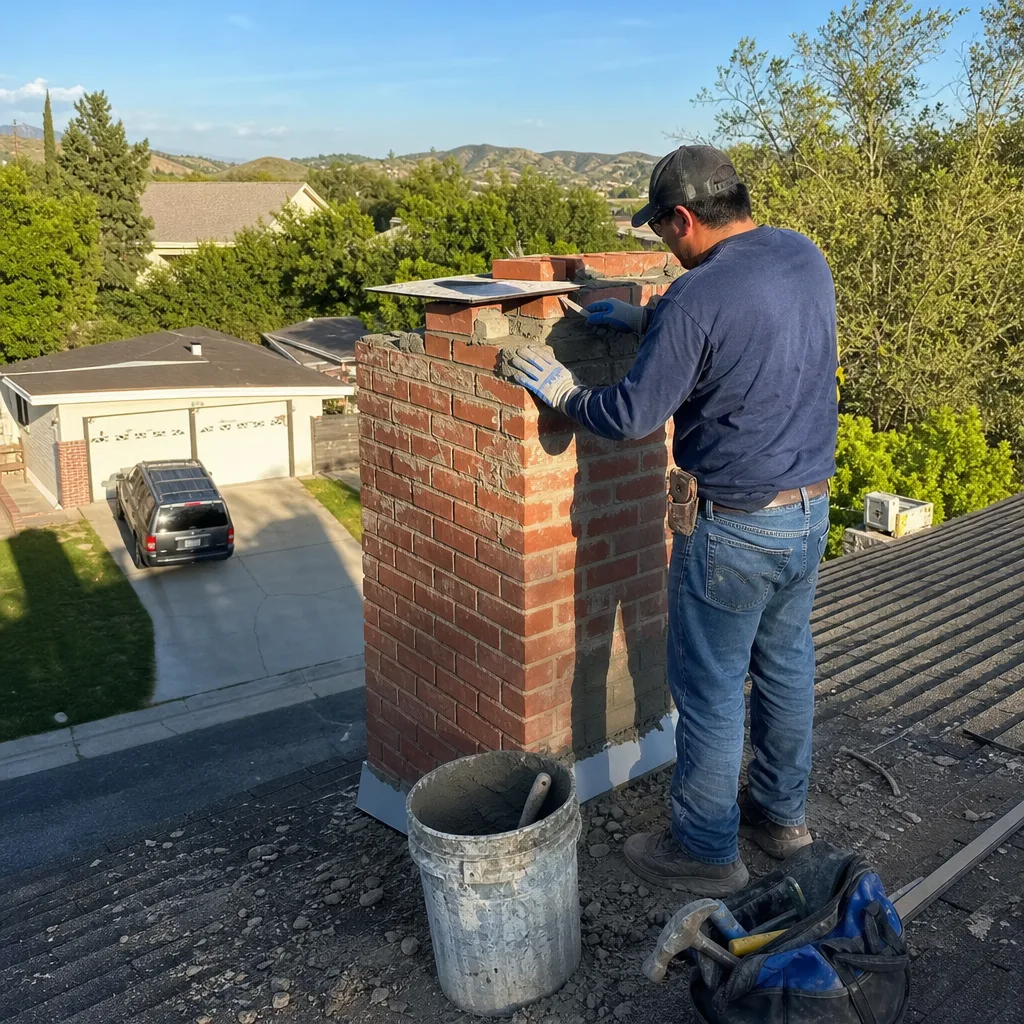
A chimney maintenance checklist is only as good as its honesty about what you cannot see. Separate owner-level observation from sweep-level diagnosis from camera-only structural evaluation. Perform monthly visual checks during Santa Clarita’s October through April burn season. Schedule professional sweeping with creosote staging classification annually or on the appropriate interval for your usage. Request a camera-scan inspection every three to five years, before any home sale, or after any seismic event or chimney fire. Document everything, compare sequentially, and never accept a verbal recommendation without written evidence you can review yourself. The 38,000+ chimneys we’ve inspected since 2009 have taught us that the most expensive repair is the one that was recommended too late, and the most dangerous condition is the one that looked fine from the outside.
Written by Corrine Halstead, Owner at Level Two Chimney Santa Clarita, serving Santa Clarita since 2009.